Dining Room Mirror: The Complete Guide to Choosing, Sizing and Styling
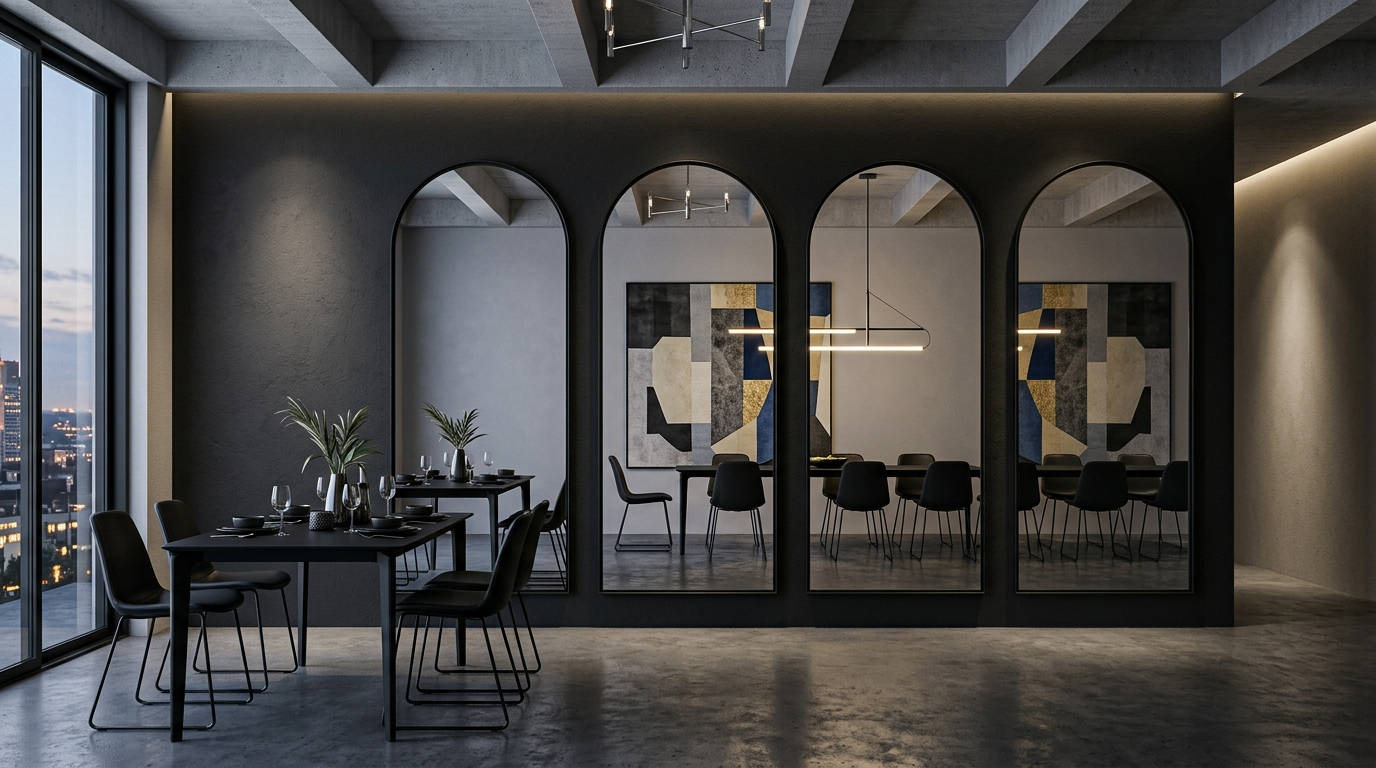
A dining room mirror is one of the simplest ways to transform how a space looks and feels. It reflects light, adds depth and turns an ordinary wall into a design feature without any structural changes. Choosing the right one, however, involves more than picking a shape you like at the store.
The size, placement, frame finish and even the wall you hang it on all affect the final result. This guide walks through every decision point, from sizing formulas to placement rules, so you can choose with confidence. By the end, you will know exactly what to look for before buying a dining room mirror for your home.
Why Every Dining Room Needs a Mirror
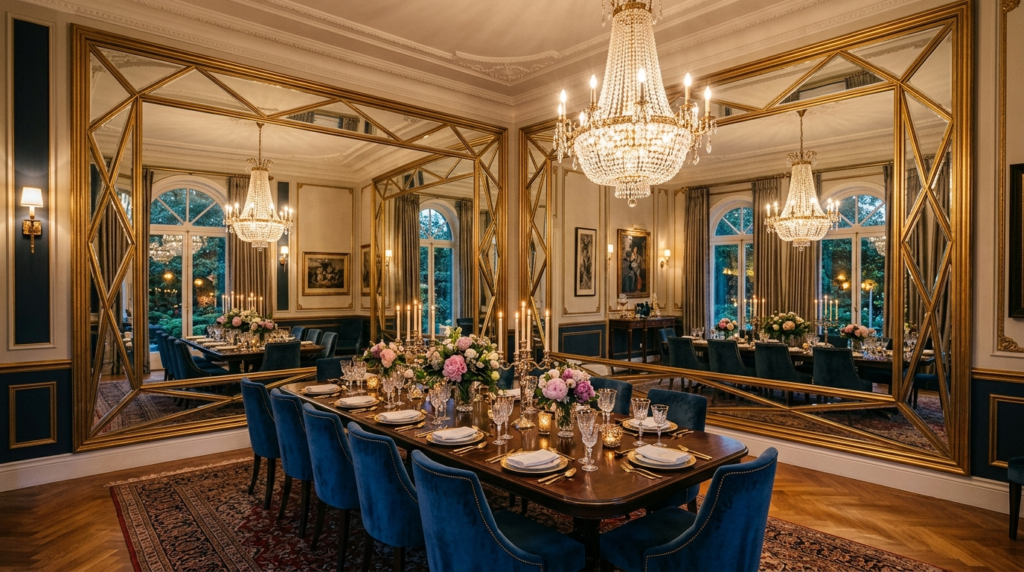
A dining room mirror does more than decorate a wall; it actively changes how the room performs. Three benefits stand out the most, and each one plays a different role in the space.
Reflecting and Multiplying Natural Light
Mirrors bounce daylight from windows deeper into the room, reducing the need for extra lighting during the day.
A dining room mirror placed opposite a window can noticeably increase the sense of brightness within minutes of installation. This is especially useful in dining rooms that only have one window or face away from direct sunlight.
Making a Small Dining Room Feel Larger
A well-placed mirror creates the illusion of extra depth, which is valuable in dining rooms that double as hallways or open-plan corners. T
he reflected view tricks the eye into reading the space as wider than its actual dimensions. This trick works best with larger mirrors rather than small decorative pieces.
Creating a Natural Focal Point
An empty wall above a buffet or console often feels unfinished, and a dining room mirror solves that instantly.
It draws the eye upward and gives the room a clear visual anchor without competing with the dining table itself. Unlike artwork, a mirror also serves a practical purpose, which makes it a more functional focal point.
Dining Room Mirror Sizing Guide
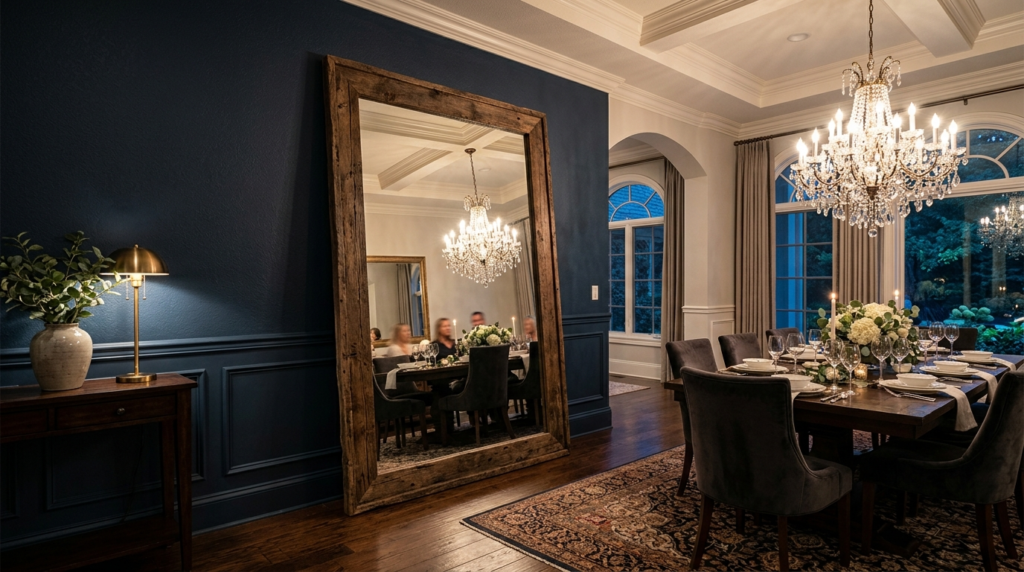
Getting the size right is the most common mistake buyers make, since a mirror that is too small looks lost on a large wall. The following sizing rules make the decision much easier.
Standard Size Guidelines by Room Size
Room size directly determines how large a dining room mirror should be to look proportional. Smaller rooms suit compact mirrors, while larger rooms need bigger, more dominant pieces to avoid feeling underwhelming. The table below offers a general starting point that can be adjusted based on available wall space.
| Dining Room Size | Recommended Mirror Width |
| Small (under 120 sq ft) | 24 to 30 inches |
| Medium (120 to 200 sq ft) | 30 to 40 inches |
| Large (200+ sq ft) | 40 to 60 inches |
The Buffet Width Rule
When hanging a mirror above a buffet or sideboard, the mirror should measure about two-thirds the width of the furniture below it.
This keeps the proportions balanced and prevents the mirror from overwhelming or underwhelming the piece it sits above. A mirror that matches the full width of the buffet often looks oversized and cramped.
Correct Hanging Height
Most designers hang a dining room mirror with its bottom edge six to eight inches above the furniture beneath it. If there is no furniture involved, the center of the mirror should sit roughly at eye level for an average adult. This keeps the reflection functional rather than purely decorative.
Best Dining Room Mirror Shapes and Styles
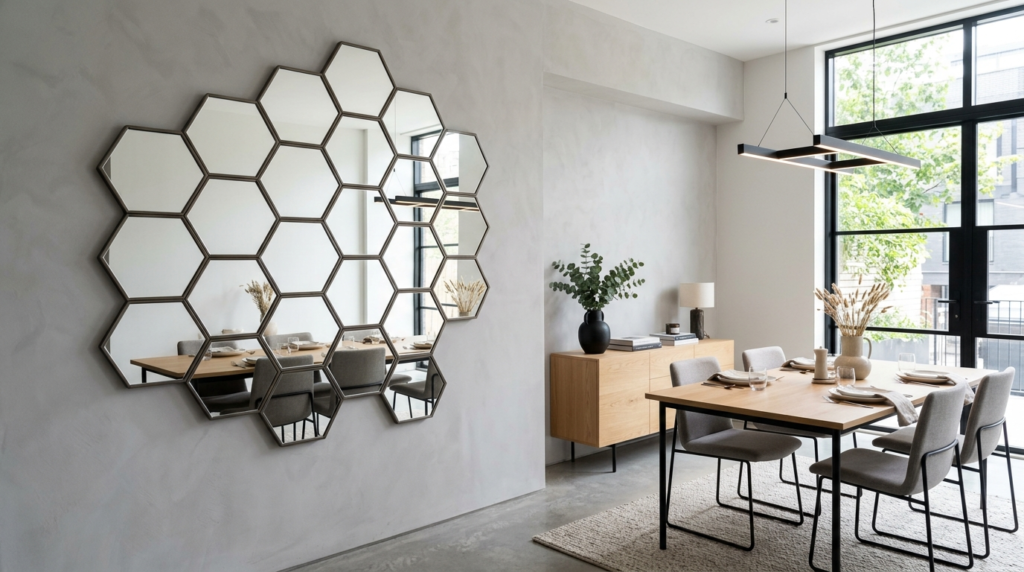
Shape has a big impact on how a dining room mirror feels within the space, and different shapes suit different layouts. The three most popular options each bring a distinct character to the room.
Round Mirrors for Softness and Balance
Round mirrors soften a room filled with rectangular furniture like tables, chairs and buffets. They work particularly well in dining rooms with a lot of straight lines, since the curved edge breaks up the visual monotony. A round dining room mirror also tends to suit smaller spaces better than large rectangular ones.
Rectangular and Horizontal Mirrors for Formal Rooms
Rectangular mirrors suit formal dining rooms because they echo the shape of the dining table and match traditional proportions. A horizontal orientation works especially well above a long buffet, since it mirrors the furniture’s own shape. This style remains the most commonly chosen option across most home styles.
Arched and Irregular Mirrors for a Modern Touch
Arched mirrors bring a slightly softer, transitional look that suits both traditional and contemporary dining rooms.
Irregular or asymmetrical shapes work best in modern spaces looking for a bold statement piece rather than a subtle accent. These styles typically cost more, but they also stand out far more than standard shapes.
Where to Place a Dining Room Mirror
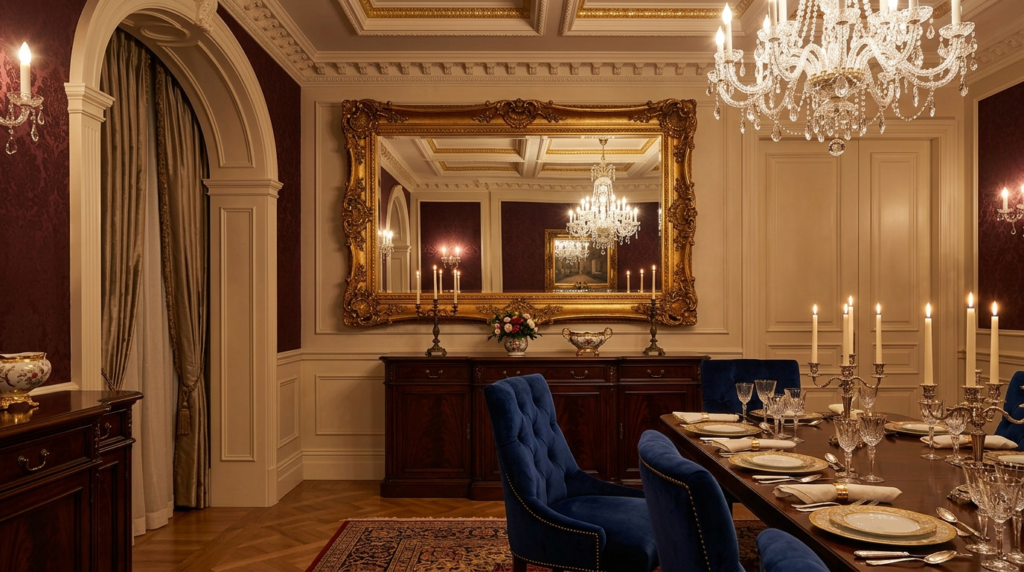
Placement affects both function and style, and getting it wrong can make the mirror look accidental rather than intentional. Three locations consistently work best in dining rooms.
Above a Buffet or Sideboard
This is the most traditional and reliable placement, since it naturally centers the mirror within the room’s layout. It also keeps the mirror at a height where it reflects light effectively without reflecting the ceiling. Most professionally designed dining rooms use this placement as the default choice.
Directly Opposite a Window
Placing a dining room mirror opposite a window maximizes the amount of natural light bounced back into the room.
This works best when there is a clear, unobstructed view between the window and the mirror’s surface. It is worth avoiding this placement if the window faces an unattractive view, since the mirror will reflect that too.
Above the Dining Table Itself
Hanging a mirror directly above the dining table is less common but can work in rooms without a buffet or console. It should be positioned high enough to avoid reflecting the table setting in an awkward or cluttered way. This placement works best when paired with a chandelier or pendant light for a cohesive look.
Choosing the Right Frame Finish
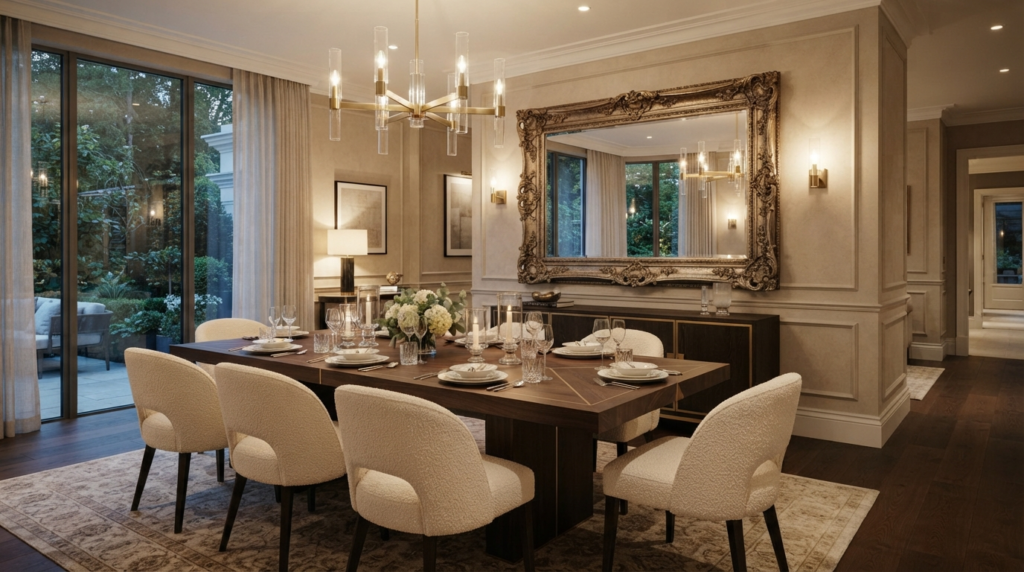
The frame finish ties the mirror to the rest of the room’s color palette and hardware. Three finishes dominate current dining room designs.
Gold and Brass Frames
Gold and brass frames add warmth and a sense of luxury, especially in rooms with wood furniture or warm lighting.
These finishes pair well with traditional and transitional dining rooms rather than strictly minimalist ones. A gold-framed dining room mirror remains one of the most searched styles among homeowners today.
Black Metal Frames
Black metal frames create strong contrast against light walls and give the room a more modern, graphic look. They also tend to be more budget-friendly than ornate gold or antique finishes. This option suits contemporary and industrial-style dining rooms particularly well.
Wood and Frameless Designs
Wood frames bring a natural, organic feel and work especially well in farmhouse or Scandinavian-inspired dining rooms. Frameless or beveled glass mirrors offer a minimalist look that blends into the wall rather than standing out. Both options suit buyers who prefer a subtler, less decorative statement.
Common Dining Room Mirror Mistakes to Avoid
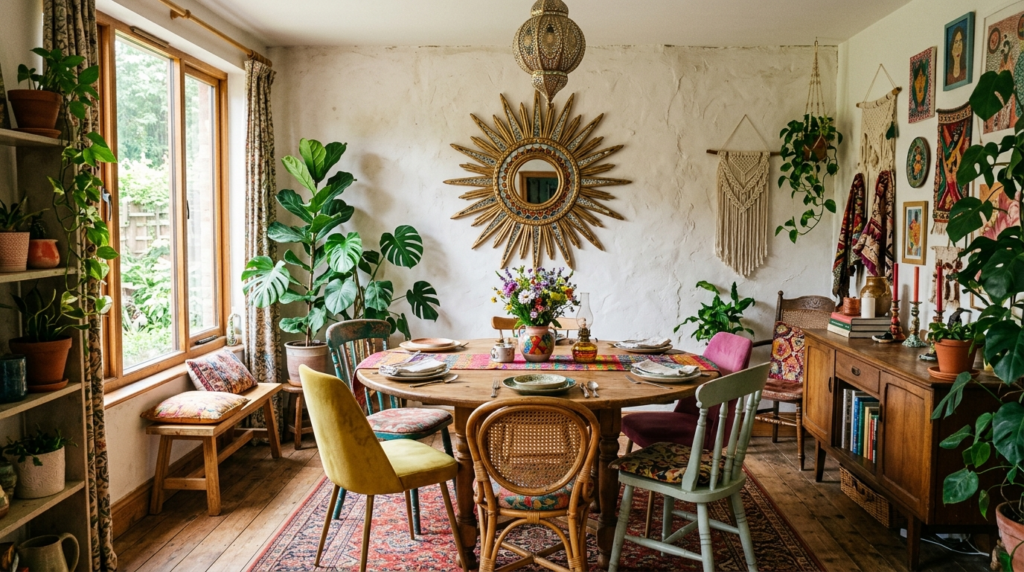
Even a well-chosen mirror can look wrong if it is placed or sized incorrectly. These are the most frequent mistakes homeowners make.
Choosing a Mirror That Is Too Small
A mirror that is too small for the wall looks like an afterthought rather than a design choice. This mistake is especially common when buyers choose a decorative mirror meant for a hallway instead of a dining space. Following the sizing guide above helps avoid this issue entirely.
Hanging It at the Wrong Height
A mirror hung too high loses its functional purpose and ends up reflecting only the ceiling instead of the room. One hung too low can make the space feel unbalanced, especially above furniture. Sticking to the six to eight inch rule above furniture solves most height-related problems.
Reflecting Clutter or Clashing With Lighting
A mirror positioned to reflect a messy kitchen doorway or cluttered corner draws attention to the wrong part of the room.
It is worth standing at the dining table and checking exactly what the mirror will reflect before hanging it. Mirrors placed too close to a chandelier can also create an uncomfortable amount of glare during meals.
Dining Room Mirror Budget Guide
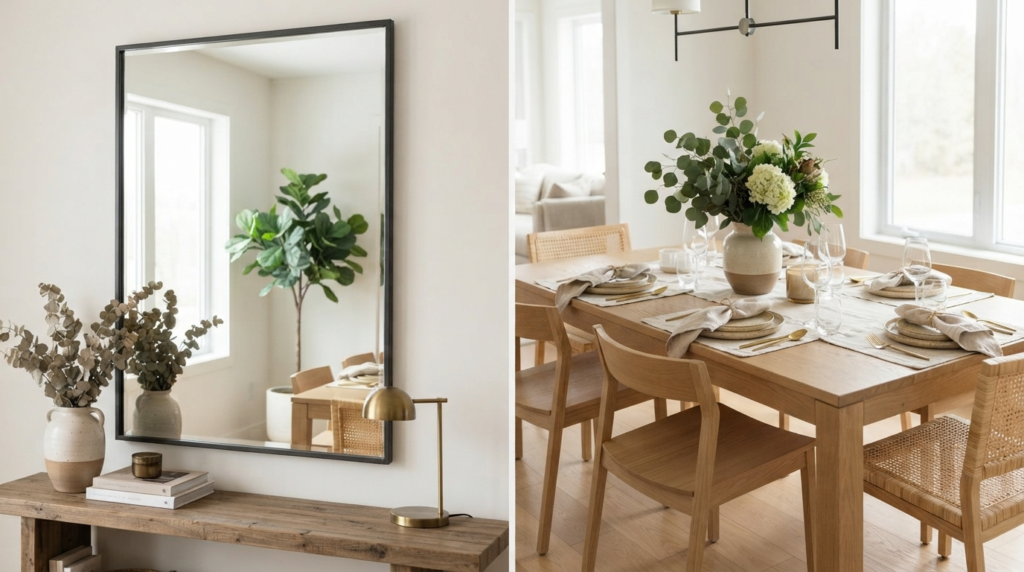
Prices for a dining room mirror vary widely based on size, frame material and brand. The table below breaks down what to typically expect at each price point.
| Price Range | What You Typically Get |
| Under $100 | Basic frames, smaller sizes, simple shapes |
| $100 to $500 | Mid-size mirrors, better materials, more shape options |
| $500 and above | Oversized statement pieces, designer finishes, hand-crafted details |
Several factors influence where a specific mirror falls within these ranges:
- Overall size and glass thickness
- Frame material, such as wood, metal or resin
- Brand reputation and craftsmanship
- Shipping and assembly requirements
Buyers on a tighter budget can still achieve a high-end look by choosing a simple frame in a larger size rather than an ornate small one. Spending more usually buys better glass quality and more durable hardware rather than just extra decoration.
Frequently Asked Questions
Is a mirror in the dining room considered good luck?
In some design traditions, a mirror in the dining room is believed to double the abundance of food on the table, making it a symbol of prosperity.
This belief is not universal, but it does explain why mirrors are a common feature in dining rooms across many cultures. From a practical standpoint, the belief lines up with the real benefit of increased light and space.
Should a mirror face the dining table directly?
A mirror can face the dining table, but it works best when it reflects a clean, uncluttered view rather than the chairs or the table setting itself. Reflecting artwork, a window or a clean wall usually looks better than reflecting people while they eat. This is more of a style preference than a strict rule.
What size mirror works best for a small dining room?
For a small dining room, a mirror between 24 and 30 inches wide typically works best without overwhelming the space. Round or vertical shapes tend to suit tighter rooms better than wide horizontal ones. The sizing table earlier in this guide offers a more detailed breakdown by room size.
Conclusion
A dining room mirror is a small investment that changes how the entire room feels, provided the size, placement and finish are chosen carefully. Most furniture retailers focus only on selling the product itself, without explaining how to size or place it correctly, which is exactly the gap this guide fills.
Using the sizing rules, placement tips and mistake checklist above should make the buying decision far easier than relying on product pages alone. The right dining room mirror is less about finding the most decorative option and more about finding the one that fits the room’s proportions.
Related Articles
Rustic Wall Art Decor: A Complete Guide to Styles, Materials & Ideas
Garage Wall Shelves: A Complete Guide to Smart Garage Storage
Wooden Wall Art: The Complete Guide to Styles, Benefits, DIY Ideas & Buying Tips
White Wall Shelves: The Complete Guide to Choosing, Installing, and Styling Them
Shelf Floating: The Complete Guide to Installing, Styling & Choosing the Best Floating Shelves