White Wall Shelves: The Complete Guide to Choosing, Installing, and Styling Them
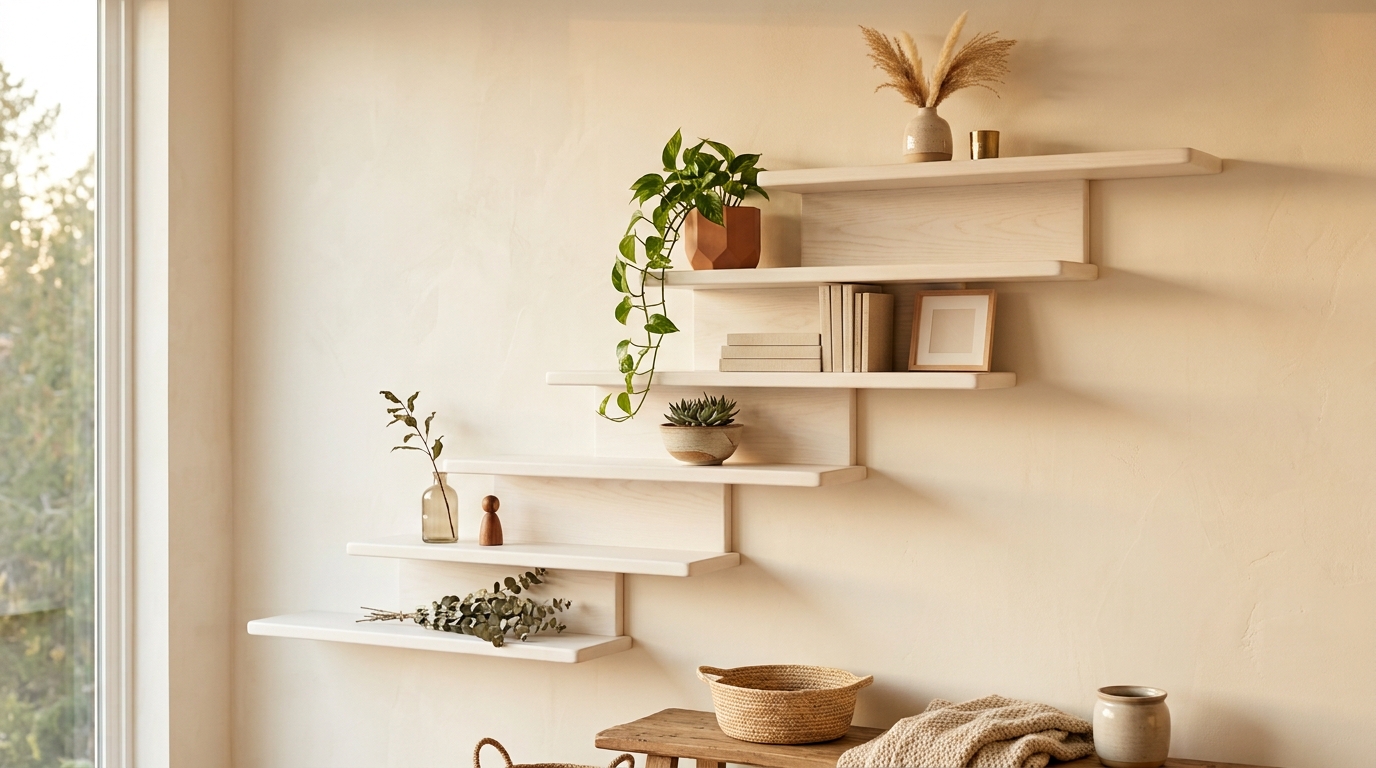
White wall shelves are mounted storage and display units that attach directly to a wall without needing legs or floor space. Their white finish makes them one of the most popular shelving choices because they blend easily into almost any wall color or decor theme.
People use them to hold books, plants, photo frames, kitchenware, or everyday essentials while keeping the room looking open and organized. Because they take up no floor space, white wall shelves work especially well in small apartments, rental homes, and rooms where extra storage is needed without extra furniture.
This guide walks through every aspect of white wall shelves, from the different types available to installation and long-term care.
Types of White Wall Shelves
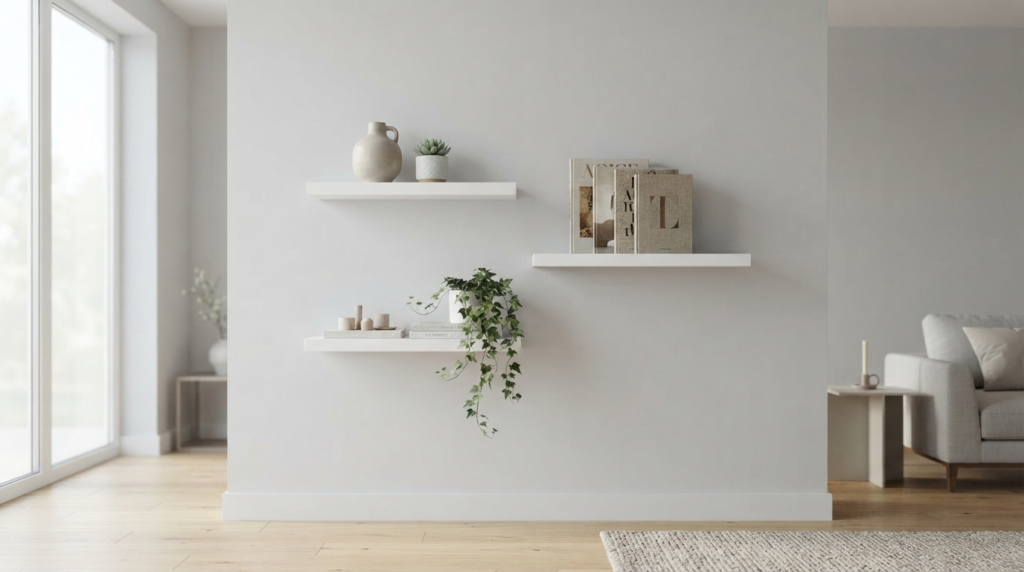
White wall shelves come in several structural designs, each suited to different rooms and storage needs. Below is a short look at the main styles before going into detail on each one.
Floating Shelves
Floating shelves are mounted using a hidden bracket system, so they appear to “float” on the wall with no visible support.
They give a clean, minimal look and are ideal for displaying books, framed pictures, or small decorative items. Because the fixing hardware is hidden inside the wall, they usually need a slightly more careful installation process.
Bracket-Supported Shelves
These shelves use visible metal or wooden brackets underneath for extra support and are known for holding heavier loads. They are a practical choice for kitchens, garages, or offices where sturdier storage is required. The visible brackets can also add a decorative element if chosen in a contrasting finish.
Ledge Shelves
Ledge shelves are shallow, long shelves designed mainly for leaning items like photo frames, small art, or paperback books rather than stacking heavy objects.
They are commonly installed in rows for a gallery-style wall display. Their narrow depth makes them a space-saving option for hallways and bedrooms.
Cube or Box Shelves
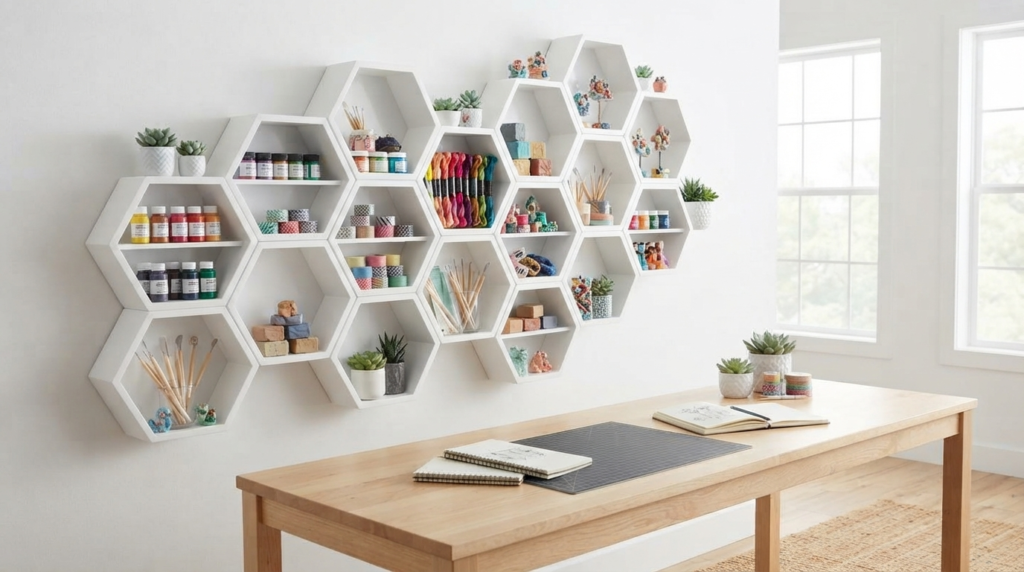
Cube shelves are boxed-in units that can be mounted individually or combined into a pattern, often used for storing folded clothes, toys, or small decor pieces. Their enclosed shape hides clutter better than an open shelf. They work particularly well in kids’ rooms or compact living spaces.
Corner Shelves
Corner shelves are shaped to fit into the unused corner of a room, making use of space that would otherwise stay empty. They are a good fit for smaller rooms where wall space along flat sections is already occupied. Many corner shelf sets come with multiple tiers for extra storage.
Adjustable or Modular Shelving Systems
These systems allow the shelf height and spacing to be changed as storage needs grow or shift over time. They are popular in home offices and libraries where item sizes vary widely. The modular design also makes them easier to expand later without replacing the whole unit.
Materials Used in White Wall Shelves
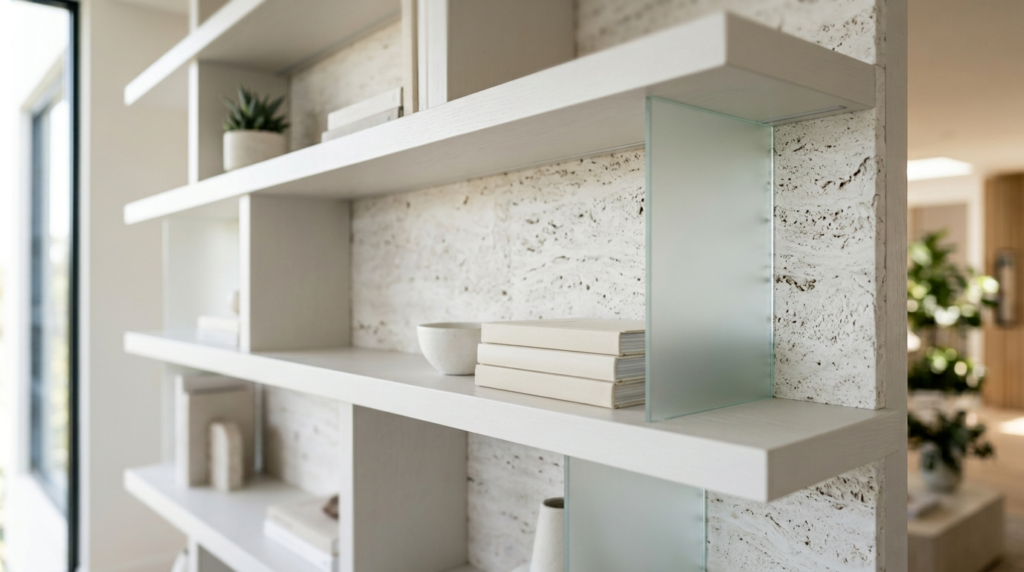
The material of a shelf affects its strength, appearance, and how long it lasts. The table below compares the most common materials used for white wall shelves.
| Material | Strength | Best For | Maintenance |
| Solid Wood | High | Heavier items, long-term use | Occasional dusting, avoid moisture |
| MDF/Plywood (painted white) | Medium | Budget-friendly general use | Wipe with dry cloth |
| Metal with white coating | High | Garages, industrial-style rooms | Wipe clean, watch for rust on edges |
| Glass with white frame | Low to Medium | Decorative display only | Clean with glass cleaner |
| Laminate/Particleboard | Low to Medium | Light items, temporary setups | Avoid excess weight or water |
Wood-Based Shelves
Wood-based white wall shelves, whether solid wood or engineered wood like MDF and plywood, are the most widely used option because they balance strength and affordability.
Solid wood versions tend to last longer and support more weight, while MDF options are lighter on the budget. Both types are usually painted or laminated in white to match modern interiors.
Metal Shelves
Metal shelves with a white powder coating are chosen when durability and heavier load capacity matter most.
They resist bending better than wood over time and suit more industrial or utilitarian spaces such as garages or workshops. Their coating also helps prevent rust if kept dry.
Glass Shelves
Glass shelves with white frames are mainly chosen for their decorative appeal rather than heavy storage, often used to display collectibles or small plants. They create a lighter, more open visual effect on the wall. However, they generally hold less weight than wood or metal options.
Benefits of White Wall Shelves
White wall shelves offer more than just storage — they also improve how a room looks and functions. The main advantages are outlined in the points below.
- They free up floor space since nothing needs to sit on the ground.
- The white finish reflects light, which can make a room feel brighter and larger.
- They match almost every interior style, including minimalist, Scandinavian, modern, and farmhouse decor.
- They can be installed in nearly any room, from kitchens to home offices.
- White surfaces are generally simple to wipe down and keep looking fresh.
Where to Use White Wall Shelves
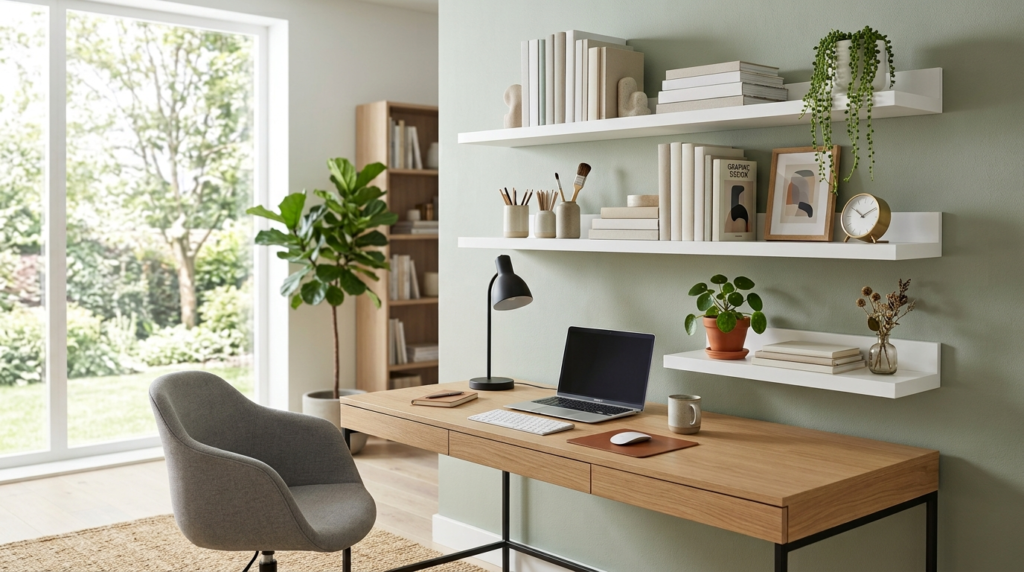
Different rooms call for different shelf sizes and shapes. This section briefly introduces the main placement options before detailing each room below.
Living Room
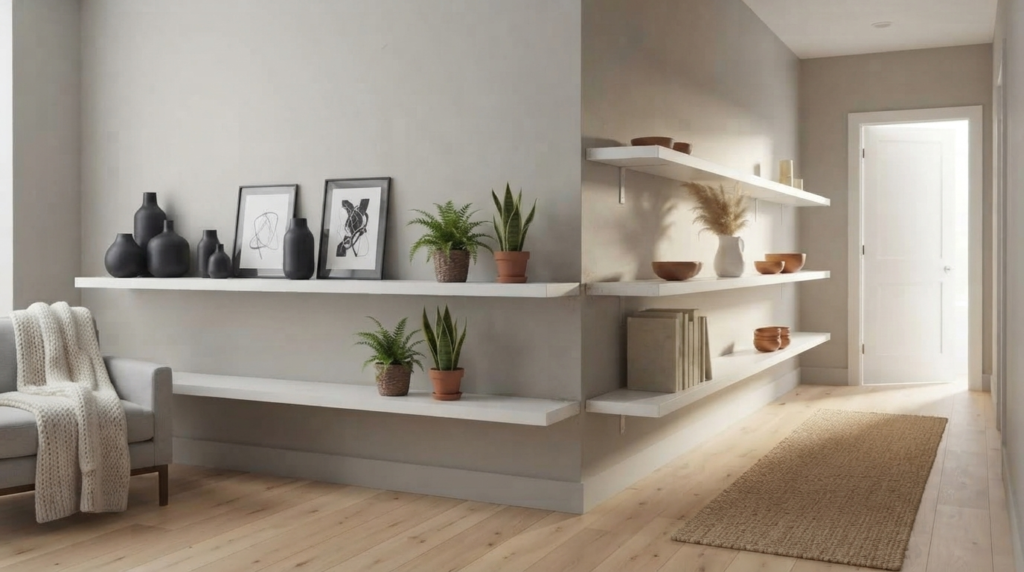
In the living room, white wall shelves are often used to display books, photo frames, and decorative objects above a sofa or television unit. They can replace a bulky bookshelf while keeping the seating area open. Arranging items at varying heights across multiple shelves adds visual interest.
Bedroom
In bedrooms, smaller white wall shelves are sometimes used instead of a nightstand, holding a lamp, a book, or a phone charger.
They also work well above a headboard for extra storage without cluttering the floor. This is especially useful in smaller bedrooms where furniture space is limited.
Kitchen
Open white wall shelves in kitchens are commonly used to store everyday dishes, jars, or spices within easy reach. They give the kitchen a lighter, more open feel compared to closed cabinets. Because kitchen shelves are exposed, items are usually arranged neatly for a tidy appearance.
Bathroom
In bathrooms, white wall shelves typically hold folded towels, toiletries, or small plants, making use of vertical wall space in a room that often lacks storage. Choosing a moisture-resistant material is important here. A small ledge shelf near the mirror is also a common addition.
Home Office
Home offices benefit from white wall shelves for storing books, files, and desk supplies without taking up desk space. They help keep the workspace organized and visually calm. Adjustable shelving systems are especially useful here as work needs change.
How to Choose the Right White Wall Shelf
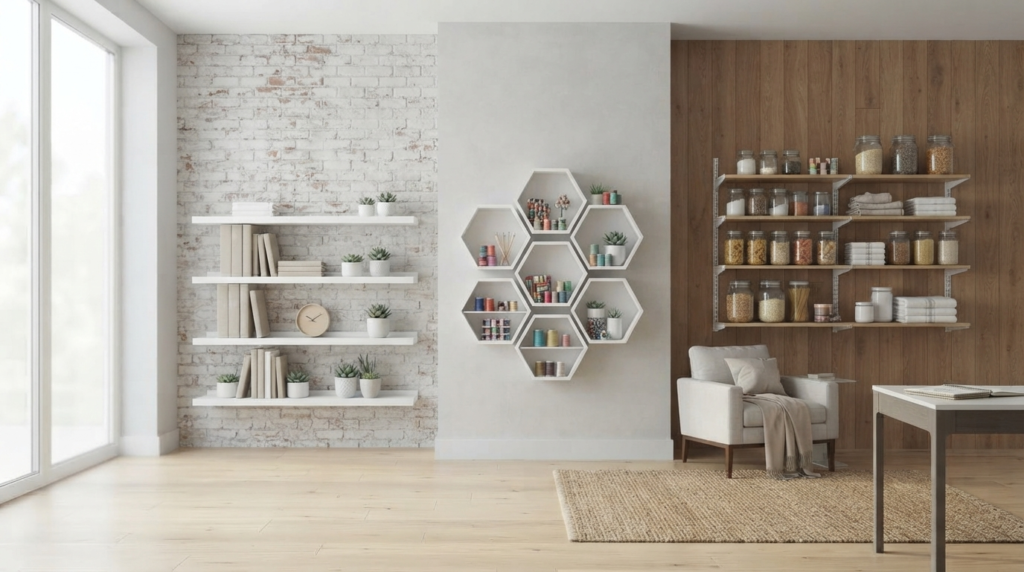
Picking the right shelf depends on a few practical factors rather than appearance alone. The following points explain what to check before buying.
Weight Capacity
Every shelf has a maximum weight it can safely hold, and exceeding this can cause sagging or the shelf pulling away from the wall. Heavier materials like solid wood or metal generally support more weight than laminate or glass. It helps to estimate the combined weight of items planned for the shelf before purchasing.
Wall Type Compatibility
The mounting method needs to match the wall type, whether it is drywall, brick, or concrete, since each requires different anchors or screws. Drywall alone without proper anchors often cannot hold heavier loads. Checking the wall type beforehand prevents installation problems later.
Size and Depth
The shelf size should match both the available wall space and the items meant to be placed on it, since a shelf too deep or too shallow can look out of proportion or fail its purpose.
Measuring the wall area in advance avoids buying an ill-fitting shelf. Depth is especially important for items like books or kitchenware that need more support.
Installation Guide
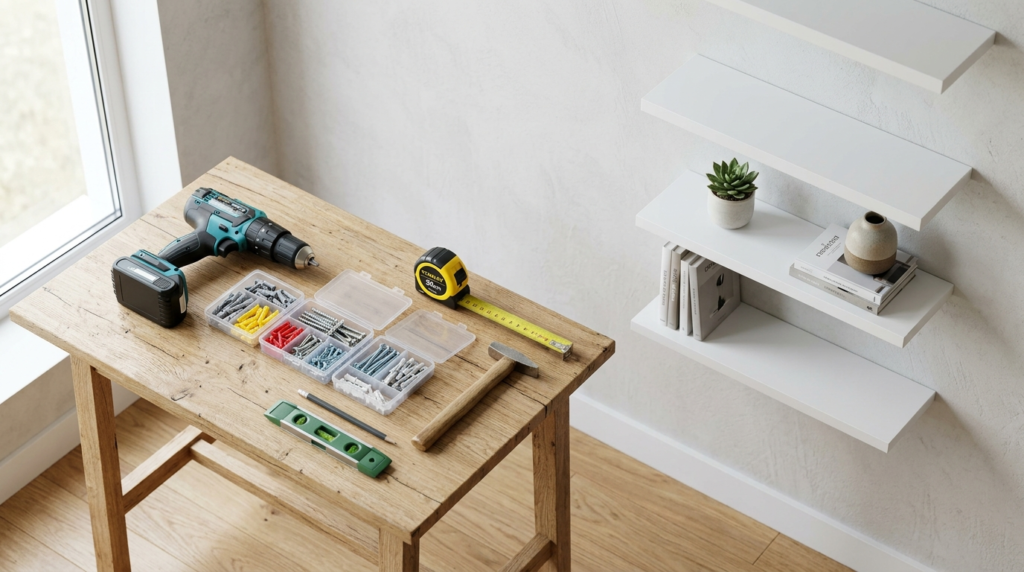
Installing white wall shelves correctly is essential for both safety and appearance. The steps below outline a general process that applies to most shelf types.
- Gather a drill, level, tape measure, pencil, wall anchors, and screws suited to your wall type.
- Mark the desired shelf position on the wall and use a level to ensure the line is straight.
- Locate wall studs where possible, since anchoring into a stud adds extra strength.
- Drill pilot holes at the marked points and insert wall anchors if needed.
- Attach the shelf brackets or mounting hardware securely to the wall.
- Place the shelf onto the brackets and check again with a level before adding items.
Common Mistakes to Avoid
A frequent mistake is skipping the leveling step, which results in a visibly tilted shelf once items are placed on it.
Another common issue is using the wrong anchor type for the wall material, leading to a weak hold. Rushing the drilling step without marking pilot holes accurately can also cause misaligned brackets.
Styling Ideas for White Wall Shelves
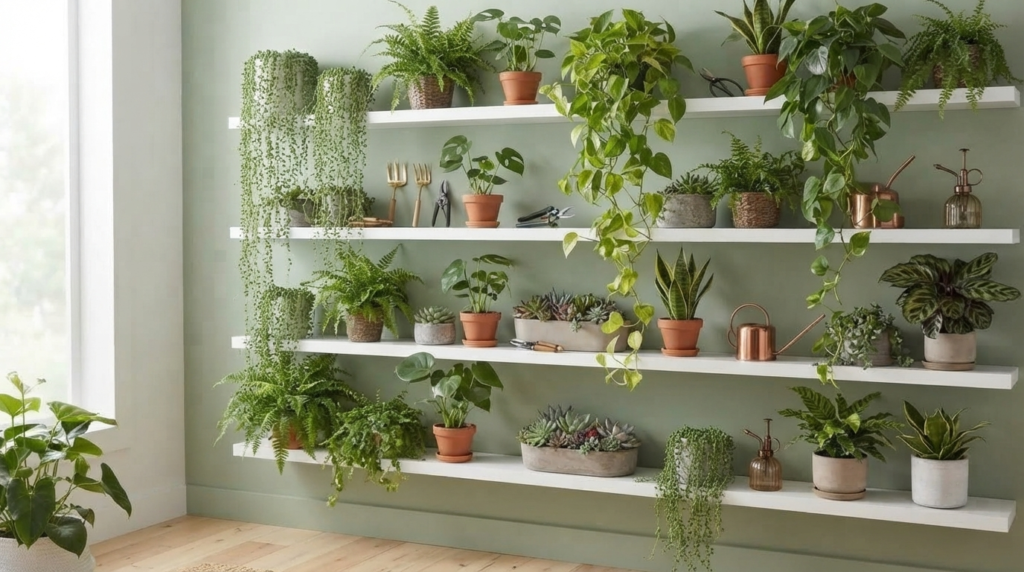
Styling white wall shelves well can turn a simple storage solution into a focal point of the room. A mix of function and decor usually works best, as explained in the points below.
- Group items in odd numbers, such as three or five, for a more natural-looking arrangement.
- Mix textures like books, ceramics, and plants rather than repeating the same object type.
- Leave some empty space on each shelf instead of filling it completely, which keeps the display from looking cluttered.
- Use a small lamp or spotlight nearby to highlight the shelf display in the evening.
- Balance colorful decor items against the white shelf to make them stand out.
Maintenance and Care
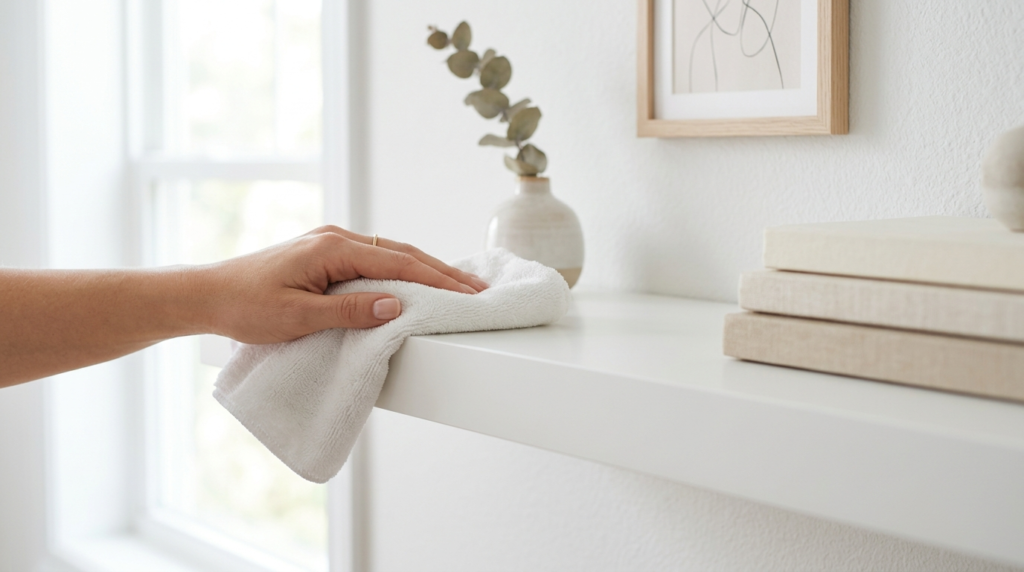
White wall shelves need only minimal upkeep, but a few habits help preserve their appearance. Wiping the surface regularly with a dry or slightly damp cloth prevents dust buildup and keeps the white finish looking fresh.
Wood or laminate shelves should be kept away from direct sunlight and excess moisture, both of which can cause yellowing or warping over time. It is also worth periodically checking that brackets and screws remain tight, especially on shelves holding heavier items, since normal use can gradually loosen the mounting hardware.
Buying Guide
Prices for white wall shelves vary widely depending on material, brand, and size. The comparison below gives a general idea of what to expect at different price points.
| Budget Level | What to Expect |
| Budget-Friendly | Laminate or MDF shelves, simple bracket designs, lighter weight capacity |
| Mid-Range | Solid wood or coated metal shelves with better finish and moderate weight capacity |
| Premium/Custom | Made-to-measure solid wood or designer metal shelves with high weight capacity and finish quality |
Shopping online offers a wider range of styles and sizes to compare, while buying in-store allows checking the material and finish quality firsthand before purchase.
Pros and Cons of White Wall Shelves
| Pros | Cons |
| Saves floor space | Limited weight capacity compared to floor furniture |
| Brightens the room visually | White surfaces can show marks more easily |
| Fits most interior styles | Requires careful wall-type-based installation |
| Wide range of price options | Lower-end materials may wear faster |
Frequently Asked Questions
How much weight can a white wall shelf hold?
This depends on the material and mounting method, but most standard shelves hold between 15 to 50 pounds when installed with proper anchors.
Can I install these without drilling?
Adhesive-mounted shelves exist for lighter items, but drilled installations are generally more secure for regular use.
Do white shelves show dirt more easily?
White surfaces can show dust and marks slightly more than darker colors, though regular wiping keeps them looking clean.
What is the best height to mount wall shelves?
A common guideline is mounting shelves at eye level or slightly above, though the right height depends on the room and shelf purpose.
Conclusion
White wall shelves offer a practical way to add storage and style without using floor space, fitting easily into living rooms, bedrooms, kitchens, and offices alike.
Choosing the right type, material, and size for the intended use makes a noticeable difference in both durability and appearance. With correct installation and light maintenance, white wall shelves remain a long-lasting and visually clean addition to almost any home.
Related Articles
Minimalist Home Decor Essentials: A Complete Guide
Black Home Decor: The Complete Guide to Styling Your Space with Black
Personalized Home Decor: A Complete Guide to Custom Interior Styling
Vintage Home Decor: A Complete Guide to Creating a Timeless Home
Home Decoration: A Complete Guide to Styling Your Home Beautifully