Garage Wall Shelves: A Complete Guide to Smart Garage Storage

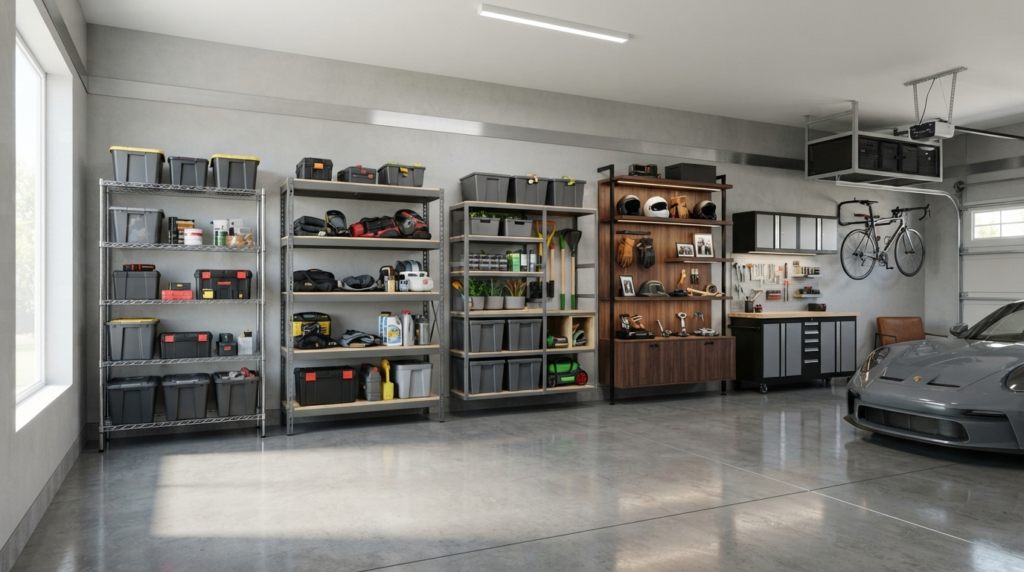
Garages often become the default dumping ground for tools, seasonal decorations, sports gear, and household overflow, which quickly turns a useful space into a cluttered mess. Garage wall shelves offer a practical solution by lifting items off the floor and placing them onto sturdy, wall-mounted storage systems that make use of vertical space most homeowners never think to utilize.
Instead of tripping over boxes or searching through piles for a single tool, everything gets a designated spot that is easy to see and reach. This guide walks through every major aspect of garage wall shelves, from their benefits and types to installation, maintenance, and cost, so you can make a confident decision for your own garage.
Whether you are working with a small single-car garage or a large multi-bay space, the right shelving system can completely change how the area functions. By the end of this guide, you will understand exactly what to look for and how to get the most value from your investment.
Why Garage Wall Shelves Matter

A garage without proper shelving tends to fill up quickly with items scattered across the floor, walls, and workbenches. Garage wall shelves solve this by giving every item a fixed home while keeping the floor completely clear for parking, projects, or movement.
Maximizing Floor Space
Most garages waste enormous amounts of vertical wall space that sits empty from floor to ceiling.
Installing shelves along these walls allows homeowners to store dozens of items without sacrificing an inch of usable floor area. This is especially valuable in smaller garages where every square foot counts toward parking or workspace.
Improved Safety and Reduced Clutter
Loose items on the garage floor create tripping hazards and make it harder to move around safely, particularly when carrying tools or groceries.
By moving belongings onto wall-mounted shelves, the risk of accidents drops significantly, and the entire garage feels more open and controlled. A tidy garage also reduces the chance of items falling or getting damaged.
Better Organization and Accessibility
When everything has a labeled spot on a shelf, finding a specific tool or box becomes a matter of seconds rather than minutes.
Garage wall shelves naturally encourage grouping similar items together, which keeps categories like gardening supplies, automotive tools, and holiday decorations separate and easy to locate whenever needed.
Types of Garage Wall Shelves
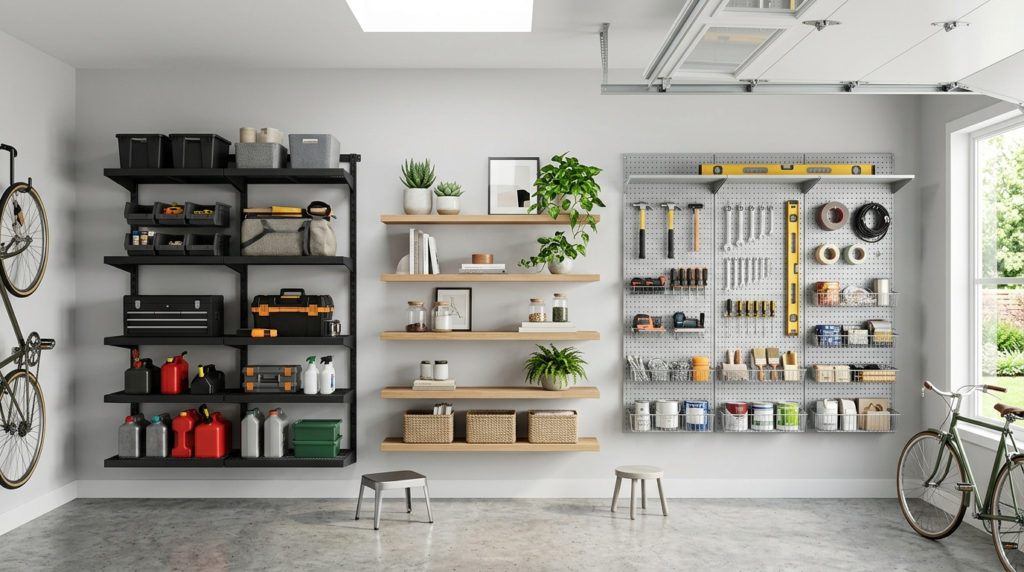
Not all garage wall shelves are built the same way, and choosing the right type depends on what you plan to store and how much weight the shelf needs to hold. Below is an overview of the most common styles available today.
Heavy-Duty Steel Shelves
Steel shelving units are designed for serious storage needs, often supporting several hundred pounds per shelf level.
These are ideal for power tools, paint cans, or bulky equipment that would overwhelm lighter materials. Steel shelves are typically bolted directly into wall studs for maximum stability.
Track and Rail Systems
Track-based systems use a horizontal rail mounted to the wall, with individual shelf brackets or baskets that slide and lock into place along the track.
This design allows for easy rearranging as storage needs change over time. Popular examples include adjustable rail systems that support both shelves and hooks on the same track.
Slatwall Panels
Slatwall panels are grooved boards installed across a wall, allowing shelves, hooks, and bins to be inserted into the slots wherever needed.
This system offers exceptional flexibility since the entire wall becomes a customizable storage surface. Many garage organization companies build entire wall systems around slatwall panels.
Floating and Wire Shelves
Floating shelves rely on hidden brackets for a clean, minimalist look, while wire shelves use an open mesh design that resists dust buildup and allows air circulation around stored items. Both styles work well for lighter storage needs such as small boxes, cleaning supplies, or seasonal decor.
Choosing the Right Garage Wall Shelves
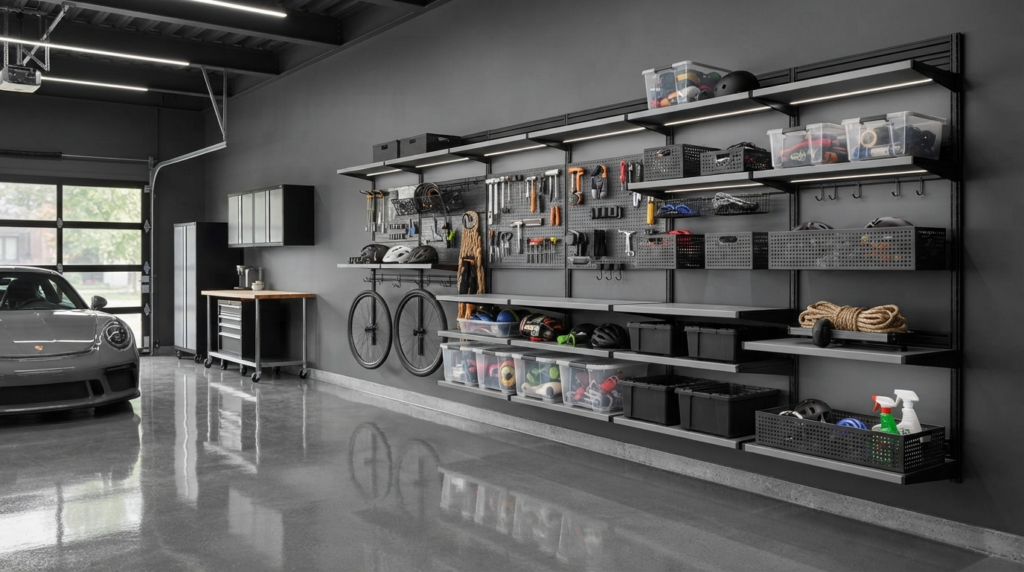
Selecting the best garage wall shelves requires balancing your storage needs against practical factors like wall type, weight capacity, and budget. Taking time to evaluate these factors prevents costly mistakes later on.
Wall Type and Studs
Before purchasing any shelving system, it is important to know whether your garage walls are framed with wood studs, metal studs, or solid concrete block.
This determines which anchors or mounting hardware will actually hold the shelf securely under load, and skipping this step is one of the most common installation errors.
Weight Capacity
Every shelf has a maximum weight rating, and exceeding it can cause sagging or complete failure over time. Heavier items like car batteries, tool chests, or storage totes filled with books require shelves rated for higher capacities, while lighter seasonal items can use standard-duty shelving.
Budget and Style
Garage wall shelves range from simple, affordable brackets to fully customized modular systems, so setting a budget early narrows down the options considerably.
Style also matters for garages that double as workshops or hobby spaces, since a clean, organized look can make the area more enjoyable to work in.
The table below compares common shelf types across key factors to help simplify the decision-making process.
| Shelf Type | Typical Weight Capacity | Approximate Cost Range | Best For |
| Heavy-Duty Steel Shelves | 200–500+ lbs per shelf | $$$ | Tools, equipment, heavy storage |
| Track and Rail Systems | 50–250 lbs per shelf | $$ | Flexible, changing storage needs |
| Slatwall Panels | Varies by accessory | $$$ | Full-wall customizable systems |
| Floating or Wire Shelves | 20–75 lbs per shelf | $ | Light items, decor, small boxes |
Installation Steps
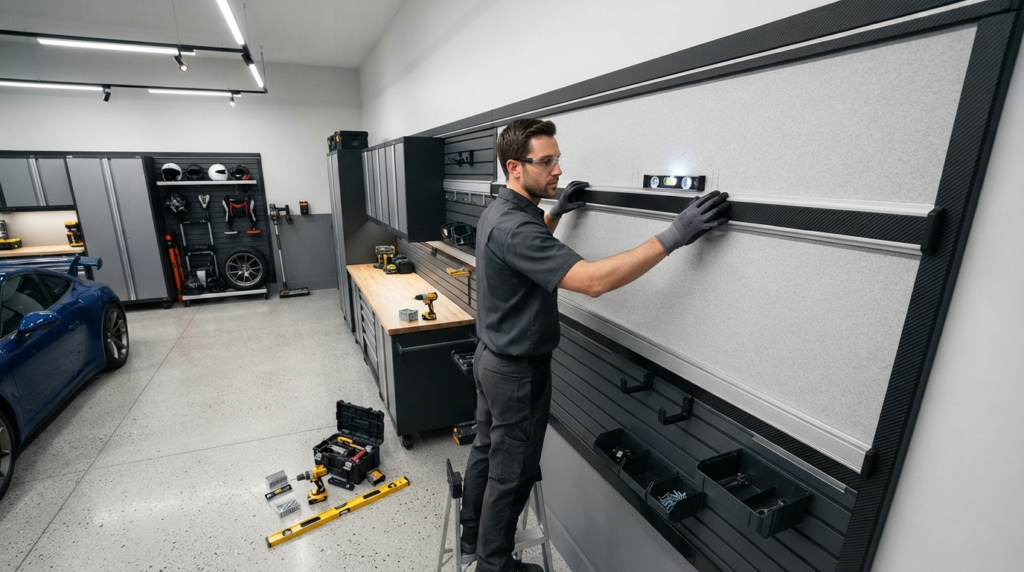
Installing garage wall shelves is a manageable project for most homeowners as long as the correct tools and steps are followed carefully. Rushing through installation is the most common reason shelves fail or come loose later.
Tools You Will Need
A basic installation typically requires a stud finder, drill, level, tape measure, and the mounting hardware included with the shelving kit. Having a helper on hand also makes holding shelves steady during mounting much easier and safer.
Mounting Process
The general installation process follows a consistent sequence regardless of the shelf type chosen:
- Locate and mark wall studs using a stud finder
- Measure and mark the desired shelf height with a level
- Drill pilot holes into the marked stud locations
- Attach mounting brackets or rails securely to the wall
- Slide or bolt the shelf onto the mounted brackets
- Recheck the level and tighten all hardware fully
Safety Checks
After installation, gently test the shelf with light weight before adding heavier items, checking for any wobbling or shifting in the brackets. It is also wise to recheck all hardware after a few weeks of regular use, since initial settling can sometimes loosen bolts slightly.
Organization and Maintenance Tips
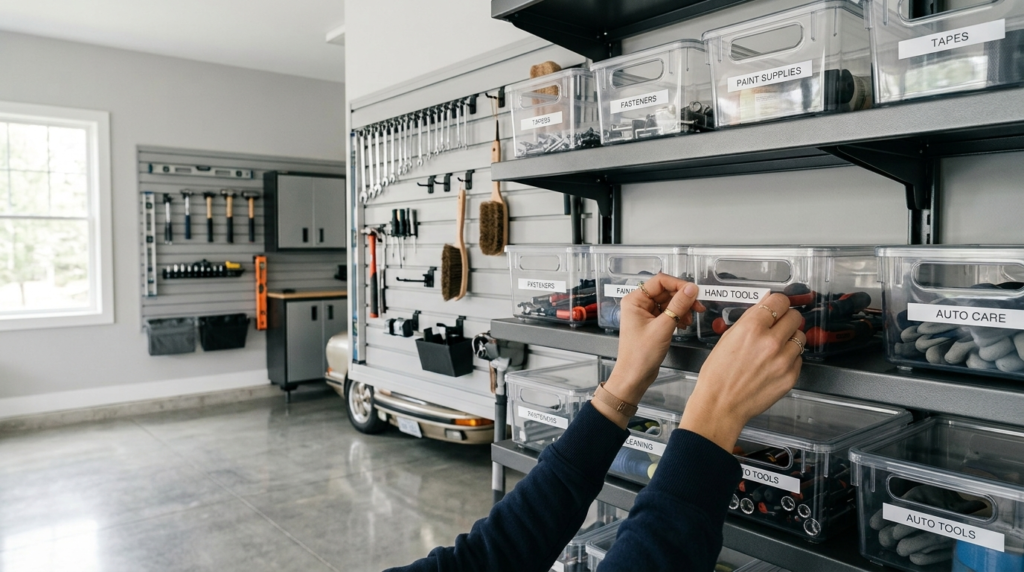
Once garage wall shelves are installed, keeping them organized and well-maintained ensures they continue to function efficiently for years. A little routine effort goes a long way toward preventing clutter from creeping back in.
Labeling and Grouping
Grouping similar items together and labeling bins or boxes makes it far easier to maintain order over time, especially in households where multiple people access the garage. Color-coded labels for categories like automotive, gardening, or seasonal items add another layer of quick visual organization.
Cleaning and Rust Prevention
Metal shelves should be wiped down periodically to remove dust and moisture that can lead to rust, particularly in humid climates or unheated garages. Wooden shelves benefit from occasional inspection for warping, while wire shelves generally require minimal upkeep beyond basic dusting.
Cost Overview
Budgeting for garage wall shelves depends heavily on the scale of the project and the quality of materials chosen. The table below breaks down general pricing tiers.
| Budget Level | What to Expect |
| Budget-Friendly | Basic wire or floating shelves, simple brackets, DIY installation |
| Mid-Range | Steel shelving units or track systems with moderate weight capacity |
| Premium | Full slatwall or modular systems, often professionally installed |
Common Mistakes to Avoid
Several avoidable errors tend to show up repeatedly during garage shelving projects, and being aware of them ahead of time can save both money and frustration.
- Ignoring the manufacturer’s weight limit for a shelf
- Mounting into drywall alone without hitting a stud or proper anchor
- Placing shelves too close to electrical panels or water heaters
- Overcrowding a single shelf instead of distributing weight evenly
Frequently Asked Questions
How much weight can garage wall shelves hold?
Weight capacity varies widely by material and design, ranging from around 20 pounds for light wire shelves to over 500 pounds for heavy-duty steel units anchored into studs.
Can garage wall shelves be installed without hitting studs?
Specialized heavy-duty concrete or masonry anchors can work on solid block walls, but standard drywall alone cannot safely support most garage shelving loads.
What is the best height to mount garage wall shelves?
Most homeowners mount the lowest shelf around waist height for easy access, reserving higher shelves for lighter or less frequently used items.
Are steel shelves better than wire shelves?
Steel shelves generally support more weight and suit heavy tools or equipment, while wire shelves are lighter, more affordable, and better suited to smaller or less frequently used items.
Conclusion
Garage wall shelves offer one of the most effective ways to reclaim floor space, improve safety, and bring lasting order to a garage.
By choosing the right shelf type, respecting weight limits, and installing carefully into proper wall supports, homeowners can build a storage system that stays reliable for years. A well-organized garage ultimately saves time, protects belongings, and makes the entire space far more enjoyable to use.
Related Articles
Interior Design Styles: A Complete Guide to Finding Your Perfect Look
Interior Design Decorating Styles: The Complete 2026 Guide
Farmhouse Kitchen Decor: Complete Guide for a Cozy Kitchen
Kitchen Island Decor : A Complete Styling Guide for Every Home