 homeofdecor.online
Catholic home decor is the practice of shaping your living space so it quietly reflects your faith and draws your mind back to God throughout the day. It goes beyond a single crucifix near the door; it touches every room, from the entryway to the bedroom, reminding your family of what matters most.
A well-decorated Catholic home does not need to look like a chapel, since it can stay warm, modern, and personal while still carrying real spiritual meaning. Many people are unsure where to start, or which items are truly essential versus simply decorative.
This guide walks through practical, room-by-room ideas, seasonal decorating tips, and budget-friendly options anyone can use. By the end, you will know exactly how to bring catholic home decor into your space in a way that feels natural rather than forced.
What Is Catholic Home Decor
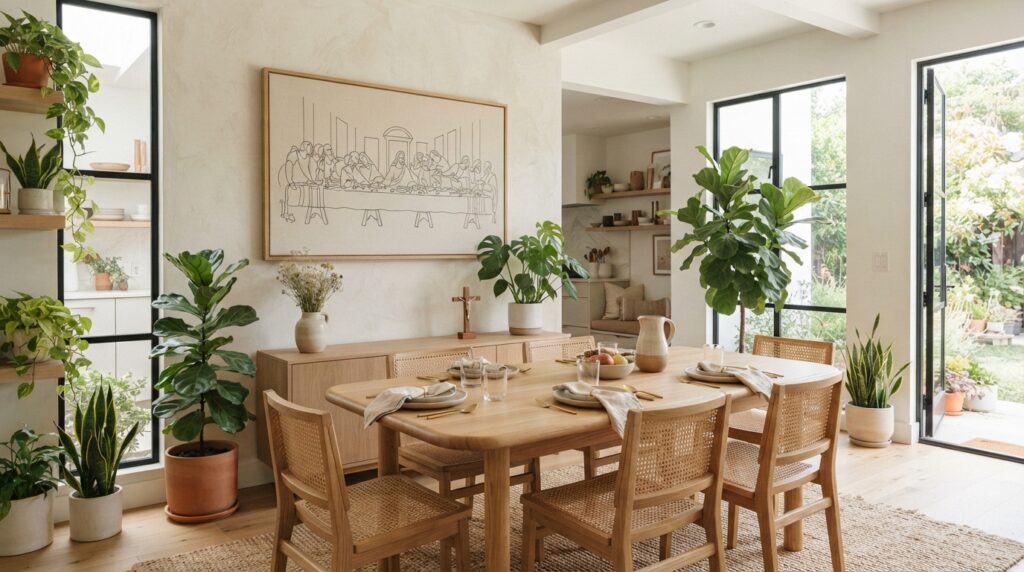
Catholic home decor refers to any decorative choice, whether art, statues, textiles, or the arrangement of a room, that reflects the beliefs and traditions of the Catholic faith. It is rooted in the idea that a home can function as a domestic church, a smaller and more personal space of worship that supports the wider life of the parish.
This does not mean covering every wall with religious imagery, since a few well-placed and meaningful pieces often communicate faith more powerfully than an overwhelming display. The real goal of catholic home decor is to create small, daily reminders that lead naturally to prayer, gratitude, and reflection, rather than to impress visitors with elaborate decoration.
Essential Catholic Decor Items for Every Home
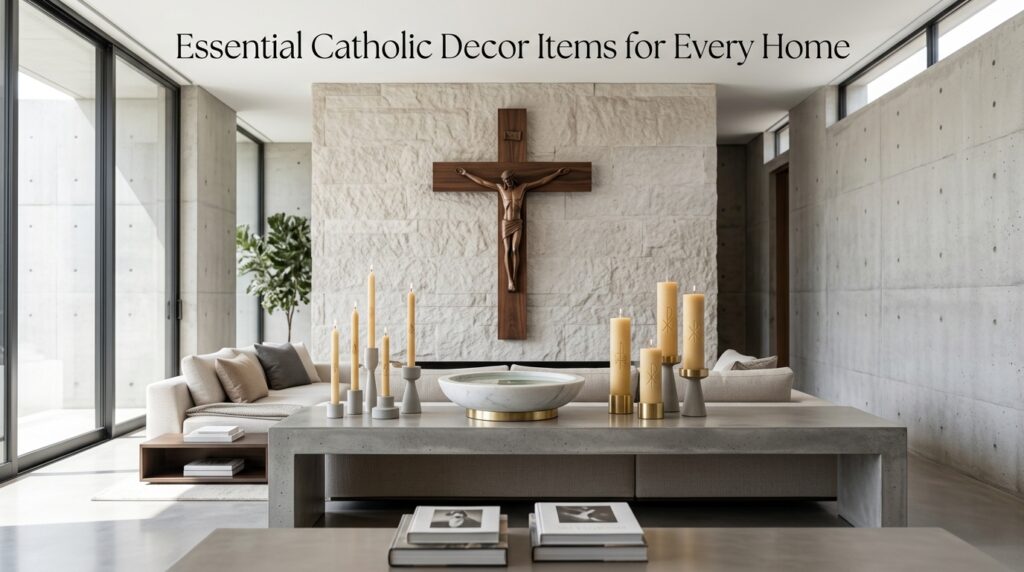
Before decorating room by room, it helps to know the handful of items that form the foundation of catholic home decor. These pieces carry the most spiritual significance and are usually the first additions any Catholic household makes.
The Crucifix
A crucifix, showing the body of Christ on the cross, is often considered the single most important piece of catholic home decor because it visibly marks a home as Catholic. It differs from a plain cross, since the image of Christ’s sacrifice serves as a daily reminder of His suffering and love. Most families place it near the front entrance, above a bed, or in a shared living space where it will be seen often.
Sacred Images and Icons
Images of the Holy Family, Mary, and the saints add warmth and personal meaning to a room while quietly teaching the faith to anyone who sees them.
Choosing icons connected to a family member’s patron saint, or a saint someone particularly admires, makes the decor feel personal rather than generic. These images work well in hallways, home offices, or above a mantel, where they will be noticed throughout the day.
Rosary and Prayer Tools
Keeping a rosary visible, rather than tucked away in a drawer, makes it far more likely to actually be picked up for daily prayer. A simple rosary hook near a nightstand or prayer corner turns a spiritual tool into a functional piece of catholic home decor.
Prayer books, scapulars, and holy cards can be displayed the same way, keeping everyday faith practices within easy reach.
Creating a Home Prayer Corner
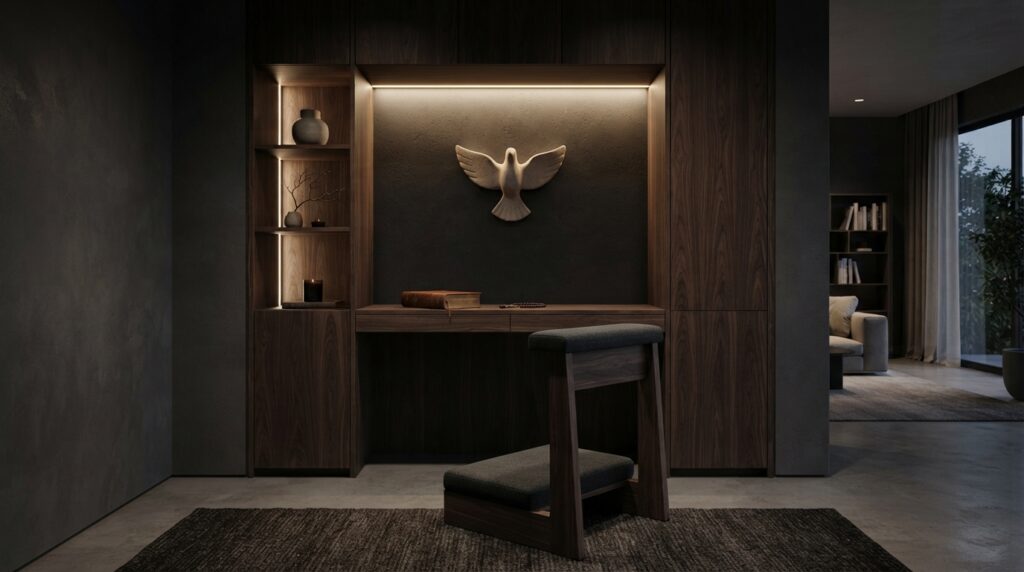
A dedicated prayer corner gives catholic home decor a clear focal point and gives the household an actual place to pause and pray. It does not require extra square footage, since most families build one using a corner, shelf, or small table they already own.
Choosing the Right Location
The best spot for a prayer corner is a quiet area with natural light, away from heavy foot traffic or television noise.
A bedroom corner, an unused hallway nook, or a windowsill in a study all work well for this purpose. The key is consistency, since the same spot used regularly becomes a habit-forming cue for prayer.
What to Include in the Space
A basic prayer corner needs only a small table or shelf, a crucifix, a candle, and an image of a favorite saint or the Blessed Mother.
Adding a rosary, a Bible, or a prayer journal turns the space into a functional tool rather than pure decoration. Keeping the arrangement simple prevents the corner from feeling cluttered or overwhelming.
Room-by-Room Catholic Decor Ideas
Catholic home decor works best when it is spread naturally through the house instead of concentrated in one room. The following room-specific ideas make it easier to decide where each item belongs.
Entryway
The entryway sets the tone for the rest of the home, making it an ideal spot for a small holy water font near the door.
Guests and family members can bless themselves on the way in or out, turning a daily habit into a spiritual practice. A small crucifix or welcome blessing plaque nearby reinforces the sense of entering a faith-filled space.
Living Room
Since the living room sees the most daily use, it is often the best place for the home’s primary crucifix or a larger piece of sacred art.
Neutral furniture and warm lighting help religious pieces blend naturally into a shared family space. Keeping the display simple, with one or two meaningful pieces, avoids making the room feel cluttered.
Kitchen and Dining Room
A framed meal prayer or an image of the Last Supper near the dining table encourages the family to pause and give thanks before eating together.
Since this room is used multiple times a day, small reminders here have a strong daily impact on routine and habit. Even a simple printed prayer card tucked near the table setting works well.
Bedroom
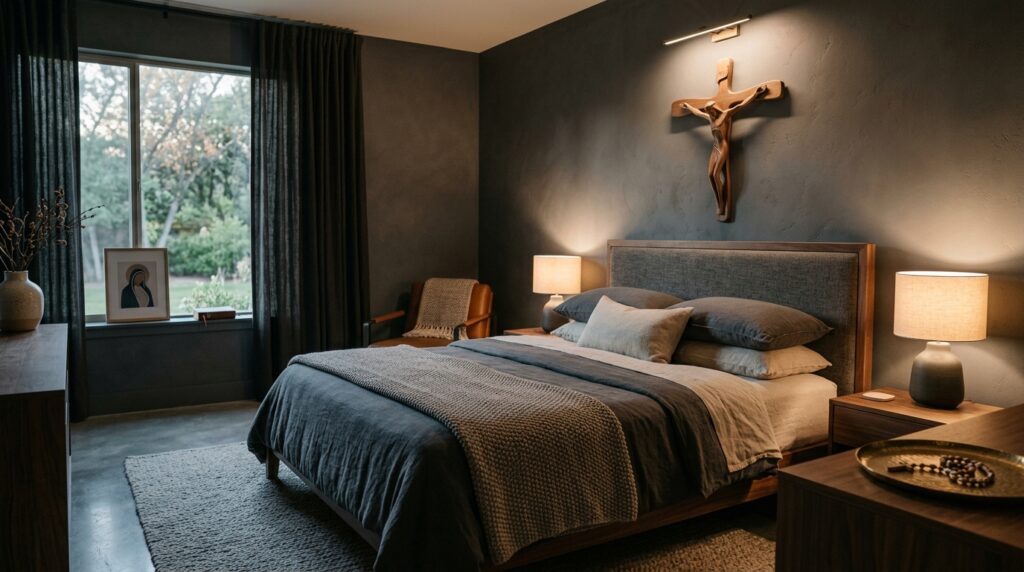
Bedrooms are a natural place for more personal catholic home decor, such as a crucifix above the headboard or a small statue of a favorite saint on a dresser.
This is often where nightly prayers happen, so keeping a rosary or prayer book within reach makes sense. Children’s rooms can include age-appropriate saint images that double as gentle bedtime reminders.
Decorating According to the Liturgical Calendar
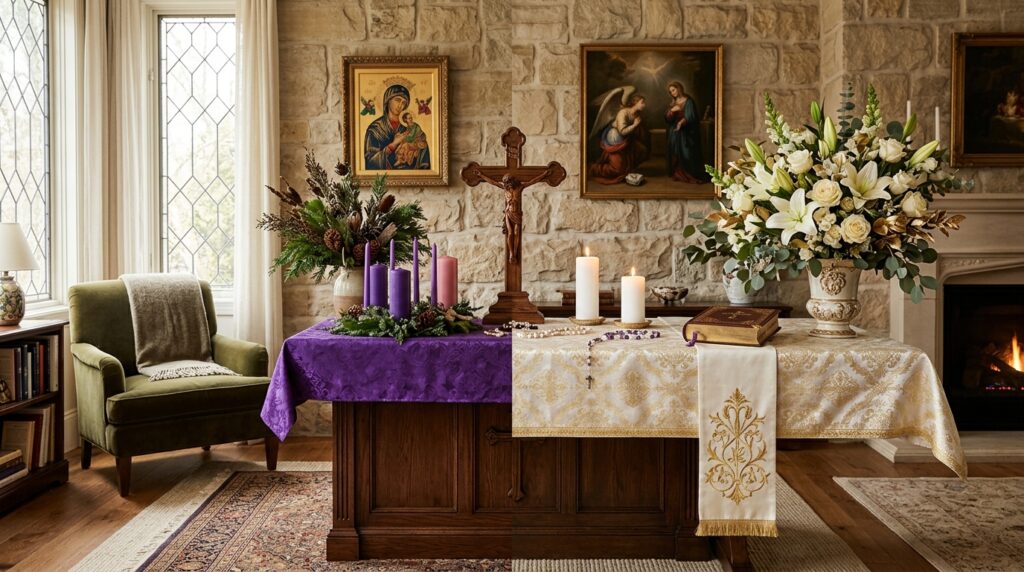
Changing certain decor items with the Church calendar keeps catholic home decor connected to the rhythm of the liturgical year rather than staying static all year round. It also gives families a simple, visual way to mark each season together.
Advent and Christmas
During Advent, an Advent wreath with candles lit weekly builds anticipation leading up to Christmas in a way children especially respond to.
A nativity set, whether traditional or a simplified modern version, becomes the visual centerpiece of the Christmas season. These items are usually stored the rest of the year, which makes their appearance feel more meaningful.
Lent and Easter
Lent calls for simpler, quieter decor, such as purple accents or the removal of decorative extras from the prayer corner.
Easter then shifts the tone entirely, with lighter colors, lilies, and imagery of the Resurrection replacing the starker Lenten decor. This seasonal shift reinforces the meaning of each period rather than treating decor as purely decorative.
Catholic Decor for Different Design Styles
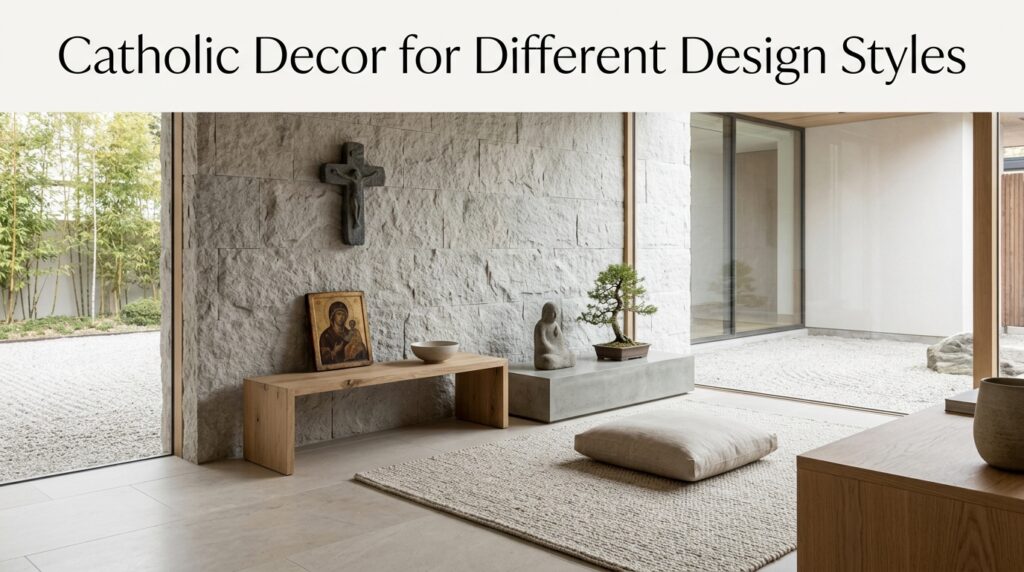
One common concern is that catholic home decor will clash with an existing interior style, but this is rarely the case in practice. The following approaches show how faith-based decor fits comfortably into different aesthetics.
Modern Minimalist Style
In a minimalist home, a single well-crafted crucifix or one abstract Sacred Heart print often works better than several smaller pieces scattered around a room.
Neutral frames, natural wood, and muted tones help religious items sit comfortably alongside modern furniture. The goal is quality and intention over quantity, which fits the minimalist philosophy naturally.
Traditional and Farmhouse Style
Farmhouse and traditional interiors tend to embrace fuller catholic home decor, including carved wooden statues, vintage-style icons, and warmer color palettes.
Distressed wood shelves or rustic frames work especially well for displaying saints or family Bibles in these settings. This style allows for a slightly layered display without feeling out of place.
Budget-Friendly Catholic Home Decor Ideas
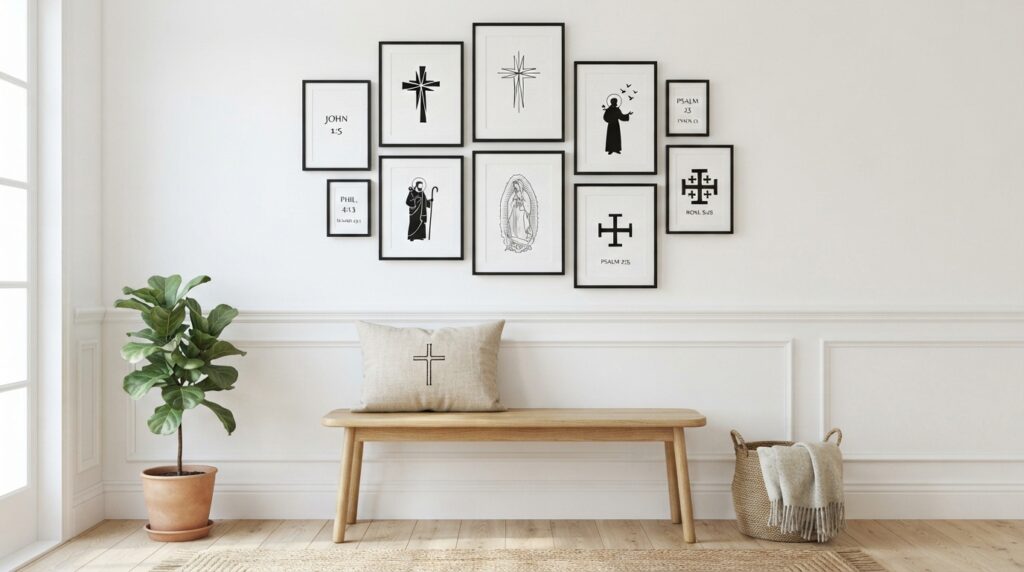
Building a faith-filled home does not require a large budget, since many of the most meaningful catholic home decor pieces are inexpensive or entirely free to create.
Printable scripture art, a hand-painted rosary hook, or a thrifted statue cleaned up with a coat of paint can look just as intentional as store-bought pieces. The table below breaks down a few low-cost options by approximate price range.
| Item | Approx Cost | Placement Idea |
| Printable scripture or prayer art | Free to $10 | Kitchen, hallway, home office |
| Basic rosary wall hook | $8 to $15 | Bedroom or prayer corner |
| Small holy water font | $10 to $20 | Entryway |
| Thrifted saint statue, repainted | $5 to $15 | Living room shelf or mantel |
| Simple wooden crucifix | $15 to $30 | Living room or bedroom |
Starting with two or three of these items is usually enough to establish a meaningful prayer corner without overspending, and more pieces can be added gradually over time.
Common Mistakes to Avoid
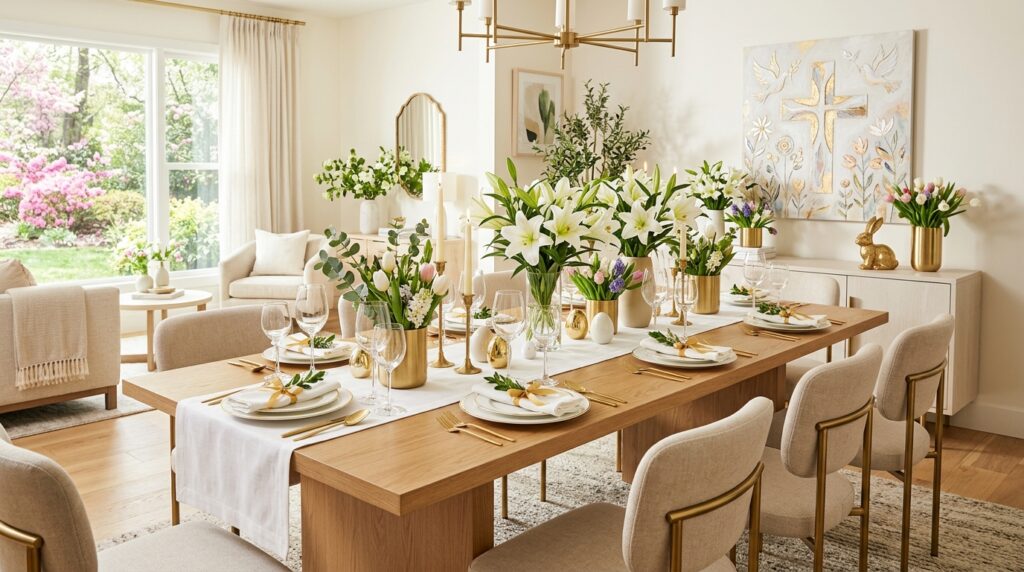
A few habits tend to undermine otherwise good catholic home decor. Overcrowding a single wall or shelf with too many religious items can make a space feel cluttered rather than sacred, so it is usually better to choose fewer, more meaningful pieces.
Buying decor that clashes sharply with the rest of the home’s style can also make it feel disconnected, which is why matching materials and tones to existing furniture matters.
Treating certain items as purely decorative, such as leaving a rosary as an unused wall ornament, misses the point of catholic home decor, which is meant to support an active prayer life rather than just fill space.
Frequently Asked Questions
Where should a crucifix be placed in a Catholic home?
Most families place the crucifix near the main entrance, in the living room, or above the bed, since these are spots seen daily. The exact placement matters less than choosing a spot where it will actually be noticed.
Do items used in catholic home decor need to be blessed?
Blessing is traditional and adds meaning, but it is not strictly required for the item to hold spiritual value. A local priest can bless items like crucifixes, statues, or rosaries during or after a regular parish visit.
Can catholic home decor fit a modern or minimalist home?
Yes, a single well-chosen piece, such as one crucifix or one sacred image, usually fits modern interiors better than several smaller items. Simplicity and intentional placement matter more than the quantity of decor used.
How do I start a prayer corner in a small apartment?
A shelf, windowsill, or even a small tray on a side table is enough space to begin, so square footage is rarely the real obstacle. Starting with a crucifix, a candle, and one image is usually sufficient.
Conclusion
Catholic home decor does not require a large budget, a specific interior style, or an entire room dedicated to faith. Small, intentional choices, such as a crucifix by the door, a rosary within reach, or a nativity set each December, are usually enough to shape a home around prayer and reflection. Starting with one or two pieces and building gradually tends to work better than trying to decorate every room at once.
Related Articles
Over Kitchen Cabinet Decorating Ideas: 40+ Budget to Designer Tips (2026)
Kitchen Counter Decor: Ideas by Style, Budget & Kitchen Size
Decor — A Complete, No-Fluff Guide for Every Room
Decor Steals : Affordable Farmhouse & Vintage Home Decor Deals