 homeofdecor.online
Decorating a home does not have to feel confusing or expensive, yet most guides make it seem that way. This article breaks decor down into simple, practical steps that anyone can follow, regardless of budget or experience. You will learn how to find your personal decor style, understand the trends worth following this year, and apply color and lighting basics that most guides skip entirely.
Every room in your home, from the living room to a small apartment corner, is covered with realistic and achievable ideas. Common decor mistakes are explained clearly so you can avoid them before they happen. By the end, you will have a complete decor plan you can actually use, not just admire.
Understanding Your Decor Style Before You Start
Before buying anything, it helps to know what kind of decor actually feels like home to you. The next two sections explain how to identify your style and blend different styles without creating visual chaos.
Finding Your Decor Style
Most people already lean toward a certain decor style without realizing it, based on the colors and textures they naturally gravitate toward.
Look through a few rooms you admire and note what repeats, such as wood tones, soft fabrics, or clean lines. That pattern is usually a strong hint toward whether you prefer minimalist, farmhouse, boho, or traditional decor.
Mixing Styles the Right Way
Combining two decor styles works best when one style leads and the other adds accents only. For example, a mostly minimalist room can include a few boho textiles without losing its calm feel. The key is consistency in color palette, since mismatched colors cause more visual clutter than mismatched styles ever do.
Decor Trends 2026 Worth Following
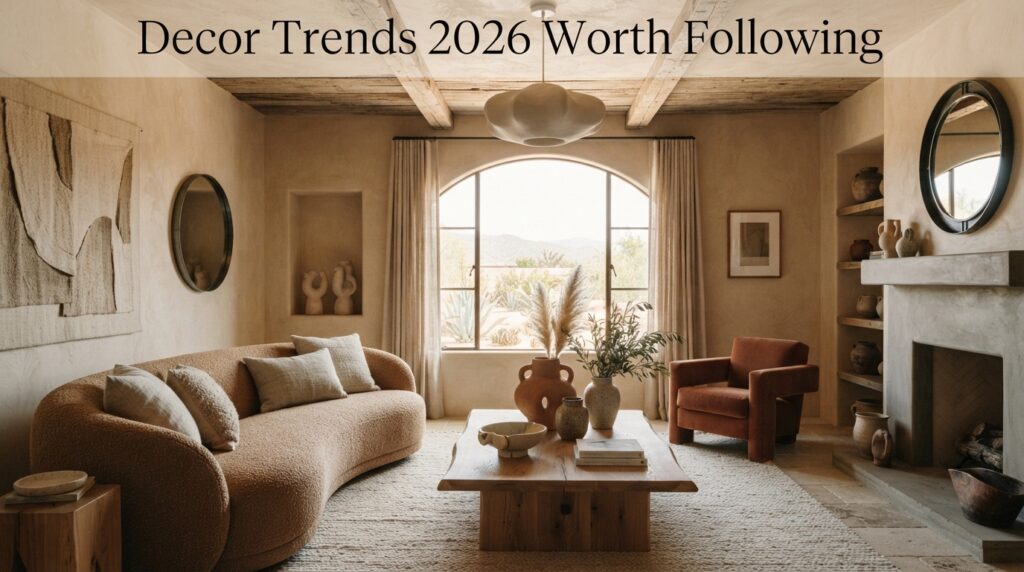
Not every trend deserves a spot in your home, but a few decor trends this year are genuinely practical and long-lasting. The sections below explain the two that matter most.
Warm Minimalism and Quiet Luxury
Warm minimalism replaces cold, empty spaces with soft textures, curved furniture, and warm neutral tones like caramel and taupe.
Quiet luxury decor focuses on well-made, simple pieces rather than loud branding or excessive ornamentation. Together, these two trends create rooms that feel calm, expensive-looking, and comfortable without requiring a large budget.
Nature-Inspired Materials
Materials like smoked wood, linen, cane, and honed stone are dominating decor choices this year because they age well and feel grounded.
These materials also tend to be more durable than trend-driven plastic or fast-furniture alternatives. Choosing even one or two nature-inspired pieces can instantly make a room feel more intentional.
Room-by-Room Decor Ideas
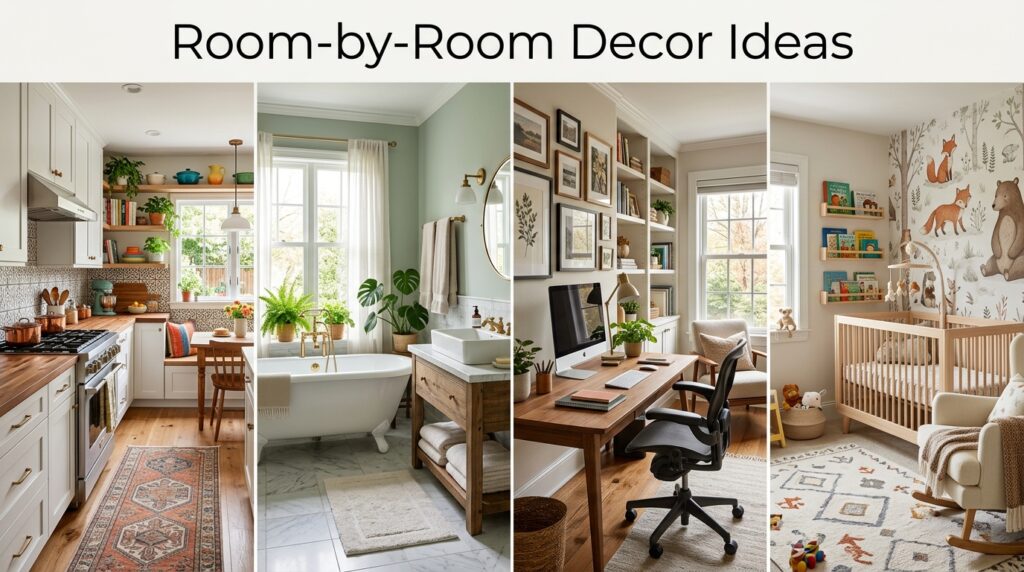
Every room in a home has slightly different decor needs based on how it is used daily. The following breakdown covers the three rooms people ask about most often.
Living Room Decor
The living room usually anchors a home’s decor style since guests see it first and family spends the most time there.
Focus on one large statement piece, such as a sofa or rug, and build the rest of the room’s decor around its color and texture. Avoid overcrowding the space with too many small accessories, since a few well-placed items look more polished than many scattered ones.
Bedroom Decor
Bedroom decor should prioritize comfort and calm over visual impact, since this room is meant for rest.
Soft, layered bedding combined with warm, dim lighting creates a relaxing atmosphere without much effort. Keep surfaces relatively clear, since a cluttered nightstand or dresser can make even a beautifully decorated bedroom feel chaotic.
Kitchen and Small Space Decor
Kitchen decor works best when function and style overlap, such as open shelving that displays attractive dishware.
In small apartments or compact rooms, decor should rely on vertical space and multi-purpose furniture to avoid feeling cramped. Mirrors and light colors also help small spaces feel larger without any structural changes.
Budget-Friendly Decor Ideas
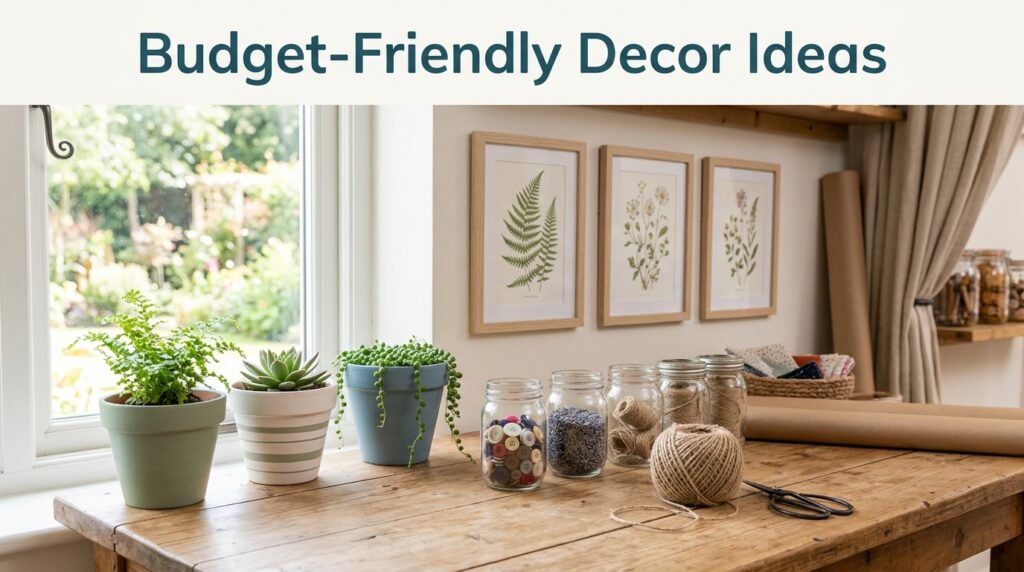
Good decor does not require a large budget, only smart prioritization of where money is spent. The two sections below explain how to save without sacrificing quality.
Affordable Decor Wins
Small decor changes like new cushion covers, a fresh coat of paint, or updated lighting fixtures can transform a room for very little money.
These low-cost swaps are especially useful when you are testing a new decor style before committing to bigger purchases. Prioritizing one impactful change at a time also prevents decor fatigue from doing too much at once.
DIY Versus Buying
DIY decor projects work well for simple items like frames, shelves, or painted accents, but complex furniture is often better bought ready-made.
The time and material cost of a failed DIY project can end up higher than simply purchasing the item. A good rule is to DIY anything decorative and buy anything structural or load-bearing.
Color and Lighting Basics
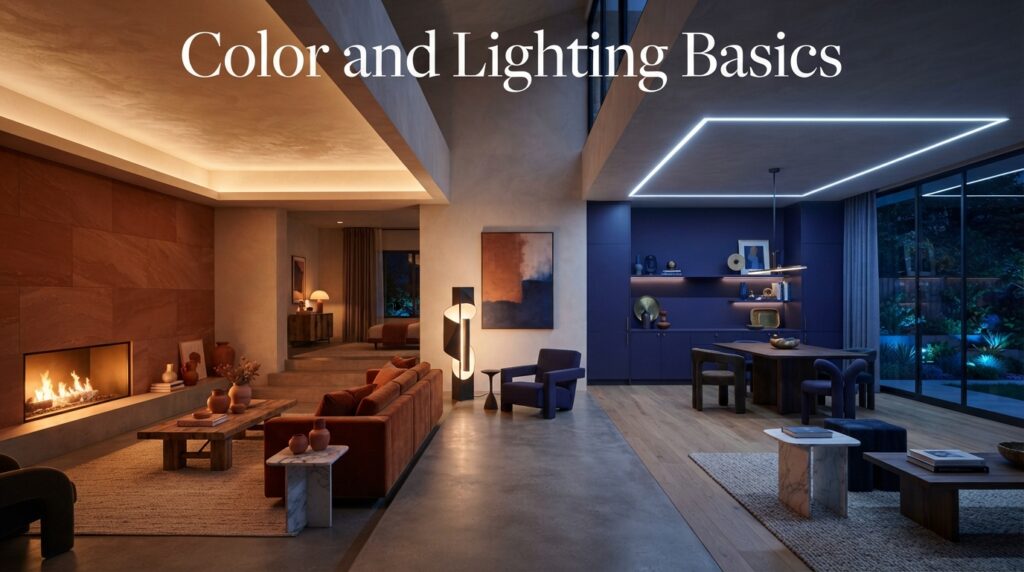
Color and lighting influence how a decor scheme feels far more than most people realize. The next two sections cover simple rules for getting both right.
Choosing a Color Palette
A reliable decor color rule is to pick three tones only: one dominant neutral, one secondary color, and one accent shade. This keeps a room’s decor cohesive even as furniture and accessories change over time. Testing paint or fabric samples in natural light before committing avoids costly color mistakes later.
Layering Your Lighting
Good decor lighting uses three layers: ambient light for overall brightness, task light for specific activities, and accent light for mood.
Relying on a single overhead light is one of the most common decor mistakes, since it flattens the room visually. Adding even one warm lamp can noticeably improve how finished a space feels.
Common Decor Mistakes to Avoid
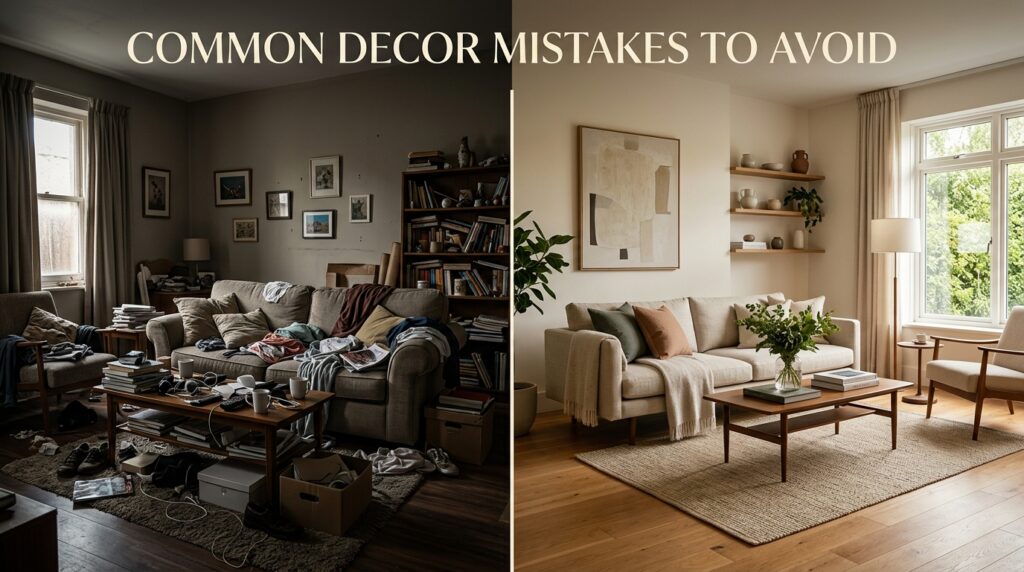
Small decor mistakes are often the difference between a room that feels finished and one that feels unfinished. The two most frequent issues are explained below.
Over-Decorating and Under-Decorating
Over-decorating fills every surface with objects until the room feels cluttered and busy rather than styled.
Under-decorating leaves a room feeling incomplete, with bare walls and empty corners that lack warmth. The goal of good decor is balance, where each item earns its place rather than filling space for its own sake.
Ignoring Scale and Proportion
Furniture and decor items that are too large or too small for a room instantly throw off its visual balance. A tiny rug under a large sofa, for instance, makes the whole room look poorly planned. Measuring your space before buying decor pieces prevents this common and costly mistake.
Decor Shopping Guide
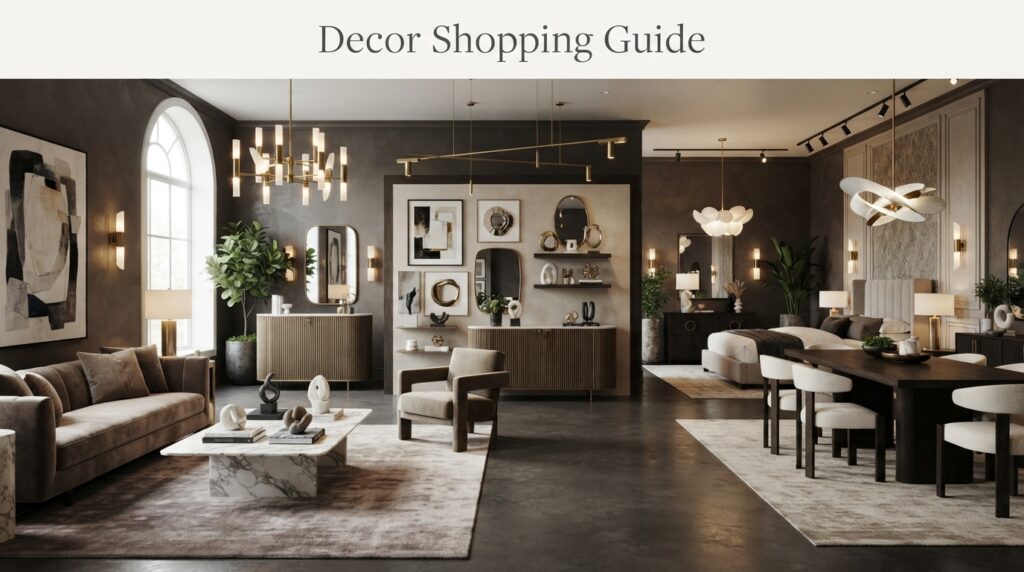
Knowing where to shop for decor items depends on your budget tier and how long you expect the piece to last. The table below breaks this down clearly.
| Budget Tier | Best For | Example Items |
| Budget Stores | Frequent style changes, renters | Cushions, small decor accents, wall art |
| Mid-Range Stores | Balanced quality and cost | Rugs, lighting fixtures, curtains |
| Investment Pieces | Long-term, daily-use furniture | Sofas, dining tables, statement chairs |
Spending more on investment pieces that get daily use, while keeping smaller decor accents affordable, is generally the smartest way to shop.
Seasonal Decor Refresh
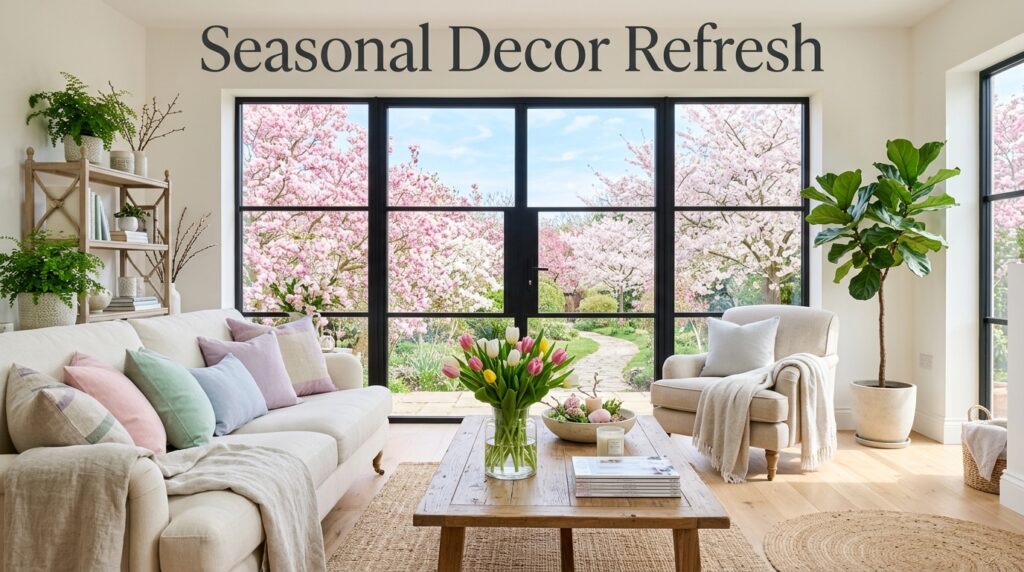
Refreshing your home’s decor each season does not require a full redesign, only a few thoughtful swaps.
Rotating textiles, such as switching linen for wool cushion covers, updates the feel of a room instantly. Adding or removing a few seasonal accents, like candles or plants, keeps decor feeling current throughout the year.
A simple seasonal decor checklist can include the following items:
- Swap lightweight textiles for warmer ones in colder months
- Rotate a few decor accessories rather than replacing everything
- Refresh plants or greenery to match the season
- Adjust lighting warmth based on daylight changes
FAQs
How do I start decorating my home from scratch?
Start by identifying your preferred decor style and choosing a simple three-color palette before buying any furniture or accessories.
What decor style is trending in 2026?
Warm minimalism and quiet luxury are the leading decor trends this year, both focused on comfort over excess.
How much should I budget for home decor?
Budgets vary widely, but prioritizing investment pieces like sofas while keeping smaller decor items affordable offers the best long-term value.
Conclusion
Good decor comes from consistent, intentional choices rather than expensive purchases or trend-chasing. Established decor blogs like Apartment Therapy and Better Homes & Gardens cover broad advice well, but often lack the clear, mistake-focused structure used in this guide.
By understanding your style, applying simple color and lighting rules, and avoiding common decor mistakes, you can create a home that feels complete without unnecessary spending.
Related Articles
How to Style a Modern Apartment: The Complete Guide
Custom Home Decor: Unique Personalized Pieces for Every Room (2026 Guide)
Shiny Brite Decorations: Complete Guide to Vintage & Modern Ornaments
Art Wall Home Decor: A Complete Guide to Transform Your Space
Decorations Guide 2026: Themed Kits vs Mix-and-Match & Top Trends