 homeofdecor.online
Learning how to style a modern apartment is less about following one strict look and more about making a few consistent choices across every room. Modern styling leans on clean furniture lines, a calm color palette, thoughtful lighting, and decor that is chosen with intention rather than filled in randomly.
The good news is that this approach works whether the apartment is large or compact, owned or rented. None of it requires structural changes, expensive renovations, or a designer’s budget to get right. What it does require is a plan, and that is exactly what this guide walks through, section by section.
What Modern Apartment Styling Actually Means
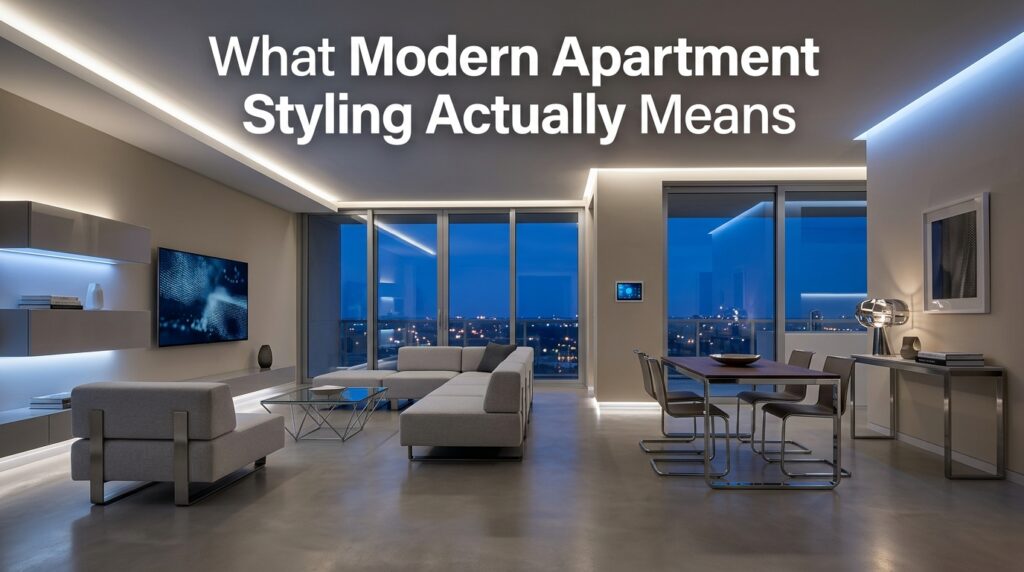
Before picking colors or furniture, it helps to understand what “modern” really refers to as a style, since it is often confused with related terms. The next few sections break down the definition, compare it to similar styles, and outline the basic planning steps to take before spending any money.
Defining the Modern Style
Modern apartment design is built around simplicity with purpose rather than decoration for its own sake.
It favors straight or gently curved lines, open and clutter-free layouts, and furniture that serves a clear function in the room. The result is a space that feels bigger, calmer, and easier to live in day to day.
Modern vs Minimalist vs Contemporary
These three terms overlap but are not identical, and mixing them up often leads to a confused final look. Minimalist styling strips a room down to only the essentials, while contemporary design simply reflects whatever is currently trending at a given time.
Modern styling sits between the two, using clean lines and function-first furniture while still allowing warmth through texture, color, and a few personal touches.
Planning Before You Start
Every apartment styling project should begin with three quick checks rather than jumping straight into shopping.
First, look at the room’s natural light and existing layout, since both will shape which colors and furniture placements actually work. Second, set a realistic budget with clear splurge and save categories, and third, choose one style anchor, such as warm minimalism or Scandi-modern, to keep every later decision consistent.
Choosing a Color Palette That Works
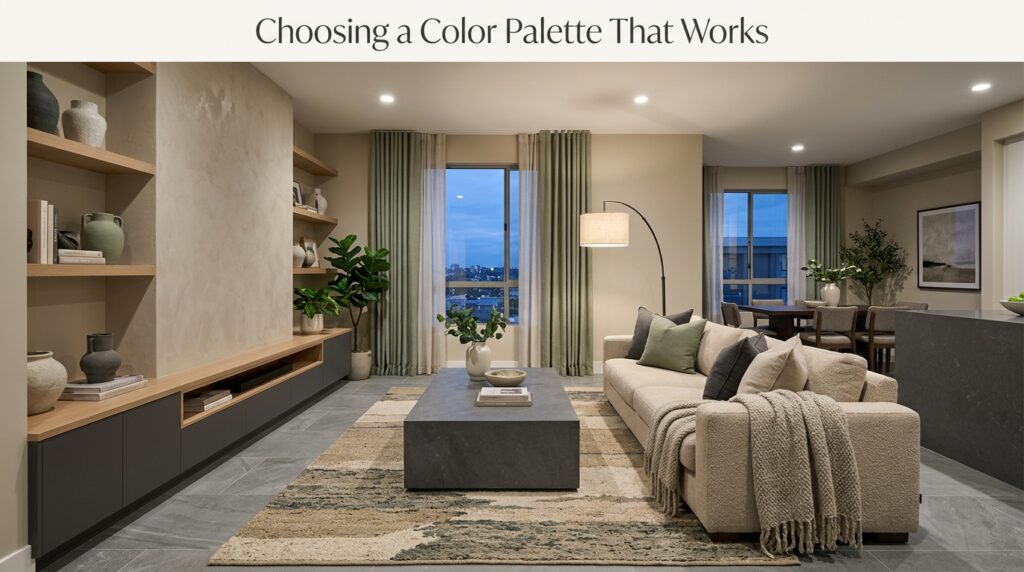
Color is usually the fastest way to make an apartment feel either modern or mismatched, so it deserves a clear system rather than guesswork. The sections below cover a simple ratio rule, current trending tones, and how to balance them across a room.
The 60-30-10 Rule
A dependable way to avoid a chaotic color scheme is the 60-30-10 ratio, where 60 percent of the room uses a dominant neutral, 30 percent uses a secondary supporting tone, and 10 percent is reserved for a bold accent.
This keeps the eye moving naturally through the space instead of being pulled in too many directions at once. It also makes shopping easier, since every new item can be checked against one of these three categories before it is bought.
Trending Apartment Palettes
Warm, earthy tones have replaced the stark white-and-grey palettes that dominated modern interiors for years. Shades like warm taupe, sage green, soft clay, and dusty rose now define a large share of modern apartment interiors because they feel calm without feeling cold. The table below shows how these tones typically pair together in a single room.
| Dominant Wall Tone | Accent Color | Neutral Support |
| Warm taupe | Terracotta | Cream |
| Sage green | Rust orange | Off-white |
| Soft clay | Deep forest green | Sand |
Balancing Dominant and Accent Tones
Once a palette is chosen, apply it consistently rather than switching combinations from room to room. Use the dominant wall tone as the backdrop, the accent color on a few statement pieces like a chair or artwork, and the neutral tone across soft furnishings such as cushions or curtains. This single rule is what most often separates a styled apartment from one that simply has matching paint.
Furniture Selection and Layout
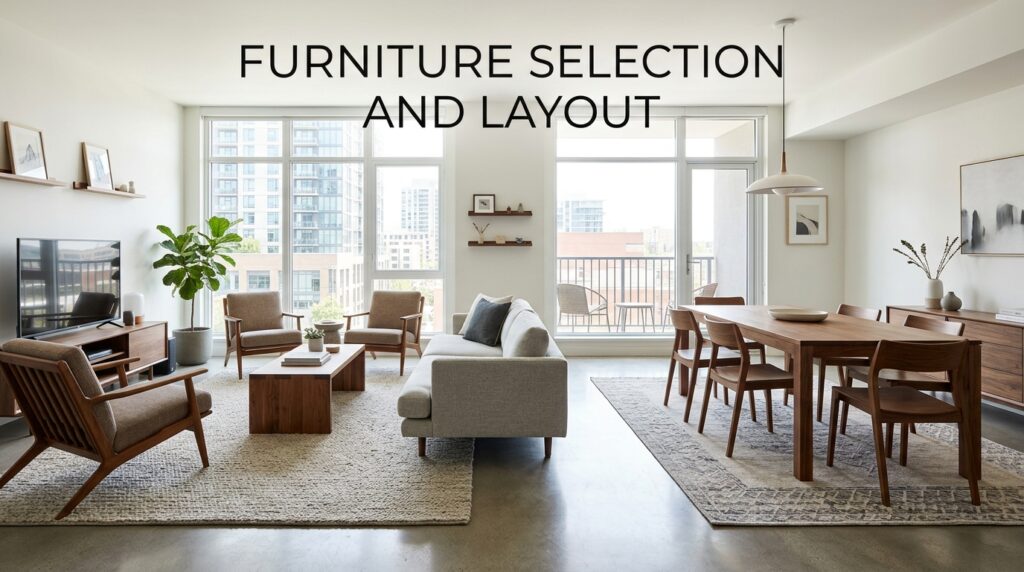
Furniture choices affect both how a modern apartment looks and how well it actually functions day to day, especially in smaller units. The following sections cover shape, multi-purpose design, and how to divide open space without adding walls.
Choosing Clean-Lined, Functional Pieces
Modern furniture avoids heavy carving, excessive tufting, and ornamental detail, favoring simple silhouettes instead. Every piece should also serve a clear purpose in the room rather than sitting there purely as decoration. A slightly curved sofa, a simple wooden dining table, or a low-profile bed frame are all good starting points that fit this approach without looking sparse.
Multi-Purpose Furniture for Small Spaces
In compact apartments, furniture that does more than one job becomes essential rather than optional. Sofa-beds, extendable dining tables, and ottomans with hidden storage all let a small space handle more activities without feeling cramped. This is one of the clearest ways to answer how to style a modern apartment when square footage is genuinely limited.
Zoning Without Building Walls
Open floor plans can start to feel undefined if every zone blends into the next with no visual separation. Placing a distinct rug under the seating area, another under the dining table, and a third in a reading corner creates the sense of separate rooms without any construction. Furniture placement can reinforce this further by angling seating to face inward rather than toward a blank wall.
Lighting and Material Texture
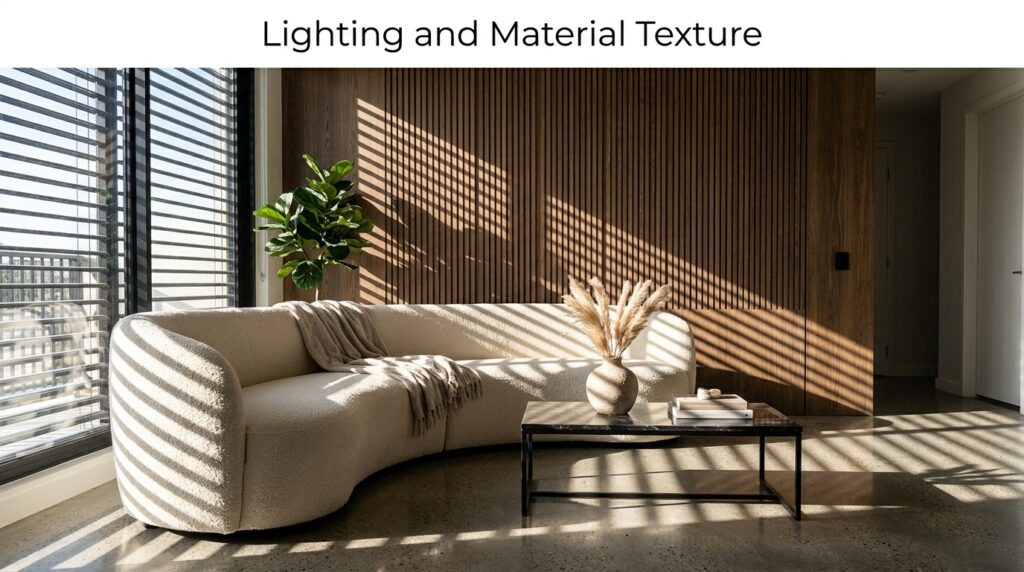
Lighting and texture are often the last things people think about, yet they do more to make a room feel finished than most decor pieces. This section covers layering light sources and mixing materials for depth.
Layering Light Sources
A single overhead light rarely does justice to a modern apartment, since it creates flat, uneven brightness across the room.
Combining ambient lighting from ceiling fixtures, task lighting near work or reading areas, and accent lighting from a floor or table lamp creates depth and mood. This layered approach also makes it easy to adjust the room’s atmosphere depending on the time of day.
Natural Light and Reflective Tricks
Natural light should always be maximized before adding artificial fixtures, since it is the cheapest way to make a space feel open.
Sheer curtains let daylight filter through without sacrificing privacy, while strategically placed mirrors bounce that light deeper into the room. Even a single well-positioned mirror opposite a window can noticeably brighten a dim apartment.
Mixing Materials for Depth
A room built entirely from one material, such as all wood or all metal, tends to feel flat regardless of how well it is arranged.
Combining wood, metal, glass, and soft textiles across furniture and decor gives the eye more to notice and makes the space feel intentionally layered. Raw, slightly uneven finishes are also gaining popularity over perfectly polished surfaces, adding a handmade quality to modern rooms.
Decor and Room-by-Room Application
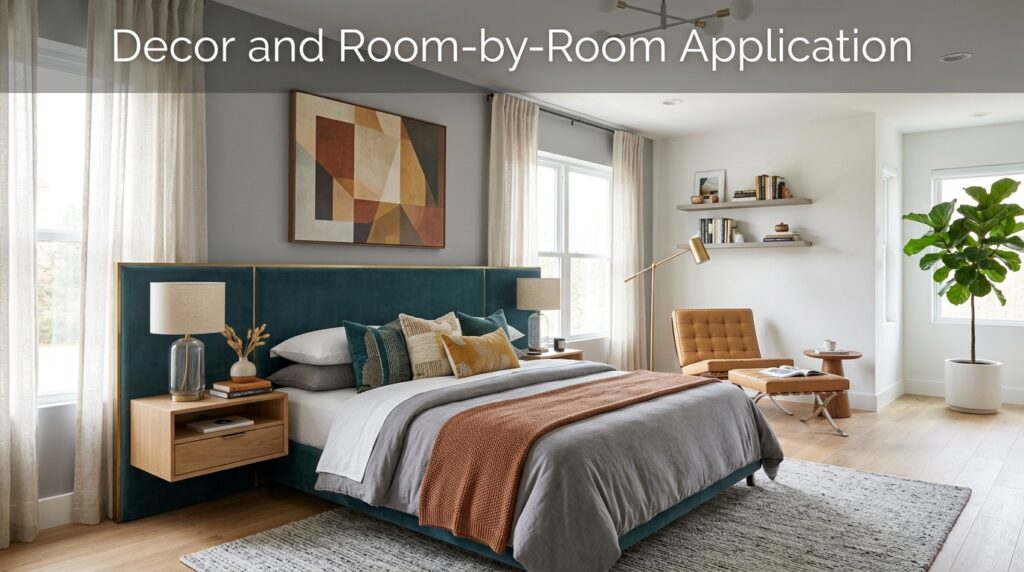
Once the foundation of color, furniture, and lighting is set, decor and room-specific choices bring everything together. The sections below cover a curated approach to accessories and quick guidance for the most-used rooms.
The Curated, Not Cluttered Rule
Modern styling favors a small number of intentional decor pieces over many small scattered items.
One statement art piece, one accent rug, and a few well-placed plants typically do more for a room than a shelf full of small trinkets. Spending slightly more on fewer, better items almost always produces a cleaner, more cohesive result.
Living Room and Bedroom Essentials
The living room benefits most from a clear seating arrangement, one statement lighting fixture, and a single accent rug tying the palette together.
The bedroom should stay calmer than any other room, using layered textiles like a woven throw and soft cushions rather than bold patterns. In both spaces, keeping surfaces mostly clear reinforces the open, breathable feeling modern styling is known for.
Kitchen, Bathroom, and Entryway Touches
Kitchens benefit from handle-less cabinet fronts and a few open shelves, which keep the space feeling connected to the living area rather than closed off.
Bathrooms respond well to matte black or brushed metal fixtures against a light, neutral tile base. The entryway, though small, sets the tone for the whole apartment, so a simple console table and one grounding rug are usually enough.
Small Space and Budget Strategies
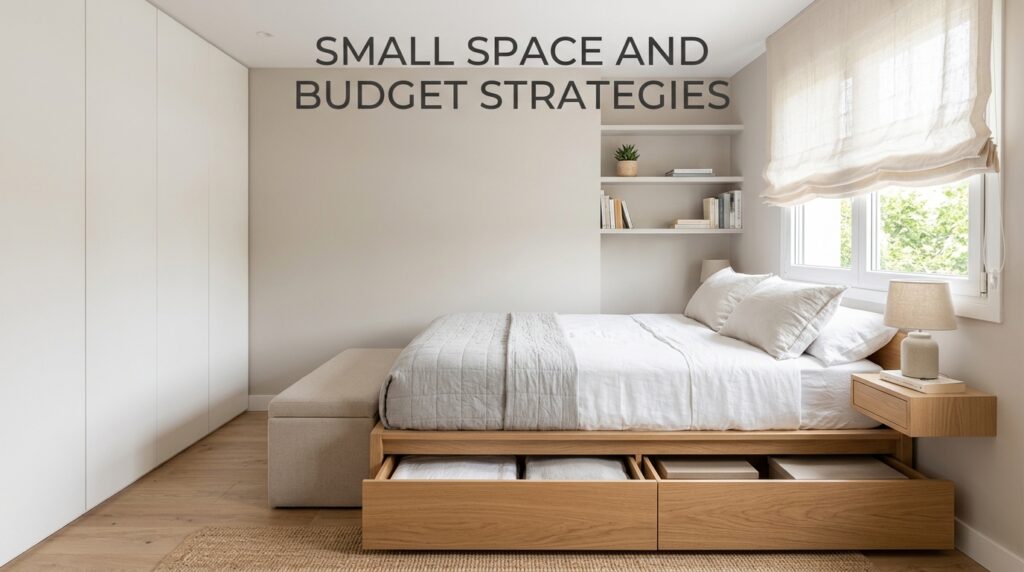
Not every reader is working with a large apartment or an unlimited budget, so this section addresses both constraints directly.
Making a Small Apartment Feel Bigger
Vertical storage, such as tall shelving units, keeps floor space open while still providing plenty of room for belongings. Mirrors and light-colored walls further support this effect by visually pushing the boundaries of the room outward.
Furniture should always be scaled to the room’s actual size rather than chosen purely because it looks appealing in a showroom photo.
Budget-Friendly Swaps That Work
High-impact, low-cost changes include a fresh coat of paint, updated cabinet or door hardware, and new lighting fixtures, all of which transform a room without major spending.
It is worth avoiding cuts on a few key items, particularly the sofa, mattress, and main light fixtures, since these affect daily comfort the most. Mixing in a few vintage or secondhand pieces alongside newer items also adds character while keeping costs down.
Common Mistakes to Avoid
Over-decorating with too many small items is one of the fastest ways to undo an otherwise well-planned modern look. Ignoring scale, such as placing an oversized sofa in a small room, throws off the entire sense of balance.
A final common issue is leaning too far into minimalism, which can leave a space feeling cold rather than calm, so a little warmth through texture and color should always remain.
Quick Styling Checklist
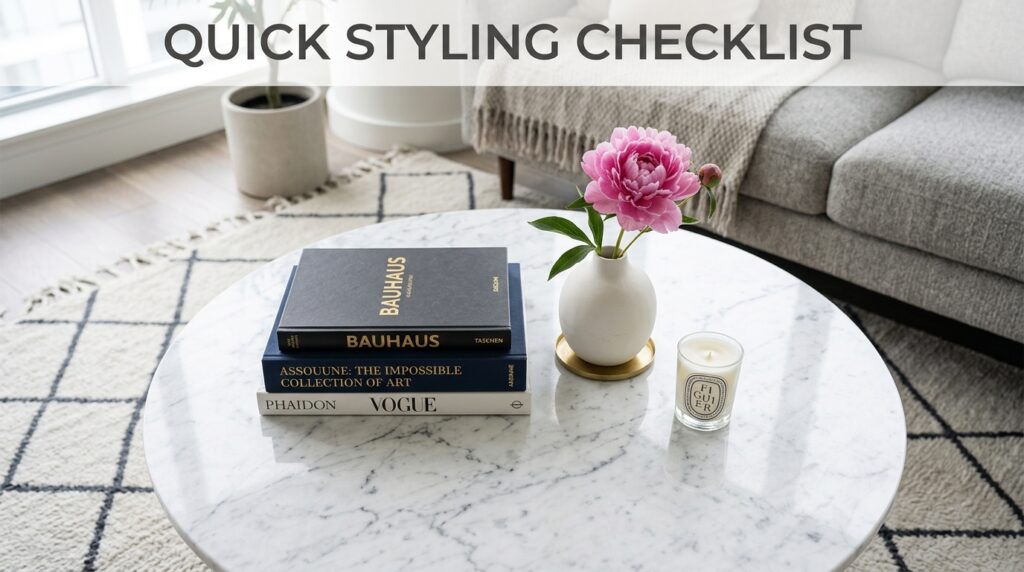
| Category | What to Check |
| Color | One dominant tone, one accent, one neutral applied consistently |
| Furniture | Clean lines, functional purpose, scaled to room size |
| Lighting | Ambient, task, and accent sources layered together |
| Decor | Few intentional pieces rather than many small ones |
| Layout | Zones defined through rugs and furniture placement |
Frequently Asked Questions
What is the difference between modern and minimalist style?
Minimalist design strips a room to bare essentials, while modern design keeps clean lines but allows warmth through color, texture, and a few personal decor choices.
How much does it cost to style a modern apartment?
Costs vary widely, but high-impact items like paint, lighting, and hardware can transform a space affordably, while furniture is usually the largest expense.
Can a rented apartment be styled this way without renovations?
Yes, since most of this guide relies on furniture, textiles, lighting, and paint that landlords typically allow, none of which require permanent changes.
What colors are trending for modern apartments right now?
Warm, earthy tones such as taupe, sage green, terracotta, and soft clay are currently more popular than the stark white-and-grey palettes of previous years.
How can a small apartment be made to feel larger?
Vertical storage, mirrors, light wall colors, and correctly scaled furniture are the most effective ways to visually expand a compact space.
Conclusion
Styling a modern apartment comes down to a handful of consistent decisions repeated across every room, not a single expensive purchase or a fixed rulebook. Color ratios, functional furniture, layered lighting, and curated decor work together far more effectively than any one element alone.
Applied consistently, these choices turn any apartment, regardless of size or budget, into a space that feels calm, intentional, and genuinely modern.
Related Articles
Custom Home Decor: Unique Personalized Pieces for Every Room (2026 Guide)
Shiny Brite Decorations: Complete Guide to Vintage & Modern Ornaments
Art Wall Home Decor: A Complete Guide to Transform Your Space
Decorations Guide 2026: Themed Kits vs Mix-and-Match & Top Trends