 homeofdecor.online
A blank living room wall can feel like the hardest part of decorating a home, mostly because there are too many directions to choose from and no clear starting point. The good news is that living room wall decor ideas do not need to be complicated or expensive to make a real difference in how a space feels.
Whether the goal is a cozy family room or a modern entertaining space, the right combination of art, shelves, mirrors, or textures can completely change the mood of a room. This guide breaks the process down into simple, practical sections so anyone can plan their walls with confidence, starting with the basics and moving into styles, budgets, and common mistakes to avoid.
Understanding Your Space First
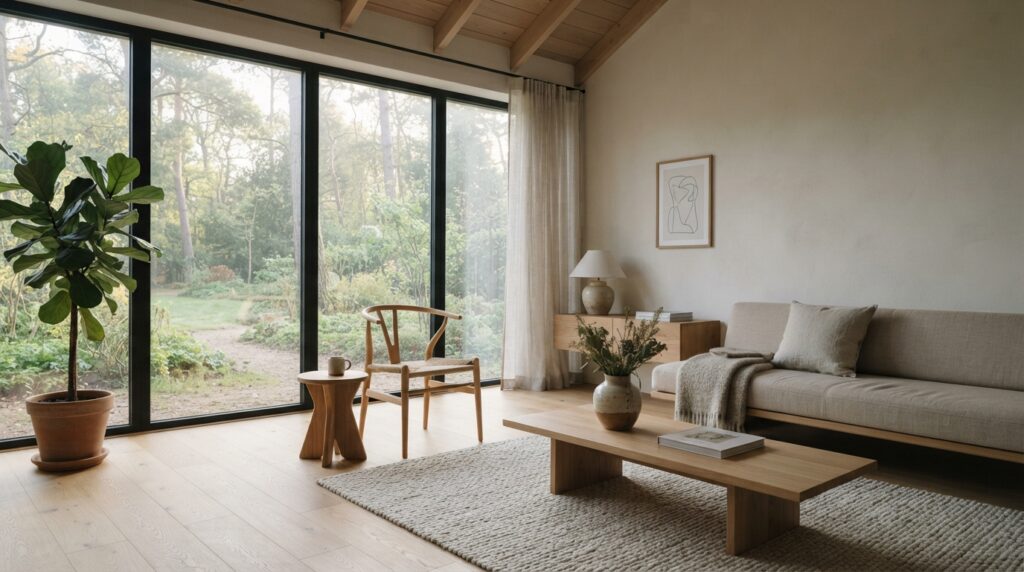
Before picking any decor, it helps to understand the wall itself, since size, light, and furniture all affect what will actually look good once it is hung. Skipping this step is one of the most common reasons wall decor ends up feeling awkward or out of place later.
Assessing Wall Size and Layout
A tall, narrow wall usually calls for vertical elements like a single large piece or a stacked arrangement, while a wide wall often looks better with a horizontal spread of smaller items. Measuring the wall before shopping prevents buying art that is too small and gets lost, or too large and overwhelms the space.
Natural Light and Wall Color
Rooms with strong natural light can handle darker frames, deeper colors, and bold contrasts without feeling heavy. Darker or north-facing rooms usually benefit from lighter frames, reflective surfaces like mirrors, or brighter artwork that adds a sense of openness to the wall.
Balancing Furniture Placement
Wall decor should relate to the furniture below it rather than float independently in the middle of empty space. As a general rule, art or shelving should roughly match the width of the sofa or console table beneath it so the whole arrangement feels intentional rather than random.
Budget-Wise Wall Decor Ideas
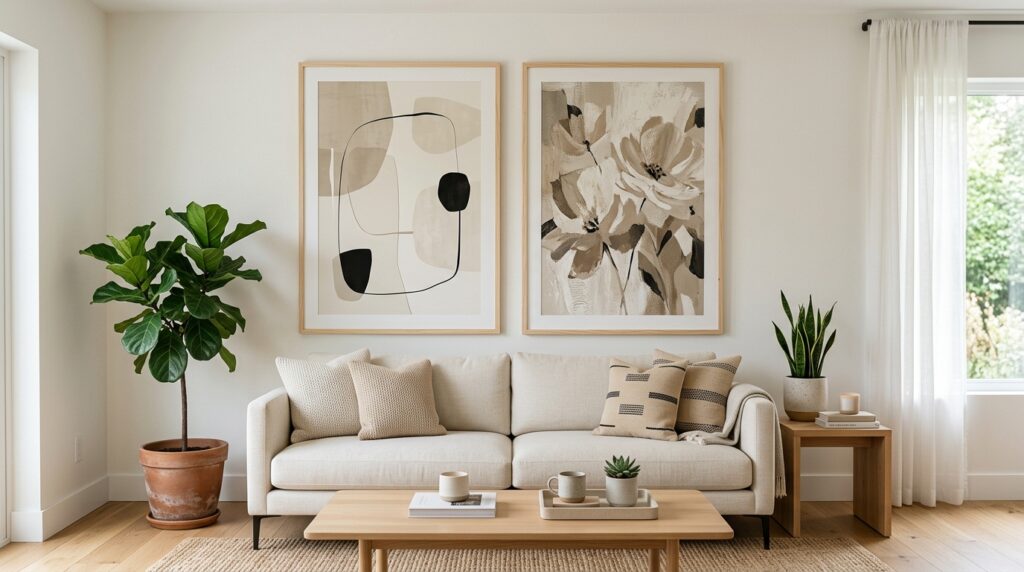
Living room wall decor ideas can fit almost any budget, since the impact often comes from arrangement and thoughtfulness rather than price. The table below breaks down realistic options across three common budget levels.
| Budget Level | Typical Options | Best For |
| Low Budget | Printable art, thrifted frames, DIY canvases, removable decals | Renters, first apartments, quick refreshes |
| Mid-Range | Curated print sets, floating shelves, framed mirrors, woven hangings | Most living rooms needing a balanced upgrade |
| Premium | Custom artwork, gallery installations, built-in lighted niches, statement mirrors | Long-term homes and design-focused spaces |
Low-budget options work well when someone wants flexibility, since printable art and thrifted frames can be swapped out easily without much financial commitment. Mid-range choices strike a balance
between quality and cost, and they tend to be the most popular because they offer a finished look without requiring a full renovation. Premium options are usually chosen by homeowners who plan to stay in a space long-term and want the wall to function as a true design centerpiece rather than a temporary decoration.
Popular Wall Decor Styles
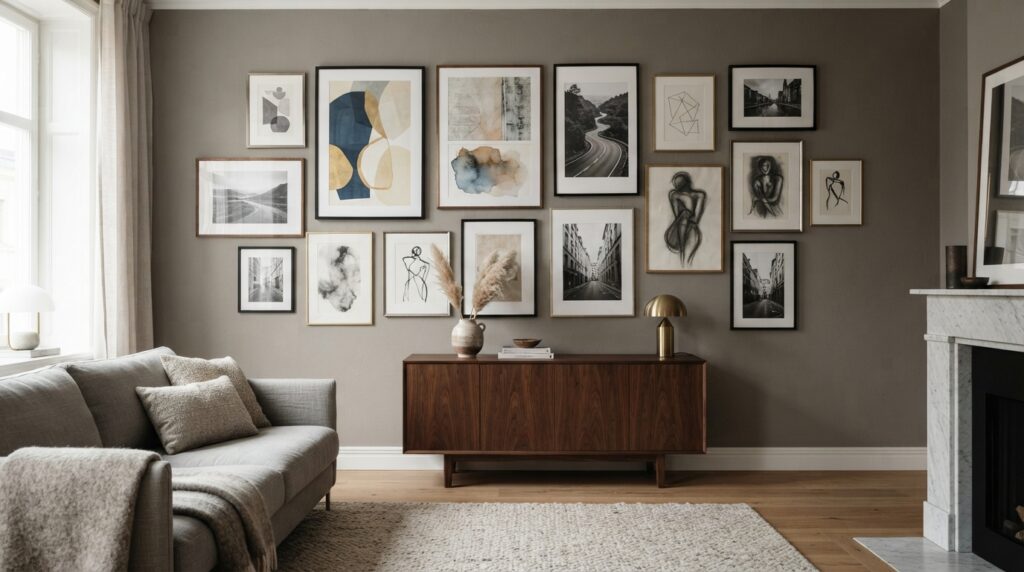
There are many living room wall decor ideas circulating online, but most of them fall into a manageable list of core categories. The table below summarizes the most popular styles so it is easier to compare them at a glance.
| Style | Description |
| Gallery Wall | A mixed collection of framed photos, prints, and art arranged together |
| Statement Mirror | A large mirror used to reflect light and visually expand the room |
| Floating Shelves | Wall-mounted shelves used to display books, plants, or small decor |
| Woven or Macrame Hangings | Textured fabric or rope art that adds warmth to a plain wall |
| Accent Wall | One wall painted, wallpapered, or textured differently from the rest |
| Oversized Abstract Art | A single large canvas used as a calming focal point |
| Wall-Mounted Plants | Vertical planters that bring greenery without using floor space |
| Statement Clock | A large clock used as both function and decor |
| Tapestries | Fabric art often used to cover large or awkward wall spaces |
| Wood Paneling or Slats | Textured wood accents that add depth and a natural feel |
| LED or Neon Signage | Lighted signs used for a modern or personalized touch |
| Built-In Niches | Recessed wall sections with lighting for displaying objects |
Each of these styles can be used on its own or combined with another, such as pairing a gallery wall with a single floating shelf underneath it.
The right choice usually depends on how much maintenance a household wants, since plants and gallery walls require more upkeep than a single statement mirror or an accent wall.
How to Plan a Gallery Wall Step by Step

Gallery walls are one of the most requested living room wall decor ideas because they allow personal photos and art to be displayed together in one cohesive spot. Getting the layout right, however, takes a bit of planning before anything goes on the wall.
Choosing a Layout
A grid layout uses evenly spaced, similarly sized frames for a clean and structured look, while an eclectic layout mixes different frame sizes and shapes for a more relaxed feel. Choosing between the two usually comes down to personal style, since neither option is more correct than the other.
Selecting Frame Sizes
Mixing two or three frame sizes tends to look more intentional than using frames that are all identical, since it creates natural visual movement across the wall. Sticking to a consistent frame color or finish, even with different sizes, helps keep the overall look unified.
Spacing and Hanging Technique
Leaving two to three inches between frames is a common standard that keeps the arrangement feeling connected without looking cluttered. Laying the arrangement out on the floor first, or tracing it on paper, helps avoid unnecessary nail holes once hanging begins.
Small Living Room Wall Decor Tips
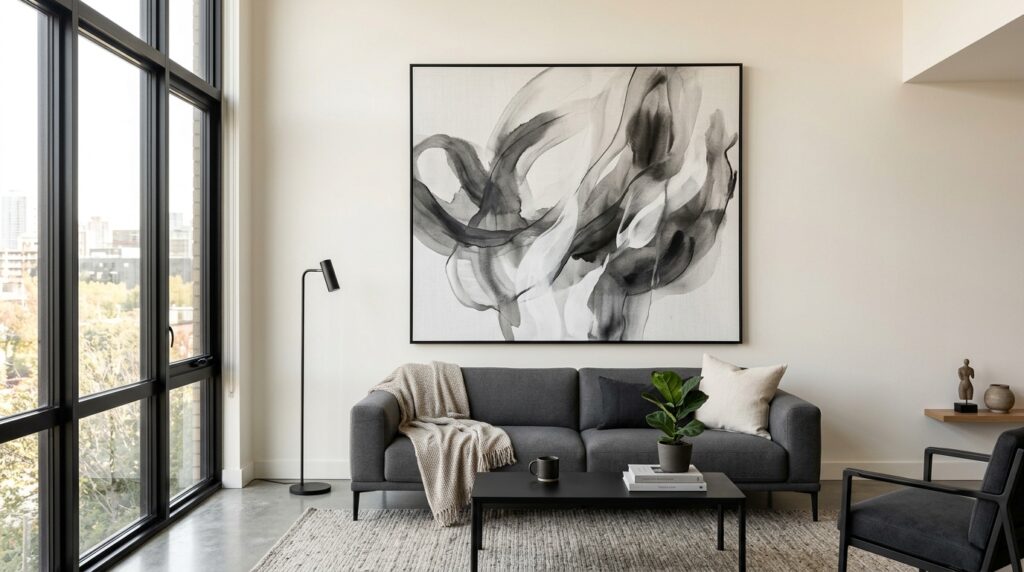
Small living rooms need a slightly different approach, since the wrong decor choices can make a compact space feel even more cramped. The right living room wall decor ideas for smaller spaces usually focus on height and reflection rather than bulk.
Using Vertical Space
Tall, narrow shelving or vertically stacked art draws the eye upward, which makes ceilings feel higher and the room feel less boxed in. This is often more effective in small rooms than spreading decor out horizontally.
Adding Mirrors for Depth
A well-placed mirror reflects both light and the room itself, which can make a small living room feel noticeably larger without any structural changes. Placing a mirror across from a window usually gives the strongest effect.
Keeping Clutter to a Minimum
Smaller rooms benefit from restraint, since too many small items on one wall can make the space feel busy rather than styled. Choosing one or two strong focal pieces usually works better than filling every inch of wall space.
Color and Theme Coordination
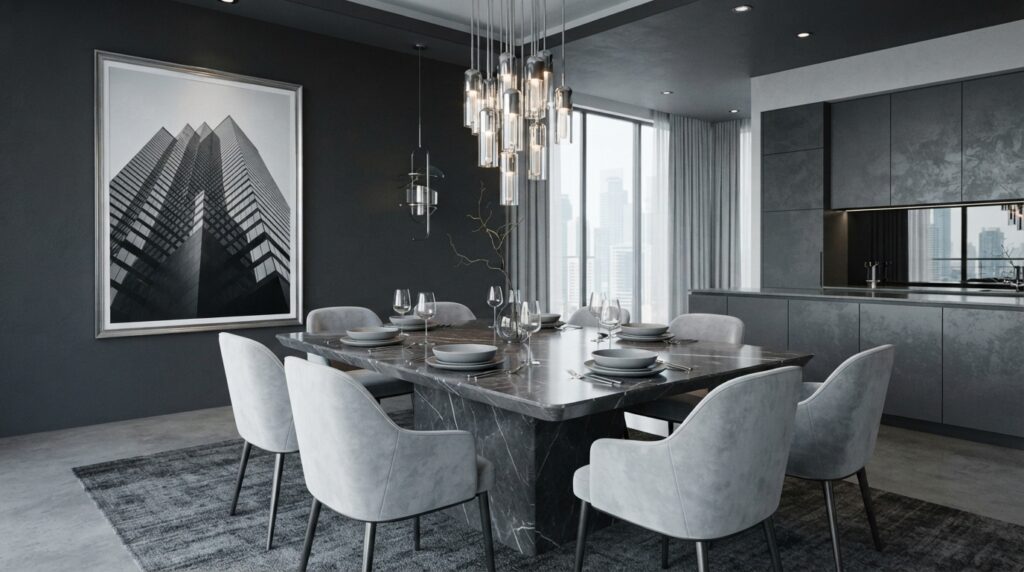
Matching wall decor to the room’s existing color palette prevents the space from feeling disconnected once everything is in place. This does not mean every piece has to match exactly, but there should be some shared thread running through the room.
Matching Art to Wall Color
Neutral walls give the most flexibility, allowing bold or colorful art to stand out as a focal point. Already colorful walls usually pair better with more neutral or muted artwork so the room does not feel overwhelming.
Cohesive vs Eclectic Approaches
A cohesive approach sticks to a consistent color story and frame style throughout the room, while an eclectic approach intentionally mixes colors, eras, and textures for a more collected look. Both approaches work well as long as the choice is made intentionally rather than by accident.
DIY Wall Decor Ideas
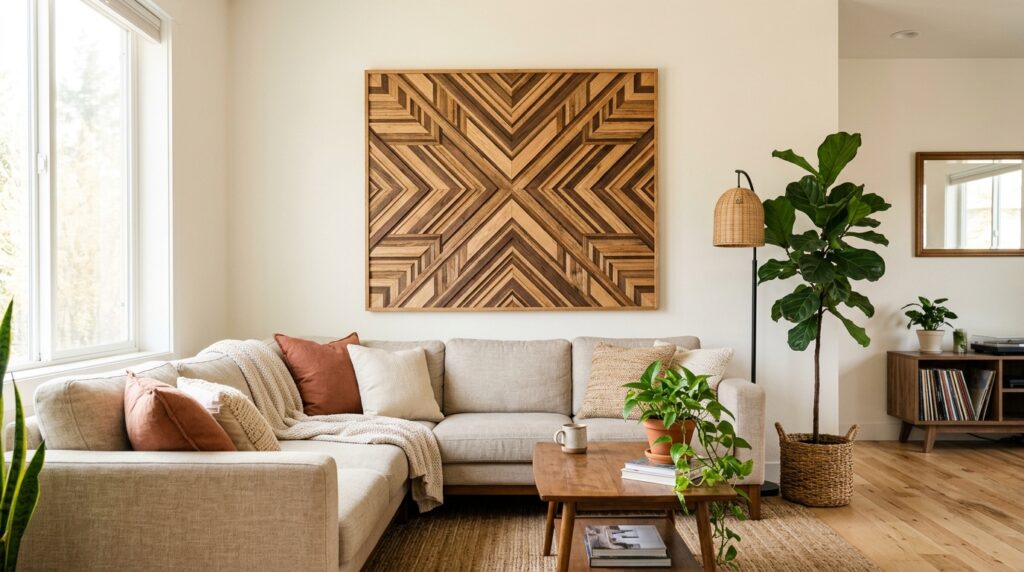
For those who enjoy a hands-on approach, DIY projects remain one of the most affordable living room wall decor ideas available. Simple options include painting an abstract canvas, framing fabric or wallpaper scraps, or creating a photo display using string and clips instead of traditional frames.
Removable hooks and adhesive strips have also made DIY decor far more practical for renters, since art can be hung and rearranged without damaging walls. These small projects often end up being some of the most personal and talked-about pieces in a room, simply because they were made rather than bought.
Common Mistakes to Avoid
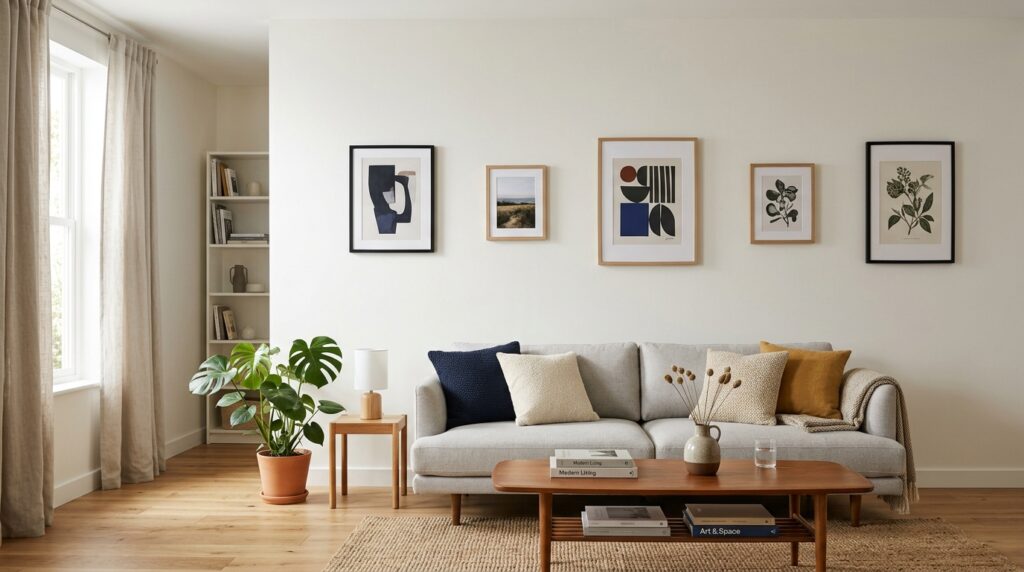
A few recurring mistakes tend to show up again and again in living room wall decor, and avoiding them can save both time and money. Hanging art too high is one of the most common issues, since eye level while seated is usually the better reference point in a living room rather than standing eye level.
Overcrowding a wall, or leaving it completely empty out of hesitation, are two opposite mistakes that both come from the same lack of planning. Ignoring scale is another frequent problem, where a small piece of art is placed on a large wall and ends up looking lost rather than intentional.
A Quick Look at What Top Sources Recommend
Most major sources covering living room wall decor ideas tend to fall into two camps. Retail-focused guides emphasize practical, low-commitment solutions like poster sets and shelves paired directly with products to purchase, while blog-style guides lean more into curated style categories and step-by-step planning advice.
Shopping platforms, on the other hand, focus purely on product variety rather than guidance, which works well for buyers who already know what they want but offers little direction for those still deciding on a style.
FAQs
What is the right height to hang wall art in a living room?
Art should generally be hung so its center sits at eye level while seated, which is usually around 57 to 60 inches from the floor for standard living room walls.
How many pieces should be used in a gallery wall?
There is no fixed number, but most gallery walls look balanced with anywhere between five and nine pieces, depending on wall size and frame variety.
What is the best wall decor option for rental homes?
Removable adhesive hooks, command strips, and lightweight decor like tapestries or printable art are the safest choices since they avoid permanent damage to walls.
Conclusion
Living room wall decor ideas do not have to be overwhelming once the space, budget, and style are considered together rather than separately.
Starting small, whether with a single mirror or one gallery wall, allows the room to evolve naturally over time. With a clear plan in place, even the most intimidating blank wall can become one of the most personal parts of the home.
Related Articles
Decorating Your Home for Valentine’s Day
Minimalist Home Decor Essentials: A Complete Guide
Black Home Decor: The Complete Guide to Styling Your Space with Black
Personalized Home Decor: A Complete Guide to Custom Interior Styling
Vintage Home Decor: A Complete Guide to Creating a Timeless Home