 homeofdecor.online
Decorating your home for Valentine’s Day is one of the simplest ways to turn an ordinary living space into a warm, romantic setting that everyone in the house can enjoy. It does not require a big budget or professional design skills, just a few thoughtful touches placed in the right corners of your home.
From the front door to the bedroom, small changes in color, lighting, and texture can completely shift the mood of a room. This guide walks through every part of the house, room by room, so you can plan your decorations in an organized and stress-free way, whether you have weeks to prepare or only a few spare minutes.
Why Valentine’s Day Home Decor Matters
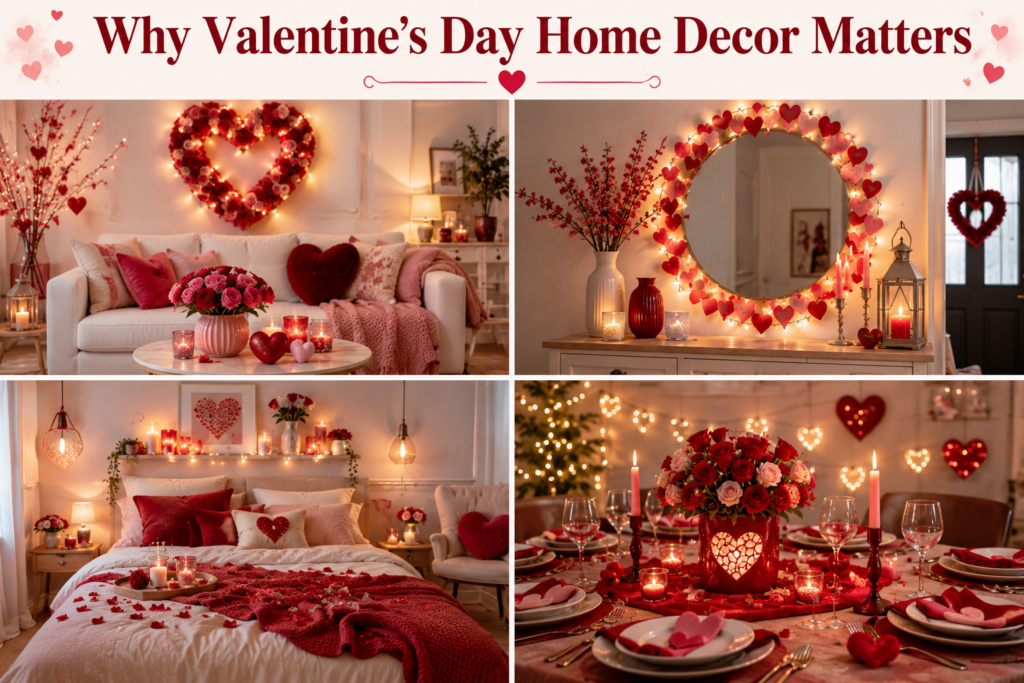
Home decoration on Valentine’s Day is not just about following a trend; it is about creating an atmosphere that feels special for the people who live there. A well-decorated home sets the tone for the entire day, making even a simple dinner or quiet evening feel more meaningful.
Setting a Romantic Mood Without Overspending
Creating a romantic mood at home does not mean buying expensive decor pieces every year. Many effective touches, such as candles, soft lighting, and rearranged furniture, cost very little. Reusing items from previous years and mixing them with one or two new pieces keeps the budget low while still refreshing the look of your space.
What This Guide Covers
This guide covers every major area of the home, including the entryway, living room, dining area, bedroom, and even outdoor spaces. It also includes DIY project ideas, shopping tips, and quick last-minute solutions for anyone short on time before the celebration begins.
Choosing a Valentine’s Day Color Palette
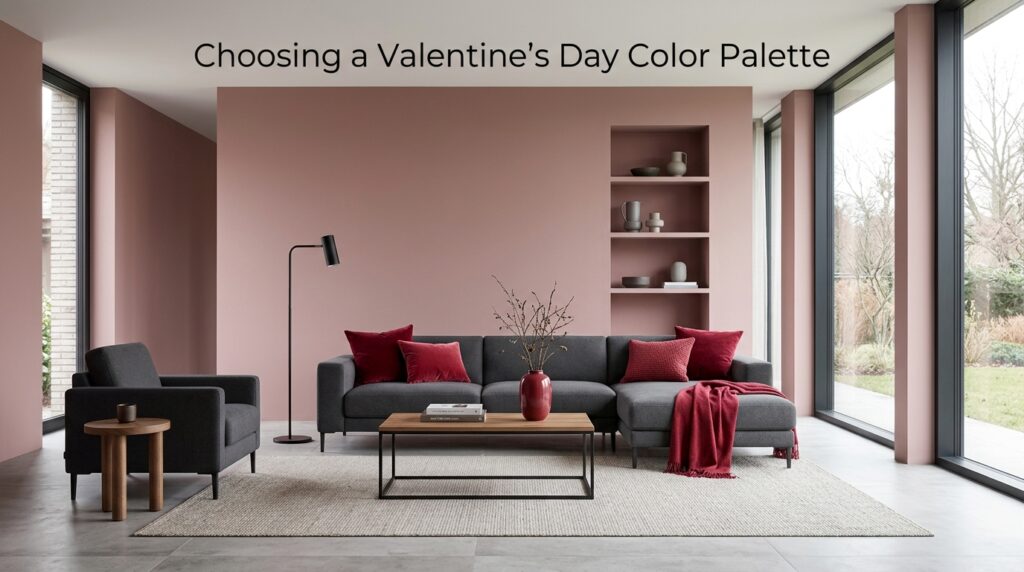
The color palette is the foundation of any Valentine’s Day decor plan, since it influences every other decision you make afterward. Picking the right combination early makes shopping and DIY work much easier and more consistent.
Classic Red, White & Pink Combinations
Red, white, and pink remain the most recognizable Valentine’s Day color scheme because they instantly signal romance and warmth. Red works well as an accent color on cushions or candles, while white balances the intensity and pink softens the overall look. This combination suits almost any home style, from modern to traditional.
Modern Alternatives (Burgundy, Blush, Gold, Black & Red)
For a more sophisticated look, burgundy, blush, and gold offer a subtle alternative to bright red and pink. Pairing black with red creates a bold, dramatic effect that suits contemporary interiors. These modern palettes work particularly well for couples who prefer understated elegance over traditional bright colors.
Matching Colors to Your Existing Home Décor
Before buying anything new, it helps to look at your existing furniture, walls, and curtains to choose Valentine’s colors that complement rather than clash with them. Neutral-toned homes can handle bold reds and pinks easily, while already colorful rooms may need softer, more muted Valentine’s accents instead.
Entryway & Front Door Decor
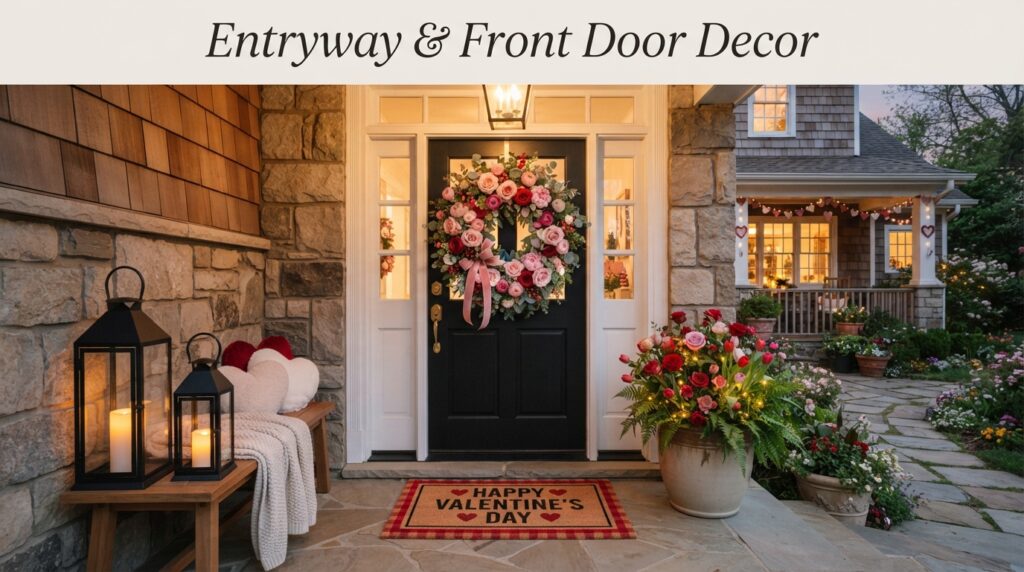
The entryway is the first impression guests and family members get of your Valentine’s Day preparations, so it deserves early attention. A few coordinated pieces here set expectations for the rest of the home.
Heart-Shaped Wreaths
A heart-shaped wreath on the front door is one of the fastest ways to announce the Valentine’s theme before anyone even steps inside. These wreaths can be made from artificial flowers, ribbons, or even paper hearts glued onto a foam base. Hanging one at eye level makes it the clear focal point of the entryway.
Doormats and Welcome Signs
Seasonal doormats printed with hearts or romantic phrases add a playful touch right at the threshold. A small welcome sign with a Valentine’s message reinforces the theme without requiring much effort or cost. Both items can be swapped out easily once the season ends.
Small Planters or Flower Pots by the Door
Placing small potted flowers, especially red or pink blooms, on either side of the entrance creates a natural, inviting frame. Fresh flowers work well for a short celebration, while artificial ones offer a longer-lasting option for those who want to reuse them yearly.
Living Room Decorations
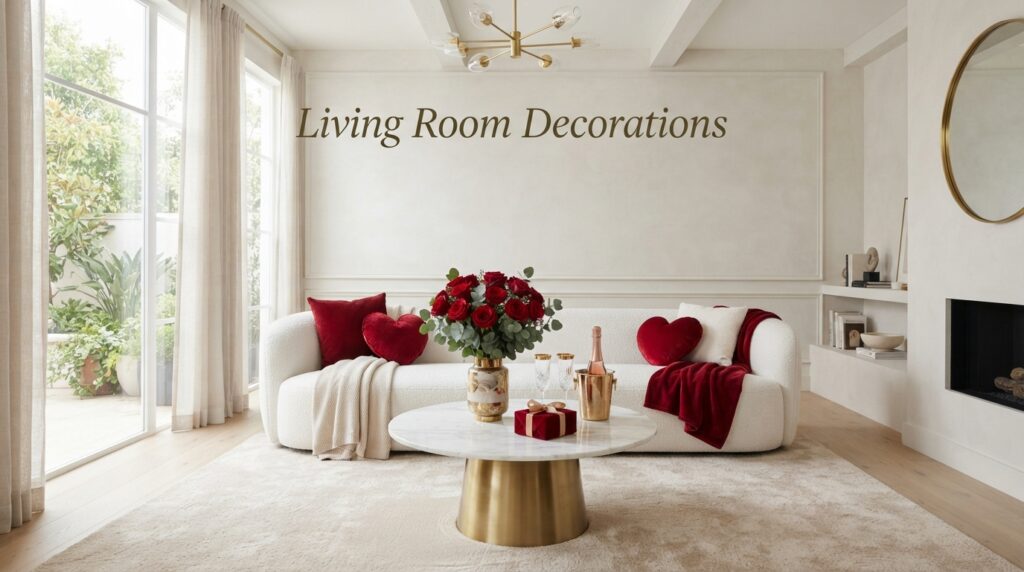
The living room is usually where most of the Valentine’s Day gathering happens, whether it is a quiet evening for two or a small family celebration. This makes it one of the most important spaces to decorate thoughtfully.
Heart Garlands and Banners
Hanging a heart-shaped garland or banner across a wall or mantel instantly adds a festive touch without taking up floor space. These are inexpensive to buy or easy to make from folded paper hearts strung together with thread. They work particularly well above a sofa or fireplace.
Throw Pillows and Blankets
Swapping regular throw pillows and blankets for ones in red, pink, or heart patterns is a quick and reversible way to refresh the room. Layering different textures, such as velvet and knit fabrics, adds visual depth without needing extra decor pieces.
Candles and Centerpieces
Grouping candles of varying heights on a coffee table or shelf creates a soft, romantic glow, especially in the evening. Scented candles in vanilla, rose, or cinnamon further enhance the atmosphere. A simple centerpiece of flowers or heart-shaped ornaments completes the look.
Balloon Arrangements
Balloon arches or clusters in red, white, and pink bring a fun, celebratory energy to the living room. These are especially effective for family gatherings or surprise celebrations, and they can be arranged in corners or behind seating areas for a photo-friendly backdrop.
Photo Displays and Love-Themed Wall Art
Displaying framed photos of shared memories adds a personal, sentimental element that store-bought decor cannot replicate. Combining these with simple love-themed prints or quotes on the wall ties the whole room together in a meaningful way.
Dining Room & Romantic Table Setting
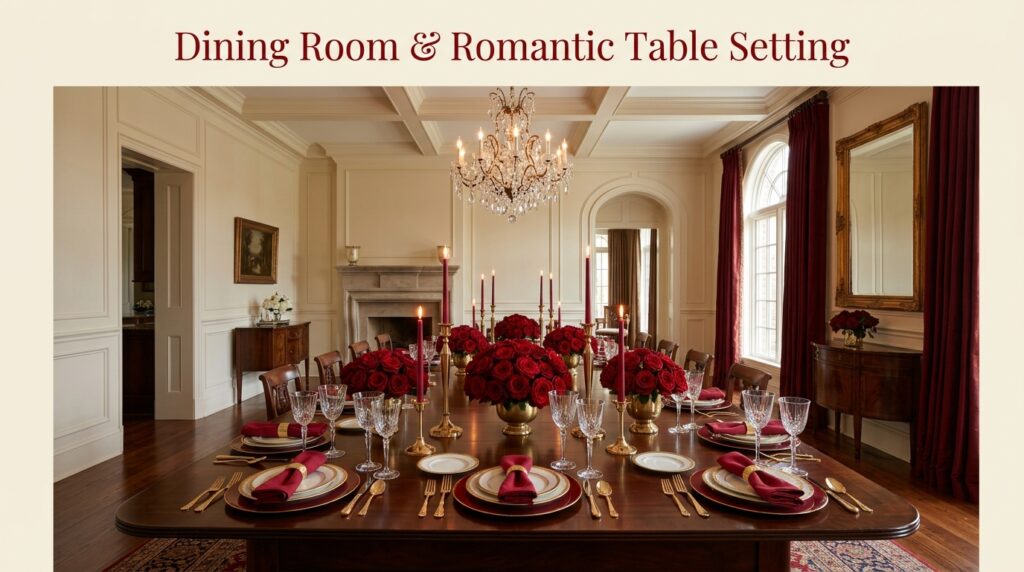
A well-set dining table can transform an ordinary meal into a memorable Valentine’s Day experience. This section focuses on the details that make the biggest visual and emotional impact.
Tablecloth and Napkin Ideas
A red, white, or pink tablecloth instantly sets the tone for a romantic dinner, while patterned or lace napkins add an extra layer of elegance. Folding napkins into simple heart shapes is an easy detail that guests will notice and appreciate.
Centerpiece Options (Flowers, Candles, Petals)
A low, elegant centerpiece of roses or tulips keeps sightlines open for conversation during dinner. Scattering rose petals around the base of the centerpiece, combined with a few candles, adds texture and warmth to the table without overwhelming it.
Place Cards and Personalized Touches
Handwritten place cards with names or short romantic notes make the table feel intentional and personal. These small touches take only a few minutes to prepare but leave a lasting impression on anyone seated at the table.
Lighting for a Candlelit Dinner
Dimming overhead lights and relying mainly on candles creates the intimate atmosphere most people associate with a romantic dinner. Using varying candle heights avoids visual monotony and keeps the table looking naturally styled rather than staged.
Bedroom Romantic Touches
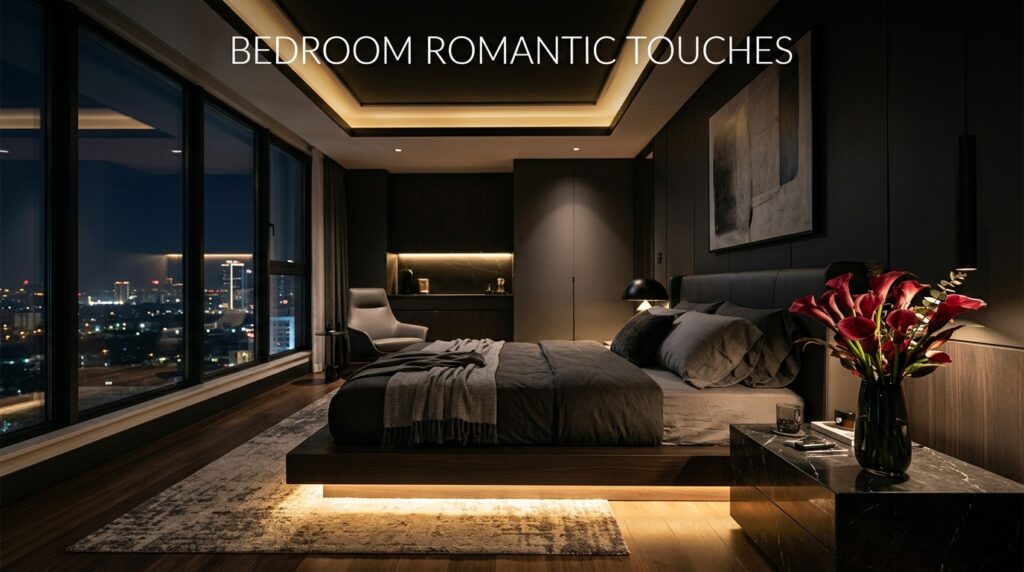
The bedroom often gets overlooked in Valentine’s Day planning, yet it is one of the most personal spaces to decorate for the occasion. Simple, soft changes here can have a big emotional impact.
Rose Petal Arrangements
Scattering rose petals across the bed or floor is a classic, low-effort way to add romance to the bedroom. Fresh petals work best if used the same day, since they wilt quickly and lose their visual appeal after a few hours.
Fairy Lights and Ambient Lighting
Draping fairy lights along the headboard or around a mirror creates a soft, warm glow that suits any time of the evening. This lighting works well combined with dimmed lamps, avoiding harsh overhead light that can break the romantic mood.
Scented Candles and Aromatherapy
Lightly scented candles or a diffuser with calming fragrances like lavender or rose help set a relaxed, sensory atmosphere in the bedroom. It is best to keep scents subtle, since overly strong fragrances can feel overwhelming in a small enclosed space.
Simple DIY Headboard or Wall Décor
A temporary fabric or paper heart backdrop behind the bed adds a decorative focal point without any permanent changes to the wall. This can be taken down easily after Valentine’s Day, making it a practical option for renters as well.
DIY Valentine’s Day Decor Ideas
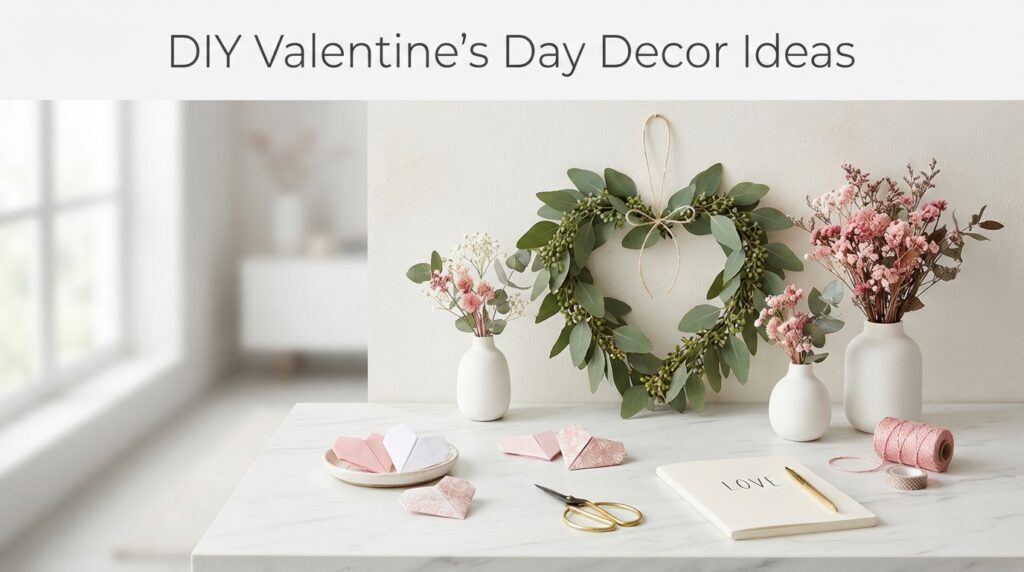
DIY decorations allow for a personal touch while keeping costs low, and many projects can be completed in under an hour using materials already at home.
Handmade Paper Hearts and Garlands
Cutting hearts from colored paper and stringing them together creates an inexpensive garland suitable for almost any room. This project is simple enough for children to help with, making it a good family activity leading up to the celebration.
Mason Jar Decorations
Filling mason jars with fairy lights, fake petals, or small candles creates charming, reusable decor pieces for tables or shelves. Wrapping the jars in twine or lace adds a rustic touch that pairs well with both modern and traditional interiors.
Repurposing Everyday Items into Décor
Items like old picture frames, glass bottles, or spare fabric can be repurposed into Valentine’s decor with minimal effort. This approach reduces waste and often results in more unique, personalized pieces than store-bought alternatives.
Budget-Friendly Craft Projects
Simple crafts such as painted heart rocks, folded paper flowers, or hand-lettered signs require only basic supplies. These projects are ideal for anyone decorating on a tight budget who still wants a personalized, handmade feel throughout the home.
Outdoor & Balcony Decor
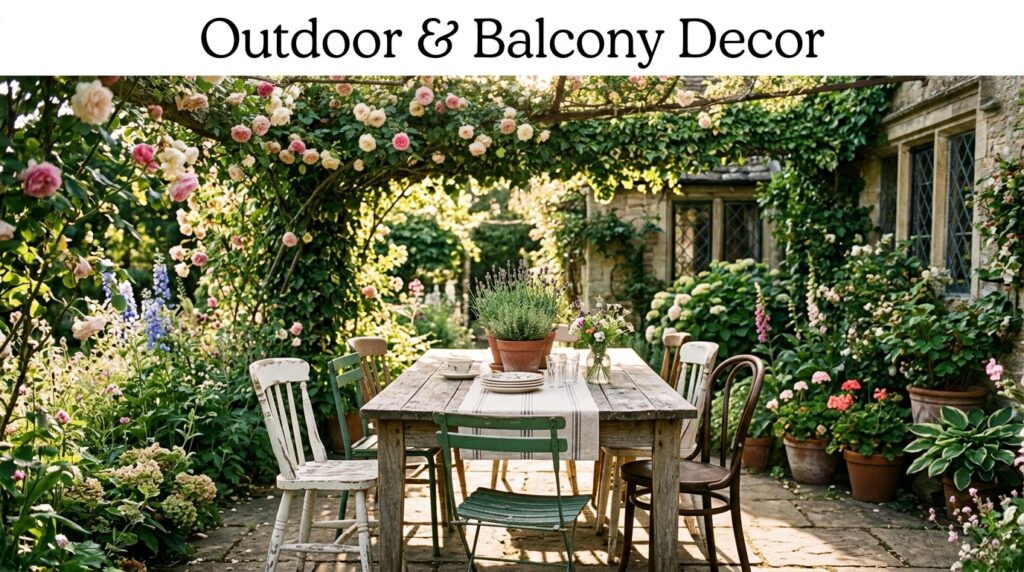
Outdoor spaces, even small balconies, can be included in the Valentine’s Day theme with a few simple additions that extend the romantic atmosphere beyond the main living areas.
String Lights
Hanging string lights along a balcony railing or patio ceiling instantly makes outdoor spaces feel warmer in the evening. This is one of the most cost-effective ways to decorate a larger outdoor area with minimal setup time.
Potted Flowers and Heart Signs
Placing potted red or pink flowers around outdoor seating, paired with a small heart-shaped sign, ties the outdoor space into the overall theme. These elements are easy to arrange and can be reused for other occasions later in the year.
Small Seating Nook Ideas
Creating a cozy seating nook with cushions, a small table, and a blanket gives couples a quiet outdoor spot to relax together. Adding a candle or lantern to this nook makes it usable even after the sun goes down.
Kid-Friendly Valentine’s Decor Ideas

For families with children, Valentine’s Day decorating can become a shared activity that involves the whole household rather than just the main living spaces.
Classroom-Inspired Home Decorations
Bringing home the same cheerful, colorful decor style often used in school classrooms, such as paper hearts and cutout letters, helps children feel connected to the celebration. This style is playful and easy to recreate with basic craft supplies.
Craft Activities for Family Bonding
Setting aside time for a family craft session, such as making cards or garlands together, turns decorating into a bonding activity rather than just a task. Children often take pride in seeing their handmade decorations displayed around the home.
Safe, Non-Breakable Decor for Kids’ Areas
In rooms used by children, it is best to avoid glass candle holders or small breakable ornaments. Soft fabric hearts, paper decorations, and battery-operated lights are safer alternatives that still keep the space festive.
Where to Shop for Valentine’s Decor

Knowing where to shop can save both time and money when preparing Valentine’s Day decorations, especially when working within a set budget.
Budget Stores vs. Specialty Shops
Budget and discount stores usually offer basic decor items like balloons, garlands, and candles at low prices, making them ideal for larger quantities. Specialty shops, on the other hand, offer higher-quality or unique pieces for those wanting a more curated look.
Online Shopping Tips
Shopping online allows for easier comparison of prices and styles across multiple sellers before making a purchase. Reading reviews and checking delivery timelines in advance helps avoid last-minute disappointments closer to the actual day.
Sustainable and Reusable Decor Options
Choosing reusable decor, such as fabric garlands or LED candles, reduces waste and offers better long-term value compared to single-use paper or balloon decorations. These items can be stored and brought out again for future celebrations.
Tips for a Cohesive Valentine’s Day Theme

A cohesive theme makes decorated rooms feel intentional rather than randomly assembled, which is especially important when decorating multiple areas of the home at once.
Balancing Decor with Everyday Functionality
It is important to decorate in a way that does not interfere with daily household routines, especially in shared or high-traffic areas. Choosing decor that can be easily moved or adjusted keeps the space both festive and practical.
Avoiding Overdecorating
Filling every surface with Valentine’s items can make a room feel cluttered rather than romantic. Focusing on a few key areas, such as the dining table and living room, usually creates a more balanced and visually pleasing result.
Mixing Textures (Fabric, Floral, Candles, Lights)
Combining different textures, such as soft fabrics, natural flowers, flickering candles, and warm lights, adds depth to the decor without relying on too many colors or patterns. This mix keeps rooms interesting even within a simple color palette.
Quick Last-Minute Decorating Ideas

For anyone short on time, a few quick changes can still make a noticeable difference without requiring extensive planning or shopping.
5-Minute Decor Hacks
Lighting a few candles, dimming the main lights, and placing a bowl of red or pink items on the table can transform a room in minutes. These small changes require no special skills or purchases, only a little rearranging.
Using Items You Already Own
Repurposing red or pink items already in the home, such as cushions, throws, or tableware, is one of the fastest ways to create a themed look. This approach works especially well for those decorating at the very last minute.
Simple Swaps for Instant Romance
Switching bright white lightbulbs for warmer-toned ones, or swapping a plain tablecloth for a patterned one, instantly changes the feel of a room. These small swaps require minimal effort but have a noticeable visual impact.
Frequently Asked Questions
How much does it typically cost to decorate a home for Valentine’s Day?
Costs vary widely, but a simple setup using candles, cushions, and a few DIY items can often be done for a modest amount, especially when reusing decor from previous years.
Can Valentine’s Day decor be reused for other occasions?
Yes, items like fairy lights, candles, and neutral heart decor can often be repurposed for anniversaries or other celebrations throughout the year.
What is the easiest room to start decorating first?
The entryway is usually the easiest starting point, since a wreath or doormat can set the tone for the rest of the home with very little effort.
Is it necessary to decorate every room in the house?
No, focusing on just the living room, dining area, and bedroom is often enough to create a noticeably romantic atmosphere without overwhelming the whole home.
Conclusion
Decorating your home for Valentine’s Day works best when it reflects the personality of the people living there rather than copying a single fixed style. Compared to many generic guides that only list decor items without explaining how to combine them, this guide focused on practical, room-by-room reasoning so the choices feel connected rather than random.
Whether the plan involves a full weekend of DIY projects or a quick five-minute refresh before guests arrive, the goal remains the same: creating a warm, personal space that feels genuinely romantic rather than simply decorated for the occasion.