Accent Wall Panels: The Complete Guide to Choosing, Installing and Styling Your Feature Wall
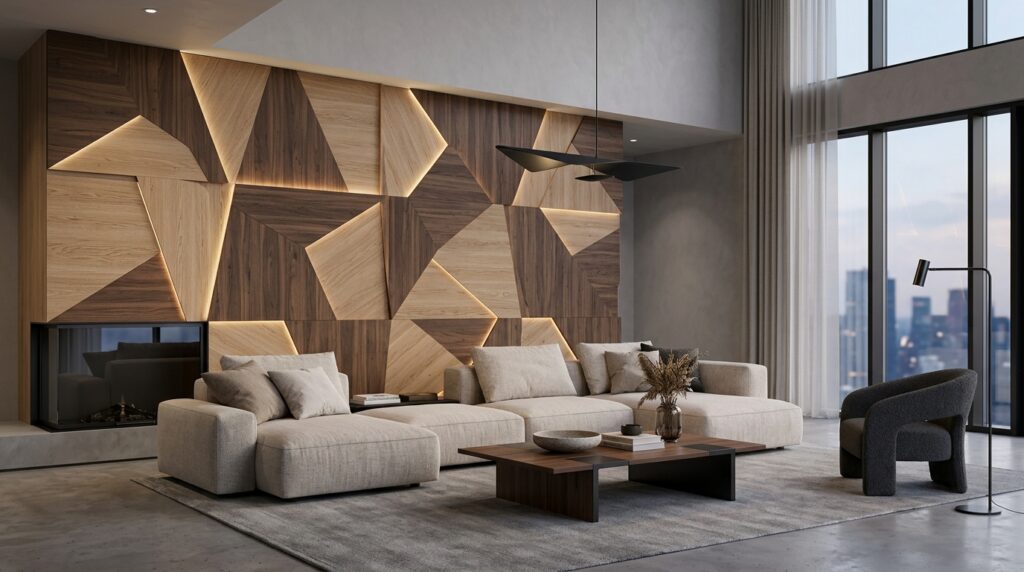
Accent wall panels have become one of the fastest ways to change the personality of a room without a full renovation. A single wall covered in wood, PVC, stone or fabric panels can instantly turn a plain space into something that feels designed with intention.Homeowners like accent wall panels because they hide small wall imperfections while adding texture that paint alone cannot deliver.
Unlike wallpaper, most panel systems are thicker, more durable and easier to repair if damaged. This guide walks through every material option, real installation steps, honest pricing and the mistakes people usually make with accent wall panels. By the end, you will know exactly which panel type fits your room, your budget and your skill level.
What Are Accent Wall Panels?
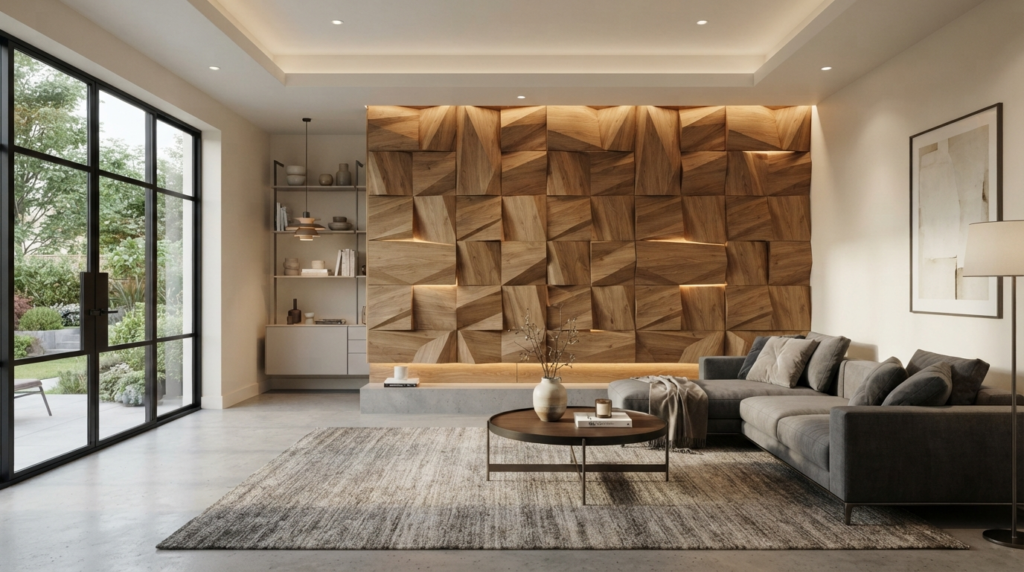
Accent wall panels are decorative wall coverings installed on one feature wall to create contrast with the rest of the room. They differ from regular wall treatments because they use texture, depth and material change rather than just color.
The Psychology of a Focal Wall
A single accent wall works because the human eye naturally looks for a point of focus in any room.When one wall stands out in texture or tone, the brain reads the whole space as more intentional and finished. This is why accent wall panels are often placed behind a bed, sofa or television — the exact spot where attention already rests.
Accent Wall Panels vs Wallpaper vs Paint
Panels, wallpaper and paint each solve a different problem, and the table below makes the difference clear.
| Feature | Accent Wall Panels | Wallpaper | Paint |
| Texture | High (3D, real depth) | Low to medium | None |
| Durability | High, dent and moisture resistant options | Moderate, tears easily | Moderate, scuffs show |
| Installation time | 2–5 hours | 3–6 hours | 1–2 hours |
| Hides wall flaws | Yes, very well | Partially | No |
Types of Accent Wall Panels
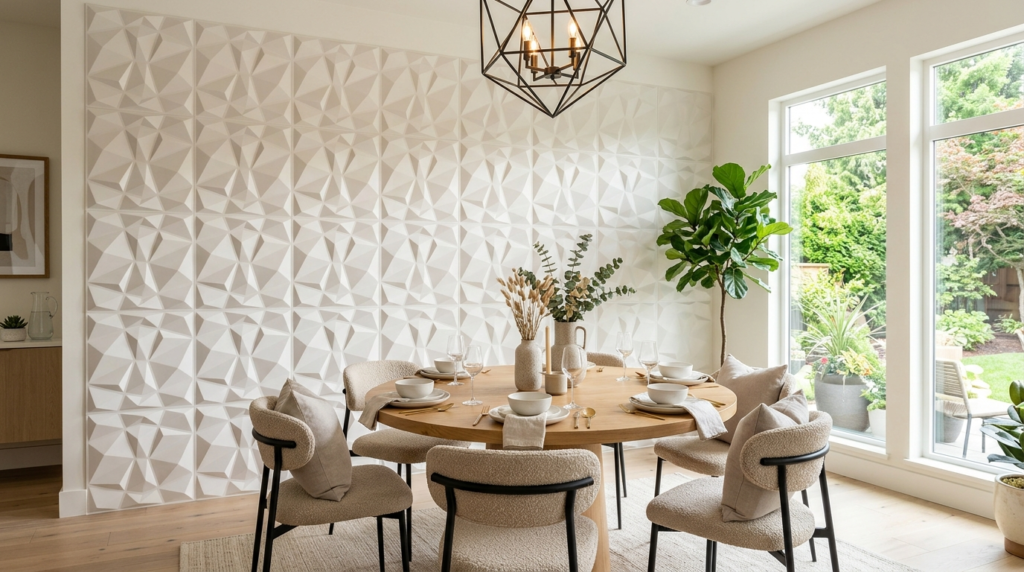
Panels are grouped by material, and each material changes the look, cost and durability of the wall in a different way. Picking the wrong material for the wrong room is the most common regret buyers report.
PVC and 3D Foam Panels
PVC and foam panels are the most affordable entry point into accent wall panels, often costing under two dollars per square foot. They are lightweight, moisture resistant and simple to cut, which makes them ideal for renters and first-time DIYers. Their main downside is a slightly less premium feel compared to real wood or stone.
Wood Slat Panels
Wood slat panels, made from solid wood, MDF or WPC composite, create a warm and natural look that suits living rooms and bedrooms. Solid wood costs more but ages beautifully, while MDF and WPC slats are budget-friendly and resist warping in normal indoor humidity.
This category currently drives most of the demand around the accent wall panels keyword because of its modern, hotel-like appearance.
Stone and Brick Veneer Panels
Stone and brick veneer panels replicate the look of masonry using lightweight polyurethane or cement composite, so no structural reinforcement is needed. Real stone veneer is heavier and pricier but offers unmatched authenticity for fireplaces or entryways. Faux versions install with adhesive alone and can be painted to match any interior color scheme.
Acoustic Wood Panels
Acoustic panels combine a wood or fabric slat face with a sound-absorbing felt or foam backing. They are the preferred accent wall panel choice for home offices, media rooms and apartments where noise reduction matters as much as appearance.Beyond aesthetics, they measurably reduce echo and improve room acoustics.
Fabric and Upholstered Panels
Upholstered panels use a foam core wrapped in fabric, usually velvet or linen, and are fixed to the wall in a grid or geometric pattern. They add a soft, hotel-suite feel that works especially well behind a bed headboard.Because fabric can stain, these panels need more careful placement away from kitchens or high-traffic hallways.
Metal and Mirror Panels
Metal and mirror accent panels bring a modern, industrial or glamorous look depending on the finish chosen. Brushed metal suits contemporary offices, while mirrored panels are popular for making small rooms feel larger. These panels are more expensive and usually need professional installation due to their weight.
How to Choose the Right Panel for Your Space

The right accent wall panel depends less on trend and more on the room’s function, size and moisture level. Matching the material to these practical factors prevents costly replacement later.
Living Room vs Bedroom vs Office
Living rooms suit wood slat or stone veneer panels because these areas are seen by guests and benefit from a bolder statement. Bedrooms work best with fabric or softer wood tones that support rest rather than visual noise.Home offices benefit most from acoustic panels, since they double as sound control during calls.
Budget-Based Recommendations
On a tight budget, PVC or foam panels deliver the biggest visual change for the lowest cost per square foot. A mid-range budget opens up MDF wood slat and faux stone options with better longevity.Higher budgets allow solid wood, real stone veneer or upholstered panels for a long-term, premium finish.
Small Room vs Large Room
In small rooms, lighter tones and thinner slat panels prevent the space from feeling boxed in.Large rooms can handle deeper textures like 3D geometric panels or thicker wood slats without overwhelming the eye. Scale matters more than material in these cases, so measuring the wall before choosing a pattern size is essential.
Humidity and Kitchen-Bathroom Considerations
Bathrooms and kitchens need moisture-resistant materials such as PVC, WPC or sealed stone veneer rather than raw wood or fabric.Standard MDF panels will swell and warp if exposed to steam over time. Checking a product’s water resistance rating before purchase avoids this common and expensive mistake.
Step-by-Step Installation Guide
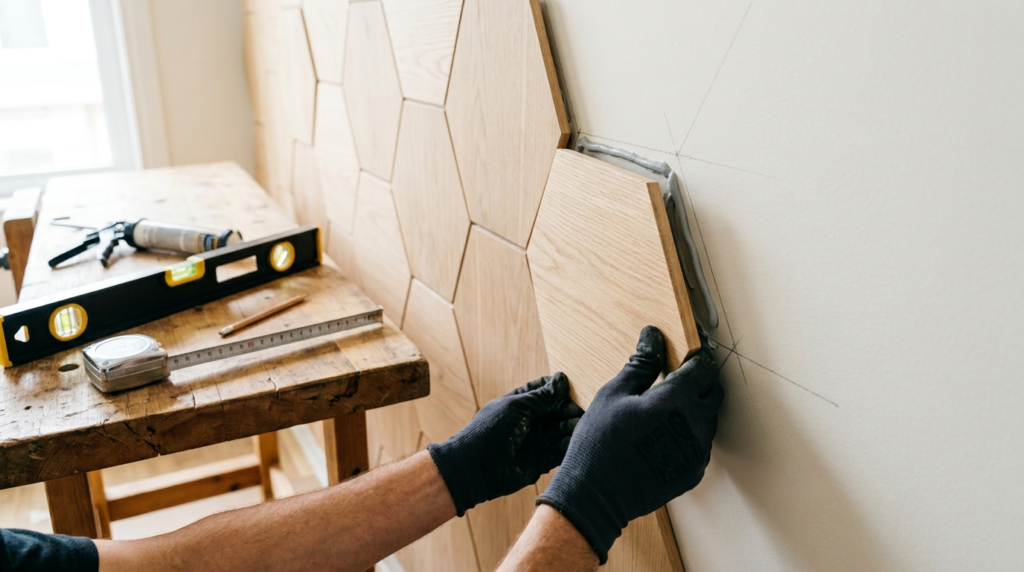
Most accent wall panels can be installed by a confident DIYer in a single afternoon with the right preparation. Skipping preparation steps is the leading cause of panels peeling or misaligning later.
Tools and Materials Checklist
A basic installation needs a tape measure, level, utility knife, construction adhesive or nails, and a stud finder. Having spacers on hand helps keep slat panels evenly gapped during placement. Safety glasses and a fine-tooth saw are recommended when panels need cutting to fit corners.
Wall Preparation
The wall surface must be clean, dry and free of old wallpaper, grease or loose paint before any panel touches it.Small holes should be filled and sanded smooth, since panels will highlight rather than hide major surface flaws. Skipping this step is the single most common reason adhesive-based panels fail within months.
Peel-and-Stick Installation Walkthrough
Peel-and-stick panels are aligned from the bottom corner first, using a level line as a guide. The backing is removed in small sections while pressing firmly outward from the center to avoid trapped air bubbles.Each subsequent panel is butted tightly against the previous one to keep patterns continuous.
Adhesive and Nail Method for Heavier Panels
Solid wood or stone veneer panels typically need construction adhesive applied in a zigzag pattern across the back.For panels installed over drywall without studs, finishing nails add extra hold alongside the adhesive. Pressing and holding each panel for the manufacturer’s recommended time prevents slippage before curing.
Common Installation Mistakes
The most frequent mistake is starting installation without a level baseline, which causes visible slanting across the wall. Another common error is ignoring panel expansion gaps, leading to buckling in humid seasons.Rushing adhesive cure time before adding pressure or weight is the third mistake that causes early panel failure.
Cost Breakdown for Accent Wall Panels
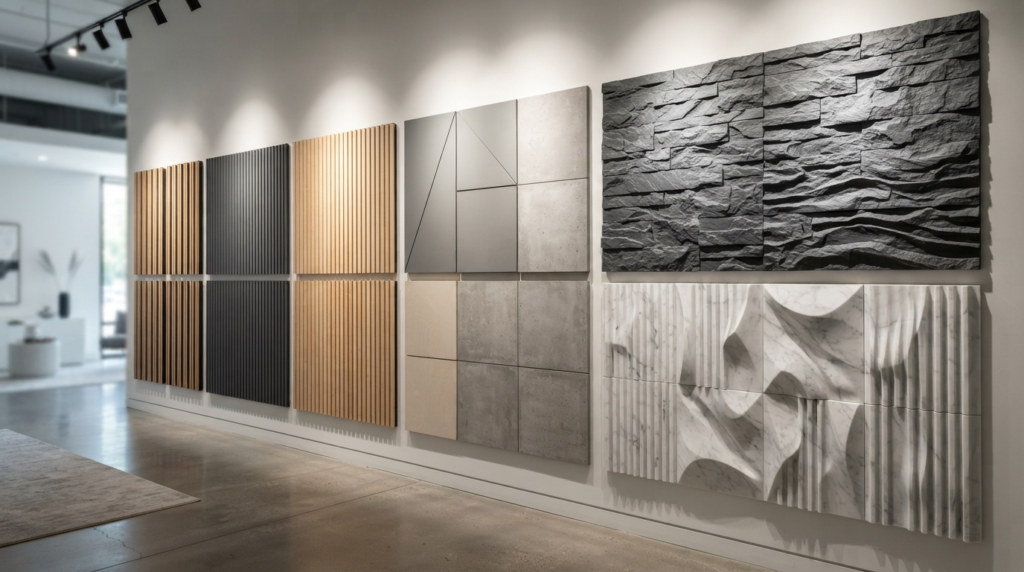
Pricing for accent wall panels varies widely by material, and labor can double the total project cost if installation is outsourced. Knowing real numbers before shopping prevents budget surprises.
DIY Cost Per Square Foot
PVC and foam panels generally range from one to three dollars per square foot. MDF or WPC wood slat panels sit between four and eight dollars per square foot.
Solid wood, real stone veneer and upholstered panels can range from ten to twenty-five dollars per square foot depending on finish quality.
Professional Installation Cost Comparison
Hiring a contractor typically adds three to six dollars per square foot on top of material cost. Heavier materials like stone veneer or large mirror panels often require professional installation for safety and warranty reasons. For a standard 10×10 foot accent wall, professional labor alone can range from three hundred to six hundred dollars.
Hidden Costs to Budget For
Adhesive, trim strips, corner pieces and sealant are rarely included in the panel’s listed price and can add fifty to one hundred fifty dollars to a project.
Tool rental, such as a nail gun, is another cost first-time DIYers often forget to budget. Extra panels for cutting waste, usually ten percent more than the measured area, should always be added to the order.
| Material | Cost per sq ft (DIY) | Moisture Resistant | Best For |
| PVC/Foam | $1–$3 | Yes | Renters, budget rooms |
| MDF/WPC Wood Slat | $4–$8 | Partial | Living rooms, offices |
| Solid Wood | $8–$15 | No | Statement walls |
| Faux Stone/Brick | $6–$12 | Yes | Entryways, fireplaces |
| Fabric/Upholstered | $10–$25 | No | Bedrooms |
Design Inspiration by Style
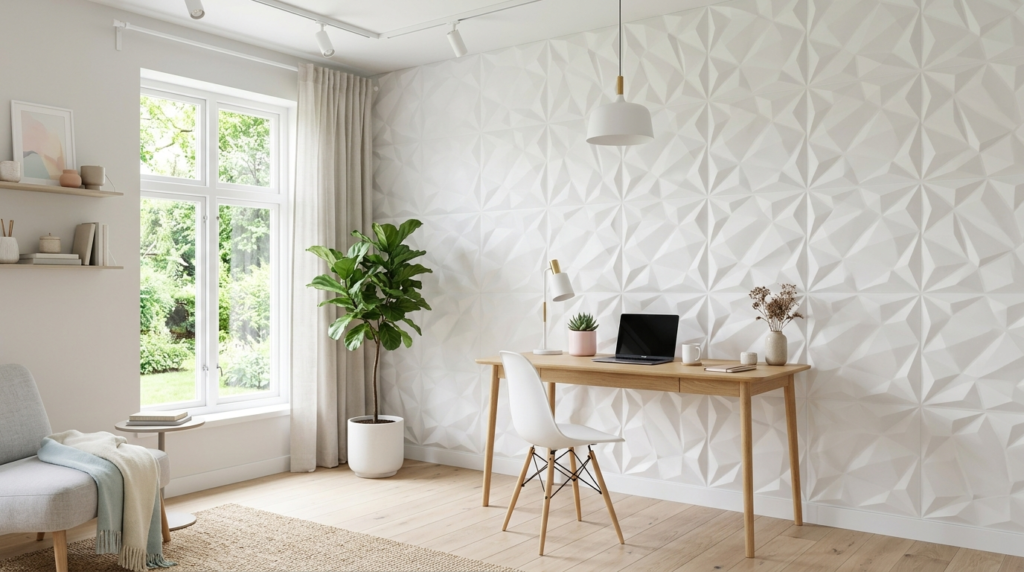
Accent wall panels adapt to almost any interior style once the right finish and layout are chosen. The following directions cover the styles most searched alongside accent wall panels today.
Modern Minimalist Accent Walls
Modern minimalist looks favor thin wood slats in walnut or black finishes running vertically for height.
Keeping the rest of the room’s palette neutral lets the panel texture do all the visual work. This style suits living rooms and entryways where a clean, uncluttered feel is the goal.
Rustic and Farmhouse Wood Panel Looks
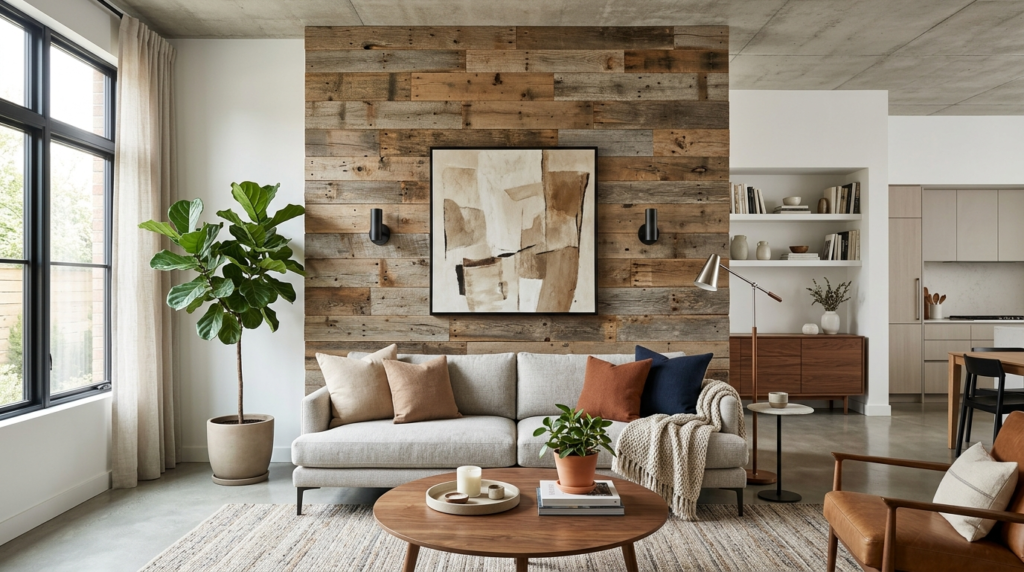
Reclaimed or distressed wood planks in varied tones create the farmhouse aesthetic many homeowners search for by name. Horizontal shiplap-style boards paired with warm lighting complete this look effectively.
This style pairs naturally with wood furniture and neutral textiles already common in farmhouse interiors.
Luxury Hotel-Style Fluted Panels
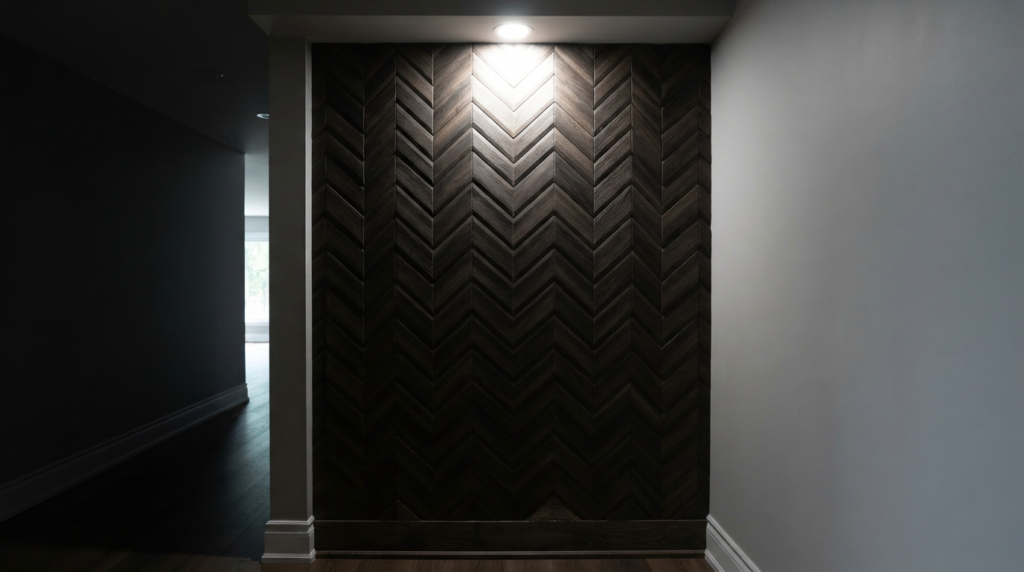
Fluted or reeded wood panels, often paired with a matte black or warm oak finish, replicate the boutique hotel headboard look.
This style works especially well in bedrooms and powder rooms where a small area creates maximum visual impact. Adding indirect LED lighting along the panel edges strengthens the premium effect further.
Small Apartment and Rental-Friendly Ideas
Peel-and-stick PVC or foam panels are the safest choice for renters since most can be removed without wall damage.
Choosing lighter colors and smaller pattern repeats helps small apartments avoid feeling closed in. Renters should always confirm lease terms before permanent adhesive or nail installation.
Maintenance and Longevity
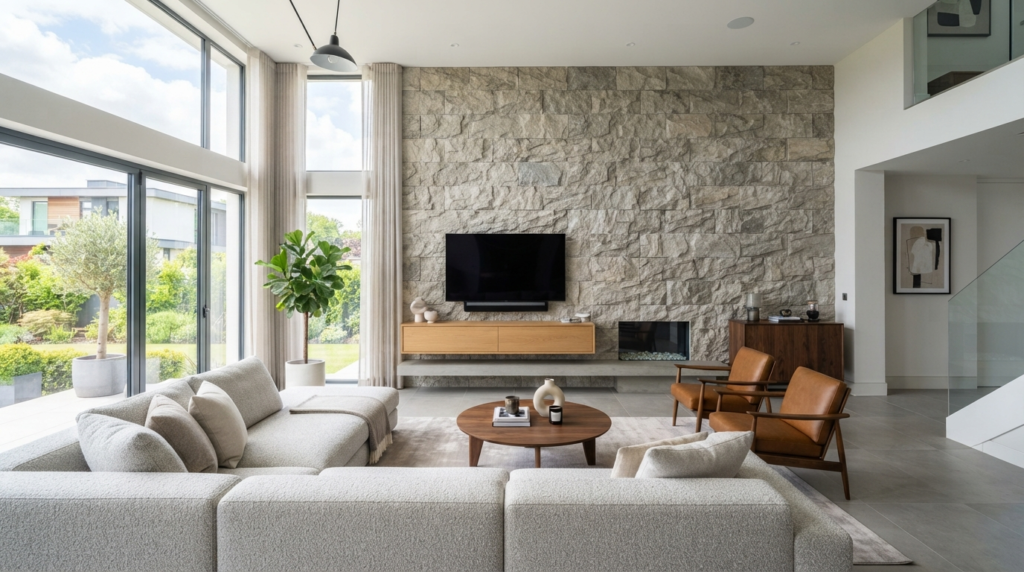
Accent wall panels are generally low maintenance, but care requirements differ meaningfully by material type. Understanding this upfront extends the wall’s lifespan significantly.
Cleaning Tips by Material
PVC and foam panels can be wiped with a damp cloth and mild soap without any risk of damage.
Wood panels need a dry or barely damp cloth, since standing moisture can cause staining over time. Fabric panels require gentle vacuuming and immediate spot treatment to prevent permanent marks.
How Long Each Panel Type Lasts
PVC and foam panels typically last eight to twelve years with normal indoor use. Solid wood and stone veneer panels can last twenty years or more when properly sealed and maintained.
Fabric panels have the shortest realistic lifespan, generally seven to ten years, due to fading and wear.
Repair vs Replace Guide
A single damaged slat or tile in a modular panel system can usually be replaced without redoing the entire wall. Cracked foam or PVC sections are best replaced outright, since patching rarely blends seamlessly.
Solid wood panels can often be sanded and refinished instead of replaced, extending their usable life considerably.
Sustainability: Eco-Friendly Panel Options
Sustainability is an increasingly common concern for buyers researching accent wall panels, yet it is rarely addressed in typical product listings. Choosing responsibly sourced materials reduces both environmental impact and indoor air quality concerns.
Recycled Material Panels
Several manufacturers now produce PVC and WPC panels using a percentage of recycled plastic content without sacrificing durability.
These panels perform identically to standard versions while reducing landfill waste from manufacturing. Checking the product specification sheet usually reveals the recycled content percentage clearly.
FSC-Certified Wood Options
FSC certification confirms that wood panels come from responsibly managed forests rather than unregulated logging. This certification also often correlates with lower formaldehyde emissions in the adhesives used during manufacturing.
Buyers sensitive to indoor air quality should prioritize FSC-certified or low-VOC labeled wood panels specifically.
Common Mistakes to Avoid
Even well-planned accent wall panel projects can fail if a few predictable mistakes are overlooked before purchase or installation.
Wrong Panel for Humid Rooms
Installing raw MDF or fabric panels in bathrooms or kitchens almost always leads to swelling, mold or staining within a year. Always match the material’s moisture rating to the room before buying. This single check prevents the most expensive and frustrating type of panel failure.
Poor Pattern Matching and Alignment
Panels installed without dry-fitting the full wall first often end with an awkward, narrow strip at one edge.
Planning the layout from the center of the wall outward keeps the pattern symmetrical. Dry-fitting every panel before applying any adhesive catches this problem before it becomes permanent.
Ignoring Wall Weight Limits
Heavier materials like stone veneer or large mirror panels can exceed what standard drywall anchors safely support.
Locating studs and using appropriate heavy-duty anchors is essential for anything beyond lightweight PVC or foam. Ignoring this step risks both panel damage and wall damage over time.
Frequently Asked Questions
Are accent wall panels waterproof?
Most PVC, foam and WPC panels are water resistant rather than fully waterproof, making them suitable for kitchens and bathrooms with normal humidity. Solid wood and fabric panels are not water resistant and should be avoided in wet areas.
Can accent wall panels be installed over wallpaper?
It is not recommended, since wallpaper adhesive can loosen over time and take the panels down with it. Removing old wallpaper and prepping bare drywall first ensures a stable, long-lasting installation.
How long do peel-and-stick accent wall panels last?
Quality peel-and-stick panels typically last eight to twelve years indoors, though extreme temperature or humidity swings can shorten that lifespan. Proper wall preparation before installation is the biggest factor in how long the adhesive bond holds.
Do accent wall panels increase home value?
A well-installed, tasteful accent wall panel feature can improve buyer perception and make listing photos stand out, though it is not typically appraised as a direct value addition. Neutral, high-quality materials tend to appeal to the widest range of buyers.
Final Verdict
Choosing the right accent wall panel comes down to matching material, budget and room function rather than following trends alone.Wood slat and acoustic panels currently offer the best balance of appearance and practicality for most homes, while PVC remains the safest entry point for renters and first-time buyers.
Competitor pages like Amazon, Wayfair, Lowe’s and Walmart focus almost entirely on product listings without covering installation, cost transparency or sustainability, leaving a clear gap for genuinely informative content like this guide.
Related Articles
Shelf Floating: The Complete Guide to Installing, Styling & Choosing the Best Floating Shelves
White Wall Shelves: The Complete Guide to Choosing, Installing, and Styling Them
Wooden Wall Art: The Complete Guide to Styles, Benefits, DIY Ideas & Buying Tips
Garage Wall Shelves: A Complete Guide to Smart Garage Storage
Rustic Wall Art Decor: A Complete Guide to Styles, Materials & Ideas