Wood Accent Wall: The Complete Guide to Wood Types, Patterns, Cost and Installation
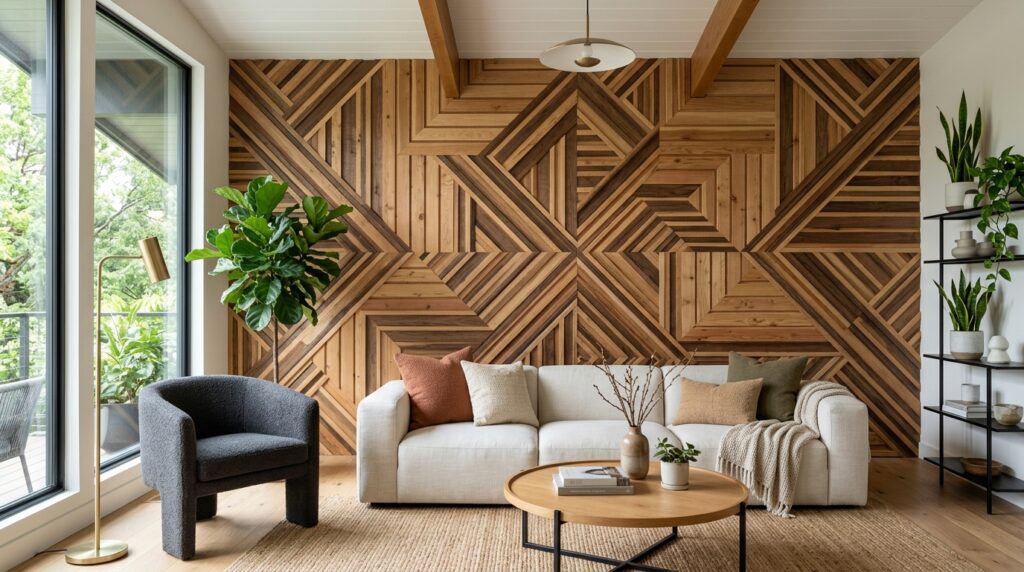
A wood accent wall brings natural warmth into a room in a way paint or wallpaper simply cannot match. It works by covering a single feature wall in real or engineered wood slats, planks or panels, creating texture, depth and a sense of craftsmanship.
Homeowners choose a wood accent wall because it hides minor wall flaws while adding a biophilic, calming quality linked to natural materials. Unlike full wood paneling across a room, an accent wall keeps the look modern rather than dated by limiting wood to one focal surface.
This guide breaks down every wood type, pattern, cost figure and installation step needed to plan a wood accent wall correctly. By the end, choosing between solid wood, engineered slats or peel-and-stick planks will be a clear, informed decision.
What Is a Wood Accent Wall?
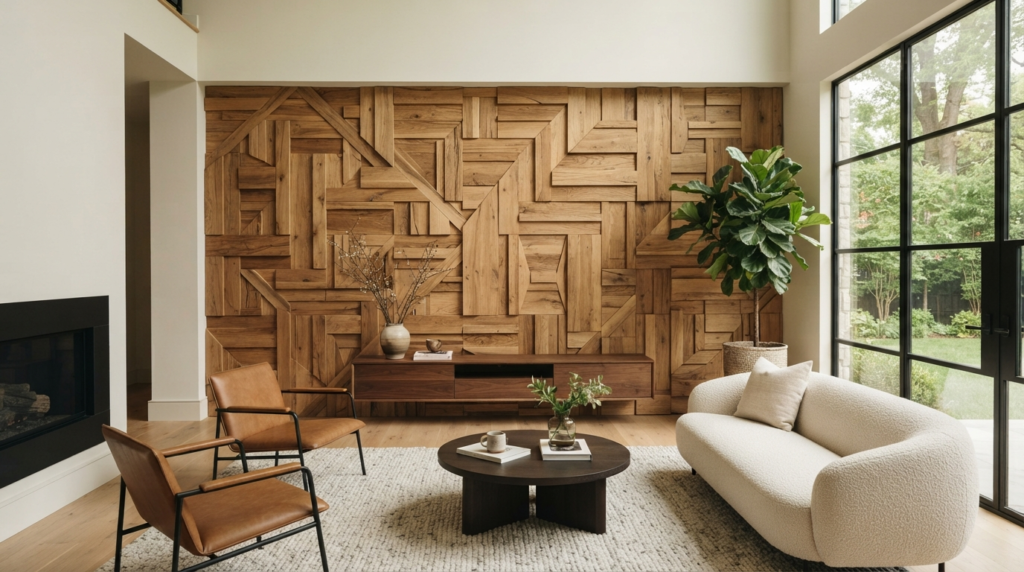
A wood accent wall is a single feature wall finished in wood material, chosen specifically to contrast with the room’s other painted or neutral surfaces. It differs from full wood paneling because only one wall carries the material, keeping the rest of the space visually light.
Why Wood Specifically
Wood carries natural grain variation and warmth that synthetic materials struggle to replicate convincingly.
Design research consistently links natural wood tones to a calmer, more grounded feeling in interior spaces, which is often called biophilic design. This emotional response is the core reason wood accent walls remain popular across bedrooms, living rooms and offices.
Wood Accent Wall vs Wood Wallpaper vs Paneling
A wood accent wall uses real dimensional material, while wood wallpaper only prints a wood pattern onto flat paper or vinyl.
Full wood paneling covers every wall in a room and tends to feel heavier and more traditional. An accent wall strikes the middle ground, offering genuine texture without paneling’s full-room commitment.
Types of Wood Used for Accent Walls
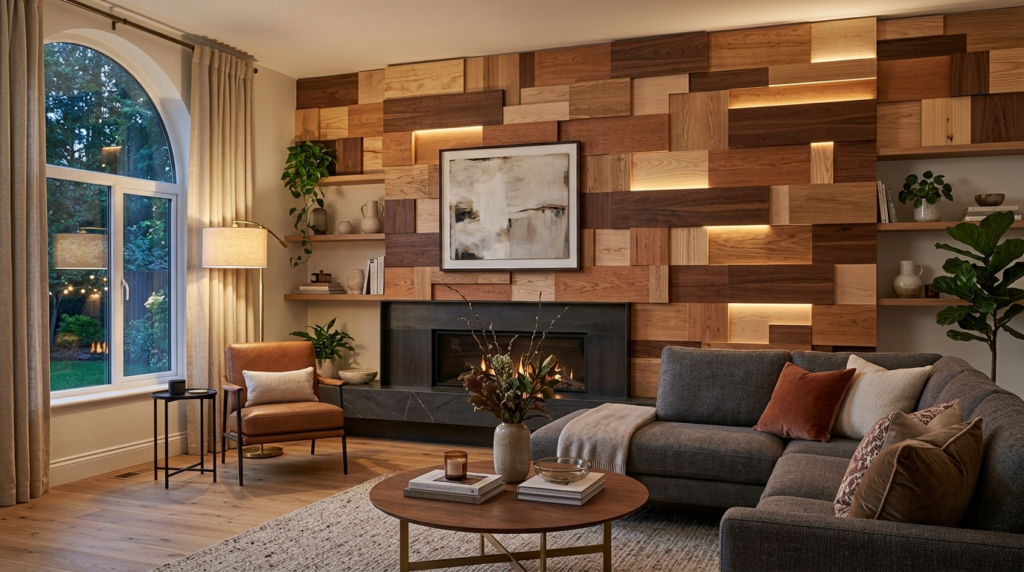
Wood accent walls can be built from several material categories, each offering a different balance of authenticity, cost and maintenance. Selecting the correct type upfront avoids expensive replacement later.
Solid Wood Planks
Solid wood planks in oak, walnut or teak offer the most authentic grain and can be sanded or refinished for decades of use. Oak provides a lighter, adaptable tone, while walnut and teak bring richer, darker character.
This category costs the most but delivers the longest usable lifespan among all wood accent wall options.
Engineered and MDF Wood Slats
Engineered wood slats use a thin real-wood veneer or printed finish over an MDF or plywood core, cutting costs significantly. They resist warping better than solid wood in typical indoor humidity levels.
This is currently the most searched wood accent wall category because it balances a premium look with an accessible price.
Reclaimed and Barnwood
Reclaimed wood panels reuse aged barn or industrial wood, keeping natural weathering, nail holes and color variation intact.
Each panel is genuinely unique, which appeals strongly to rustic and farmhouse-style interiors. Sourcing quality reclaimed wood can take longer and typically costs more than new engineered slats.
WPC Wood-Plastic Composite
WPC panels blend wood fiber with plastic polymers, producing a wood-look surface that resists moisture and warping far better than pure wood. This makes WPC the safest wood accent wall choice for kitchens, bathrooms or humid climates. The trade-off is a slightly less authentic feel compared to solid or engineered wood.
Peel-and-Stick Wood Planks
Peel-and-stick wood planks use a thin wood or wood-look layer with adhesive backing for quick, tool-light installation. They are the most rental-friendly wood accent wall option, since many can be removed without wall damage.
Durability is lower than other categories, making them best suited for lighter-use spaces.
| Wood Type | Cost per sq ft | Durability | Real Wood Feel | Best Room |
| Solid Wood | $10–$20 | Very High | Highest | Living rooms, statement walls |
| Engineered/MDF Slats | $4–$9 | Moderate to High | High | Bedrooms, offices |
| Reclaimed/Barnwood | $8–$16 | High | High, unique character | Farmhouse-style rooms |
| WPC Composite | $5–$10 | High, moisture resistant | Moderate | Kitchens, bathrooms |
| Peel-and-Stick | $2–$5 | Low to Moderate | Moderate | Rentals, apartments |
Wood Panel Patterns and Layouts
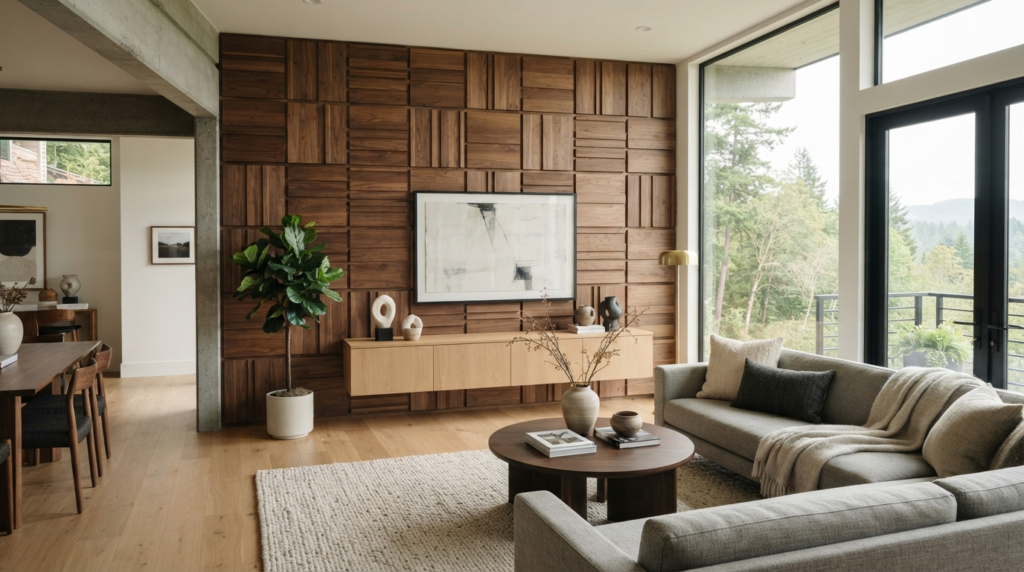
The physical layout of wood slats changes how a room feels just as much as the wood type itself. Choosing the right pattern can visually stretch, widen or elevate a space.
Vertical Slat Pattern
Vertical wood slats draw the eye upward, making standard ceiling heights feel noticeably taller. This pattern is especially effective in bedrooms and hallways where height perception matters most. It is currently the most common layout requested for modern wood accent walls.
Horizontal Shiplap Pattern
Horizontal wood boards create a classic, cottage-inspired look while making a narrow room appear wider. Shiplap-style gaps between boards add subtle shadow lines that enhance texture under natural light. This pattern remains popular in farmhouse and coastal-style interiors specifically.
Herringbone and Chevron
Herringbone and chevron layouts arrange wood pieces at angled, interlocking points for a bold, high-end statement look.
These patterns require more precise cutting and planning, increasing both material waste and installation time. They are best reserved for smaller feature areas rather than full walls due to complexity.
Fluted and Reeded Panels
Fluted panels use rounded, evenly spaced grooves across the wood surface, creating a soft shadow-line texture. This style has become closely associated with boutique hotel and luxury interior design in recent years.
Fluted wood accent walls pair especially well with matte black hardware and warm ambient lighting.
How to Choose the Right Wood Type for Your Space
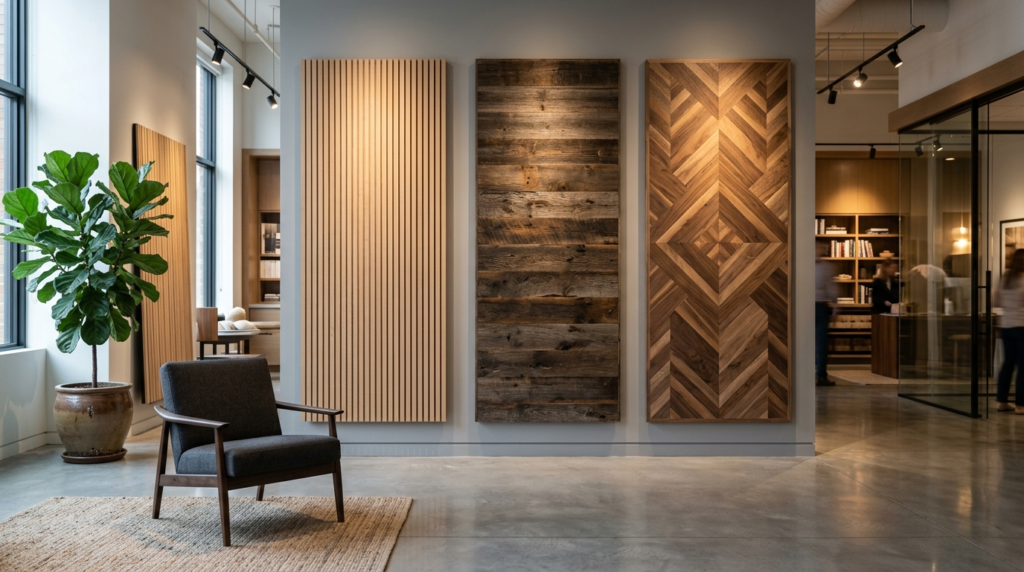
Selecting wood for an accent wall should be based on the room’s lighting, function and humidity level rather than trend alone. Matching these factors correctly prevents both visual mismatch and material failure.
Living Room vs Bedroom vs Office
Living rooms suit bolder wood tones like walnut or reclaimed barnwood since the space is meant to make a statement. Bedrooms benefit from lighter, warmer tones such as oak that support a calming atmosphere.
Offices generally do well with engineered slats in neutral tones that read as professional rather than rustic.
Light Wood vs Dark Wood
Light wood tones reflect more natural light, making small or dim rooms feel more open and airy.
Dark wood tones absorb light and create a cozier, more intimate feeling suited to larger or brighter rooms. Balancing wood tone against existing room lighting is essential before finalizing a material choice.
Budget-Based Wood Selection
Tight budgets are best served by peel-and-stick or basic engineered slat panels, which deliver strong visual impact affordably. Mid-range budgets open up quality engineered wood and reclaimed panel options.
Higher budgets allow solid wood planks in premium species like walnut or teak for a long-term investment finish.
Indoor vs Outdoor Wood Accent Walls
Indoor wood accent walls have far more material flexibility since they avoid direct weather exposure.
Outdoor applications, such as covered decks or patios, require WPC or specially sealed solid wood rated for exterior use. Using an indoor-rated wood product outdoors will lead to warping, cracking or rot within a short period.
Step-by-Step Installation Guide
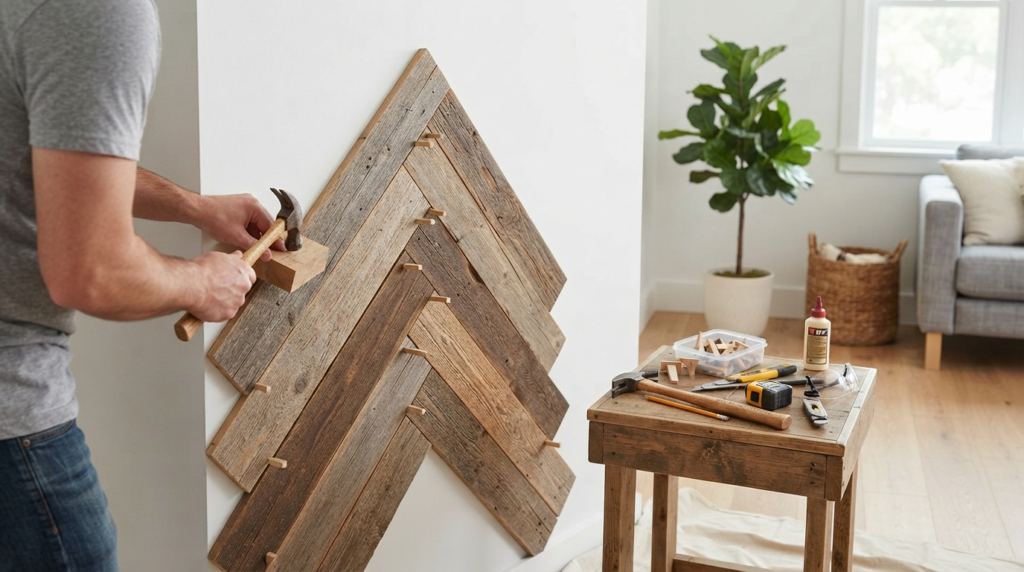
Most wood accent wall types can be installed within a single day by a reasonably confident DIYer. Skipping preparation steps remains the most common cause of long-term panel failure.
Tools and Materials Checklist
A standard installation requires a tape measure, level, miter or circular saw, construction adhesive or finishing nails, and a stud finder.
Spacers help maintain even slat gaps throughout the installation process. Safety glasses and a dust mask are recommended when cutting engineered wood products specifically.
Wall Preparation
The wall must be clean, dry, and free of loose paint, grease or old wallpaper residue before panels are applied. Any significant dents or holes should be filled and sanded flush beforehand. This step directly affects how well adhesive bonds and how flat the finished wood surface appears.
Peel-and-Stick Plank Installation
Installation begins from a level baseline at the bottom of the wall, working upward in consistent rows. Backing is peeled in small sections while pressing firmly outward to avoid trapped air pockets. Each plank should be pressed tightly against its neighbor to maintain a continuous, seamless wood grain pattern.
Nail and Adhesive Method
Solid wood and heavier engineered panels typically need construction adhesive applied in a zigzag pattern across the panel back. Finishing nails driven into wall studs add extra security beyond adhesive alone.
Holding each panel firmly in place for the manufacturer’s specified cure time prevents shifting before the bond sets.
Cutting and Fitting Around Corners
Outlets, switches and corners require careful pre-measurement and marking before any cuts are made. A fine-tooth saw blade reduces splintering on both solid and engineered wood surfaces.
Dry-fitting cut pieces before final adhesive application avoids costly measurement mistakes on visible cut edges.
Cost Breakdown for a Wood Accent Wall
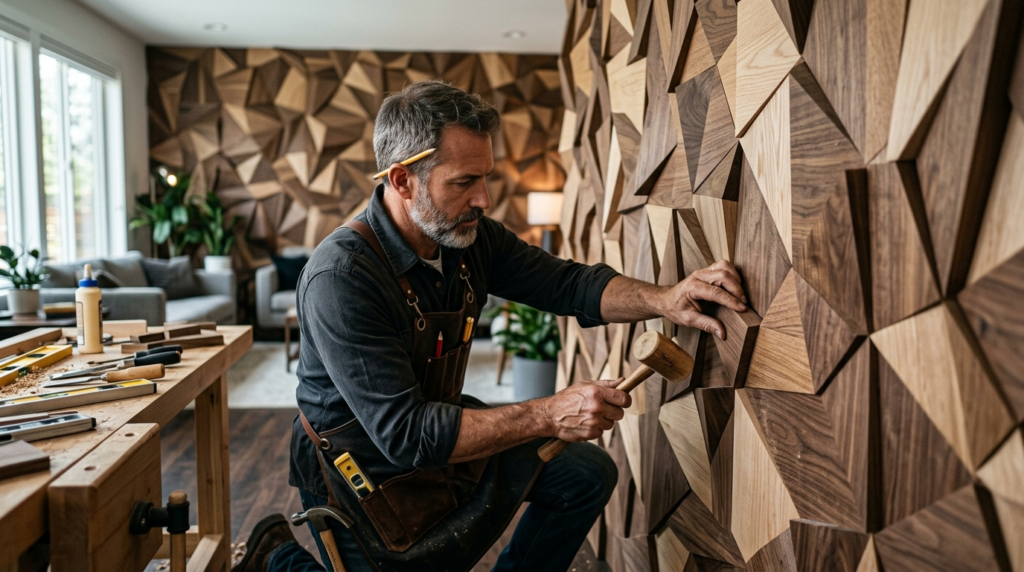
Wood accent wall pricing varies substantially based on wood type, and labor costs can significantly add to the total project budget. Understanding real figures avoids surprises once a project is already underway.
DIY Cost Per Square Foot by Wood Type
Peel-and-stick wood planks generally range from two to five dollars per square foot, making them the most economical entry point.
Engineered and MDF slat panels typically cost four to nine dollars per square foot depending on veneer quality. Solid wood, reclaimed and specialty species can range from eight to twenty dollars or more per square foot.
Professional Installation Cost Comparison
Hiring a professional typically adds three to seven dollars per square foot on top of material costs. Complex patterns like herringbone or chevron often require professional-level cutting precision, increasing labor time substantially.
For a standard 10×10 foot wall, professional labor alone can range from three hundred to seven hundred dollars.
Hidden Costs to Budget For
Wood sealant, trim strips and corner transition pieces are frequently excluded from listed panel prices.
Ordering physical samples before committing to a full wood accent wall order typically costs an additional twenty to forty dollars. Cutting waste should be budgeted at roughly ten percent extra material beyond the measured wall area.
| Wood Type | DIY Cost/sq ft | Pro Install Add-On | Notes |
| Peel-and-Stick | $2–$5 | $2–$4 | Fastest, most budget-friendly |
| Engineered/MDF Slats | $4–$9 | $3–$5 | Best value-to-look ratio |
| Reclaimed/Barnwood | $8–$16 | $4–$6 | Sourcing time adds to timeline |
| Solid Wood | $10–$20 | $5–$7 | Highest long-term durability |
Design Inspiration by Style
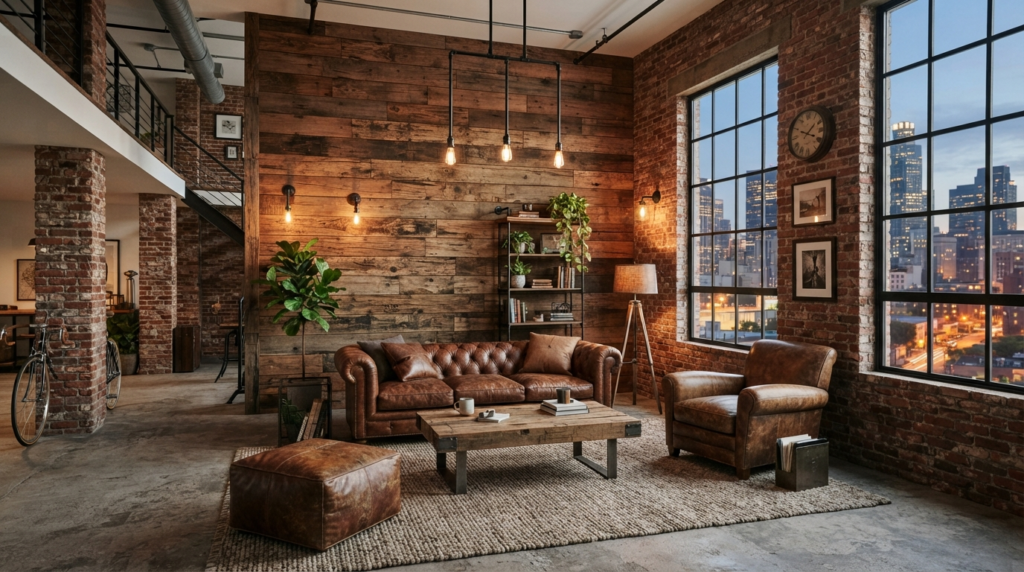
A wood accent wall adapts naturally across most major interior design styles once the right species and pattern are matched correctly. The following directions reflect the styles most frequently paired with wood accent walls today.
Modern Minimalist Wood Accent Wall
Modern minimalist spaces favor thin vertical slats in walnut or matte black-stained wood for a clean, linear look.
Keeping the remaining room palette neutral allows the wood texture to remain the clear focal point. This style suits living rooms and entryways aiming for an uncluttered, contemporary feel.
Rustic Farmhouse Wood Wall
Reclaimed barnwood in horizontal shiplap layout defines the classic farmhouse wood accent wall look most searched by homeowners.
Weathered gray or warm brown tones pair naturally with existing farmhouse furniture and neutral textiles. This style photographs particularly well under warm, low ambient lighting.
Scandinavian Light-Wood Look
Scandinavian interiors favor pale, unstained wood species like ash or birch arranged in simple vertical or horizontal patterns.
The emphasis stays on natural light and minimal color contrast throughout the room. This style suits small apartments and bedrooms aiming for a bright, airy atmosphere.
Luxury Hotel-Style Fluted Wood Wall
Fluted wood panels in warm oak or matte black finishes replicate the boutique hotel headboard aesthetic effectively. Adding indirect LED strip lighting along panel grooves strengthens the premium, high-end effect.
This pairing works especially well in bedrooms and powder rooms where a smaller wall creates significant visual impact.
Maintenance and Longevity of Wood Accent Walls
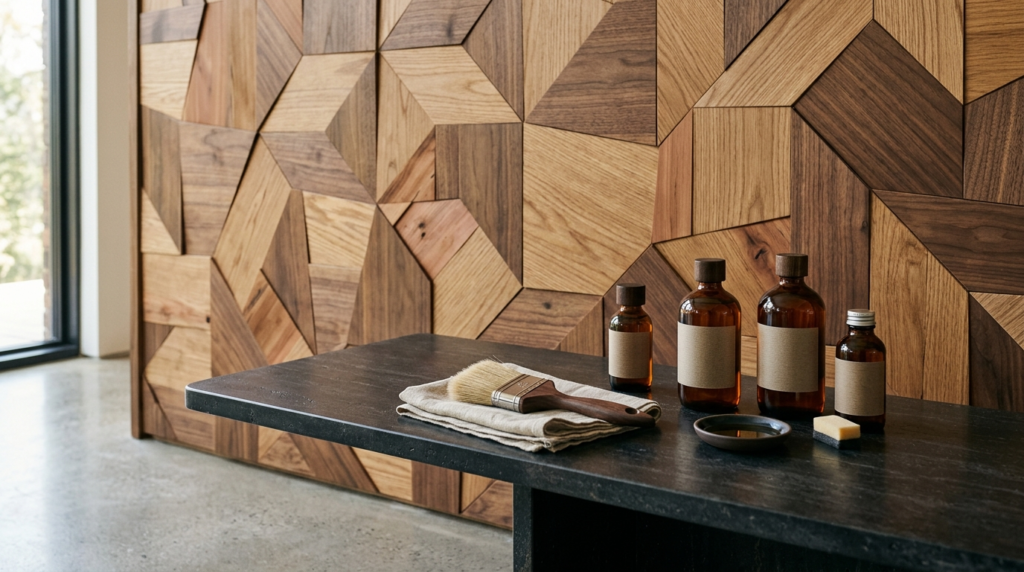
Wood accent walls generally require minimal upkeep, though care needs shift depending on the wood category chosen. Understanding these differences upfront extends the wall’s overall lifespan.
Cleaning Tips by Wood Type
Solid and engineered wood should be cleaned with a dry or barely damp cloth to avoid warping or staining over time.
WPC and peel-and-stick surfaces tolerate slightly more moisture and can handle mild soap solutions safely. Reclaimed wood benefits from gentle dusting rather than wet cleaning, which can disturb its natural aged finish.
How Long Each Wood Type Lasts
Solid wood planks can last twenty to thirty years or more when properly maintained and periodically refinished.
Engineered and WPC panels typically last twelve to eighteen years under normal indoor conditions. Peel-and-stick planks have the shortest realistic lifespan, generally eight to ten years, due to adhesive degradation over time.
Refinishing vs Replacing Damaged Panels
Solid wood panels can usually be sanded and refinished multiple times, extending their usable life significantly beyond the original finish.
Engineered wood veneer can typically only be lightly refinished once before the base material becomes visible. Peel-and-stick and WPC panels are generally replaced rather than refinished when damaged, since they lack a solid wood core.
Sustainability: Eco-Friendly Wood Options
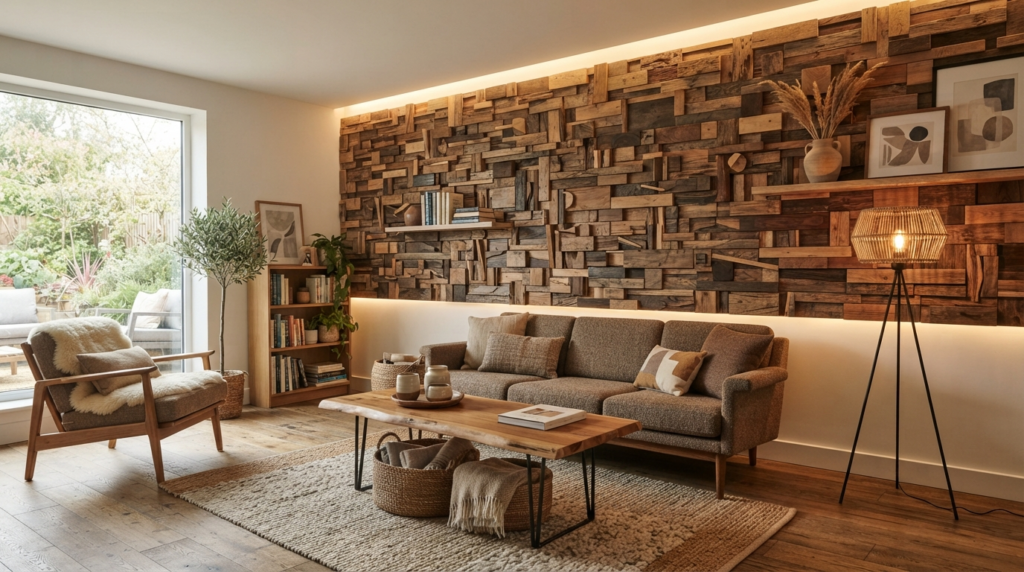
Sustainability is a growing concern among buyers researching a wood accent wall, yet it is rarely addressed clearly on competitor product pages. Choosing responsibly sourced wood reduces both environmental impact and potential indoor air quality issues.
FSC-Certified and Responsibly Sourced Wood
FSC certification confirms that wood comes from forests managed under strict environmental and replanting standards. This certification often correlates with lower formaldehyde emissions in the adhesives used during panel manufacturing.
Buyers concerned about indoor air quality should specifically look for FSC-certified or low-VOC labeled wood products.
Reclaimed Wood as the Greenest Choice
Reclaimed wood requires no new tree harvesting, making it the most environmentally sound option within the wood accent wall category.
Each reclaimed panel also carries unique character that new manufactured wood cannot replicate. The main trade-off is longer sourcing time and generally higher pricing compared to new engineered alternatives.
Common Mistakes to Avoid
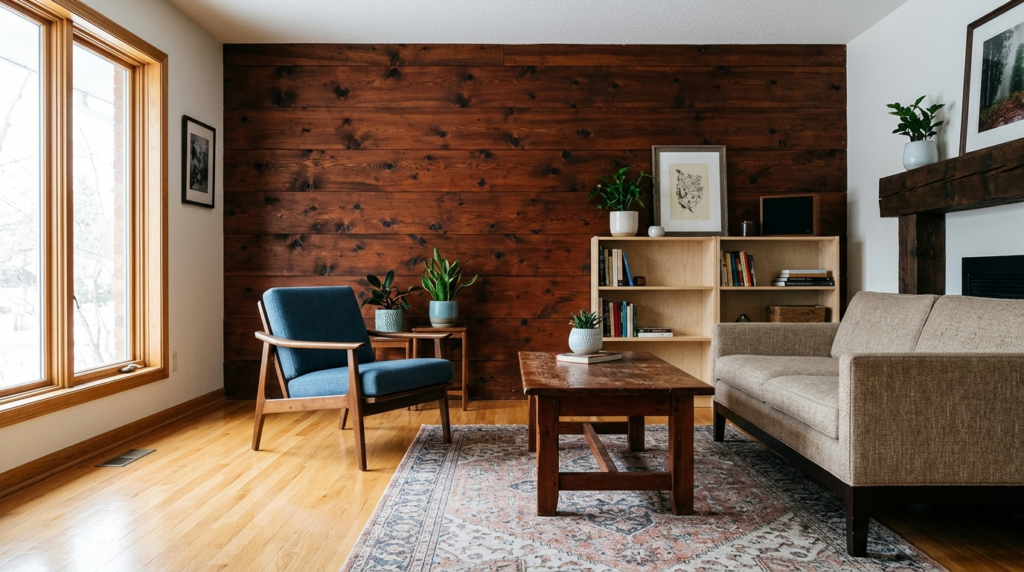
Even carefully planned wood accent wall projects can fail due to a few predictable and avoidable mistakes. Recognizing these in advance protects both budget and finished appearance.
Using Non-Moisture-Resistant Wood in Wet Areas
Installing solid or reclaimed wood in bathrooms or kitchens without proper sealing frequently leads to warping or mold within a year.
WPC or fully sealed solid wood should always be chosen for humid environments instead. Checking a product’s moisture rating before purchase prevents this common and costly error.
Wrong Pattern Scale for Small Rooms
Wide plank or heavy herringbone patterns can visually overwhelm a small room, making it feel more cramped rather than styled.
Thinner slats and simpler vertical layouts generally scale better in compact spaces. Measuring the wall and viewing pattern samples at true scale before ordering helps avoid this mismatch.
Ignoring Wood Expansion and Contraction Gaps
Wood naturally expands and contracts with seasonal humidity changes, and panels installed without small expansion gaps can buckle over time. Manufacturer installation guides typically specify a required gap size for this reason.
Skipping this detail is one of the most frequent causes of warped wood accent walls after the first year.
Frequently Asked Questions
Is a wood accent wall expensive?
Cost varies widely, from around two dollars per square foot for peel-and-stick planks to twenty dollars or more for solid wood species like walnut or teak. Most homeowners find engineered wood slats offer the best balance between authentic look and affordable pricing.
Can I install wood accent wall panels myself?
Yes, most peel-and-stick and engineered slat panels are designed for straightforward DIY installation using basic tools. Complex patterns like herringbone or solid wood requiring precise cuts may benefit from professional installation instead.
Does a wood accent wall need sealing?
Solid wood in humid areas like kitchens or bathrooms generally needs sealing to prevent moisture damage. Engineered, WPC and peel-and-stick products typically come pre-finished and do not require additional sealing in normal indoor conditions.
What is the difference between a wood accent wall and wood paneling?
A wood accent wall applies wood material to a single feature wall, while wood paneling traditionally covers every wall in a room. Accent walls offer a more modern, contrast-driven look compared to full-room paneling’s more traditional feel.
Final Verdict
Choosing the right wood accent wall comes down to matching wood type, pattern and budget to the specific room rather than following trends alone.
Engineered wood slats currently offer the best overall balance of authentic appearance, durability and price for most homes, while peel-and-stick remains the safest entry point for renters.
Related Articles
Accent Wall Panels: The Complete Guide to Choosing, Installing and Styling Your Feature Wall
Cool Room Ideas: 50+ Unique Ways to Transform Any Space
3 Piece Wall Art: Complete Guide to Sizing, Spacing & Styling