 homeofdecor.online
Living room wallpaper decor is one of the simplest ways to change the entire mood of a home without doing a full renovation. It adds texture, color, and personality to walls that plain paint often cannot achieve. Homeowners today prefer wallpaper because it offers more design variety, from soft floral patterns to bold geometric prints.
It also works well for both rented and owned homes, since removable options are now widely available. This guide walks through everything you need to know before choosing wallpaper for your living room. By the end, you will understand types, patterns, colors, and placement ideas in a simple and practical way.
Why Wallpaper Works Better For Living Rooms
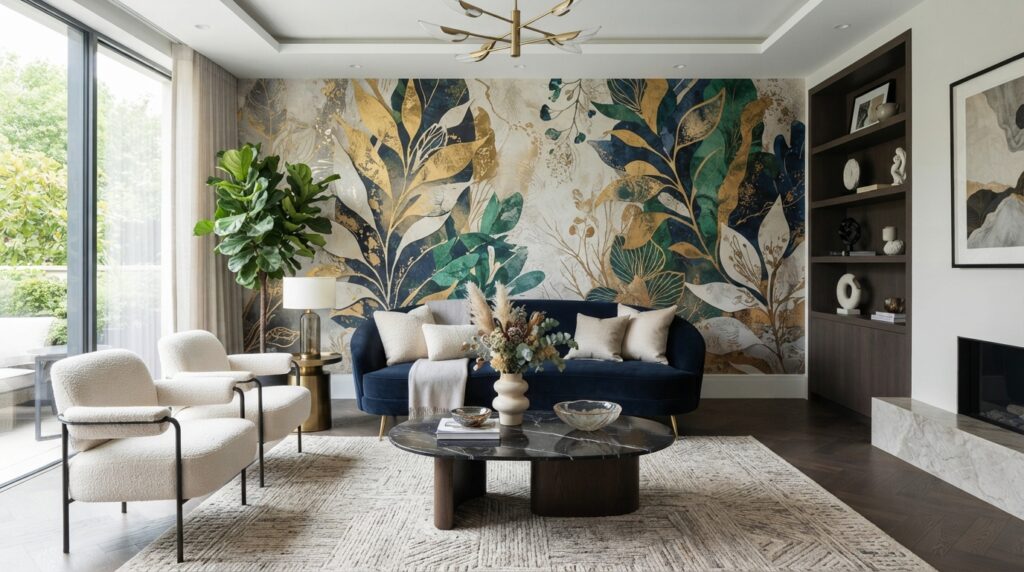
Wallpaper adds depth and character that flat paint simply cannot match, especially in a room where guests spend most of their time. It hides minor wall imperfections better than paint and gives a finished, designer-like appearance almost instantly.
Many patterns also help make a small living room feel larger or a plain room feel warmer. Unlike paint, wallpaper can be changed more easily when trends shift, without needing multiple coats or long drying time. This flexibility is one major reason living room wallpaper decor has become a preferred choice over traditional paint jobs.
Types of Wallpaper for the Living Room
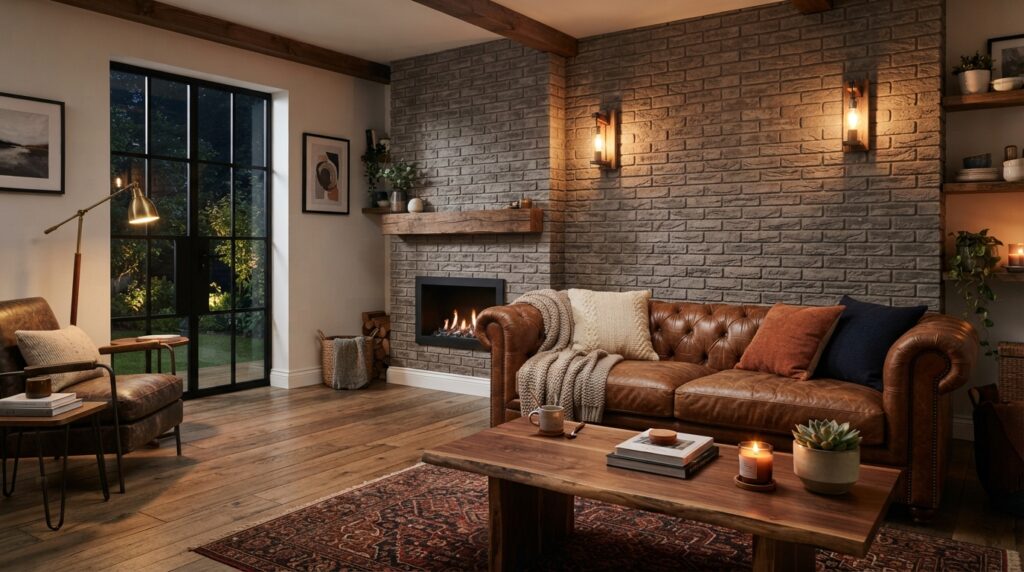
Choosing the right type of wallpaper matters just as much as choosing the right pattern, since durability and application differ across materials. The four options below cover most living room needs, from rented apartments to permanent family homes.
Vinyl Wallpaper
Vinyl wallpaper is one of the most durable options available, making it ideal for living rooms that see daily foot traffic.
It resists moisture, minor scuffs, and stains better than most other materials. This makes it a practical choice for families with children or pets. Cleaning is also simple, usually requiring just a damp cloth wipe.
Peel and Stick Wallpaper
Peel and stick wallpaper is a favorite for renters and first-time decorators who want a low-commitment option. It does not require glue or professional installation, so it can be applied and removed without damaging the wall.
This makes experimenting with different living room wallpaper decor styles much easier. It is also budget-friendly compared to permanent wallpaper types.
Textured Wallpaper
Textured wallpaper, such as grasscloth or embossed designs, adds a tactile, three-dimensional feel to the room.
It works especially well for accent walls where you want a subtle but noticeable upgrade. This type suits living rooms with a natural or earthy design theme. It also tends to hide wall unevenness better than smooth finishes.
Fabric Wallpaper
Fabric or linen wallpaper gives a soft, luxurious finish that feels less industrial than vinyl options.
It is often chosen for formal or classic living room settings where elegance matters. Since it is more delicate, it works better in low-traffic zones. This type is usually priced higher due to the premium material used.
Choosing the Right Pattern
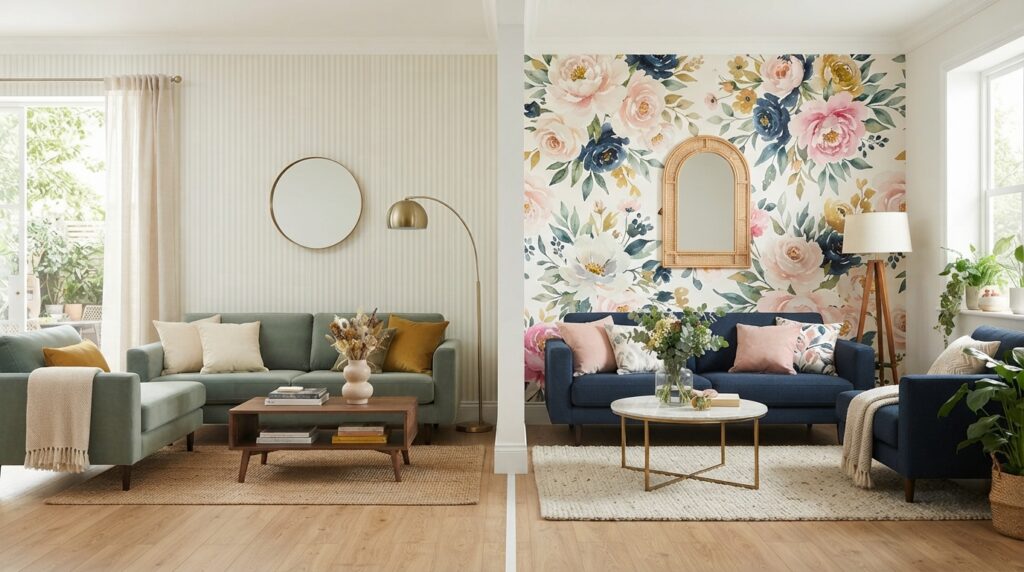
Pattern selection directly affects how a living room feels, whether calm, bold, or spacious. The following patterns are the most commonly used across modern living room wallpaper decor projects today.
Floral and Botanical Prints
Floral prints bring a natural, calming effect that works well in living rooms meant for relaxation. They pair nicely with wooden furniture and neutral sofas.
This pattern is popular in both classic and modern interior styles. It also softens a room that has too many hard, straight-lined furniture pieces.
Geometric Patterns
Geometric wallpaper suits modern and contemporary living rooms that follow clean, structured design themes.
It creates a strong visual focal point without needing extra decor pieces. This pattern pairs well with minimalist furniture and metallic accents. It is often chosen for urban apartment interiors.
Stripes
Striped wallpaper is commonly used to make ceilings appear higher or rooms feel more structured.
Vertical stripes work best in smaller living rooms, while horizontal stripes suit wider spaces. This pattern is simple yet effective for adding subtle personality. It also blends easily with most existing furniture colors.
Wallpaper Type Comparison Table
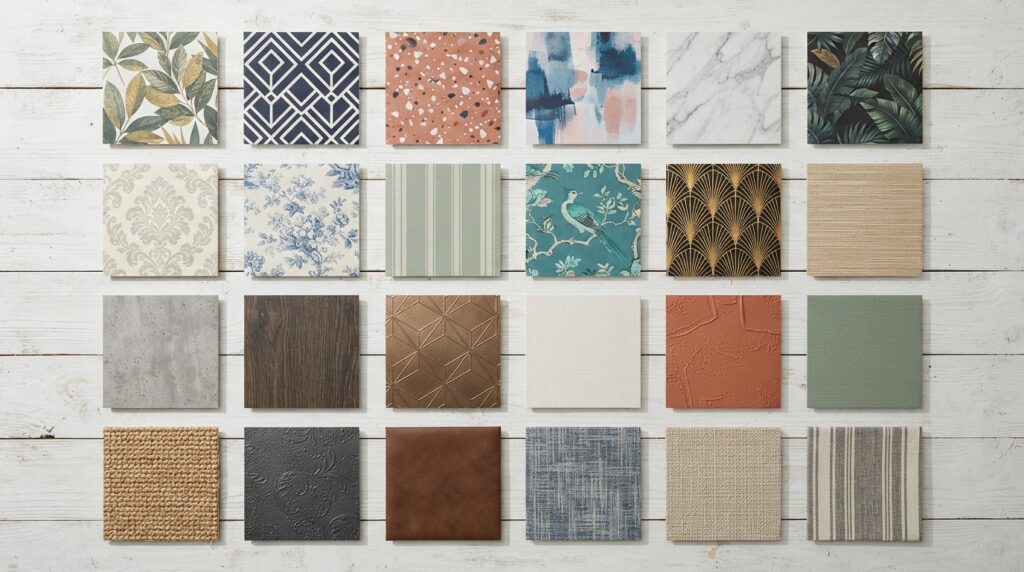
Before finalizing a choice, it helps to compare wallpaper types side by side based on durability, cost, and ideal use case.
| Wallpaper Type | Durability | Best For | Approximate Cost |
| Vinyl | High | High-traffic living rooms | Moderate |
| Peel and Stick | Medium | Rented homes, quick updates | Low |
| Textured | Medium-High | Accent walls, natural themes | Moderate-High |
| Fabric | Low-Medium | Formal, low-traffic areas | High |
This comparison makes it easier to match a wallpaper type with both your lifestyle and your budget before making a final decision.
Accent Wall or Full Room Coverage
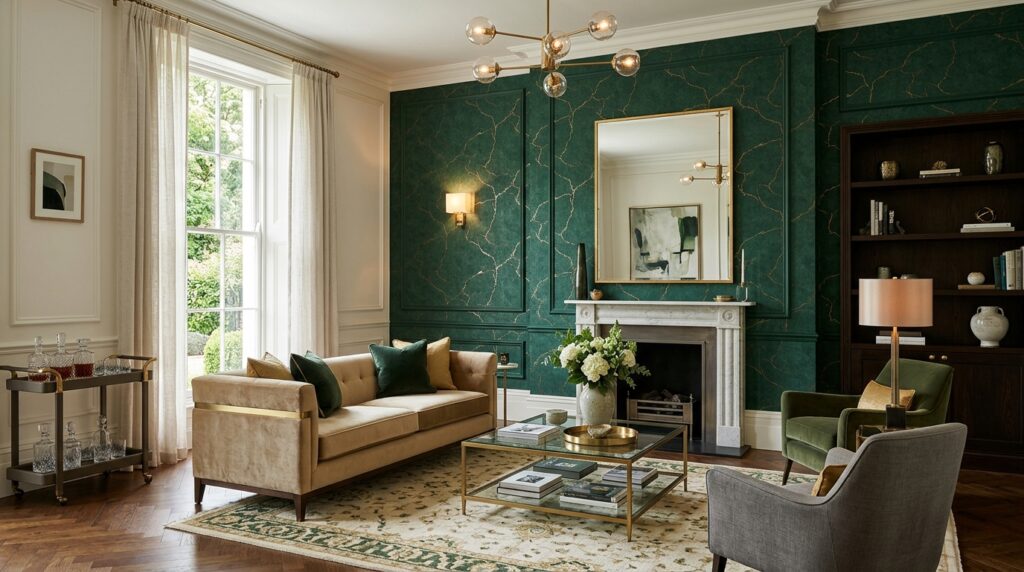
Deciding between one accent wall and full room coverage depends on how bold you want the final look to be. An accent wall, usually placed behind the sofa or television unit, adds a focal point without overwhelming the space.
Full room wallpaper works better in smaller living rooms where a single continuous pattern creates a cohesive, immersive feel. Many designers also combine wallpaper with plain paint on adjoining walls for balance. This approach keeps the room visually interesting without becoming too busy.
Color Selection Tips
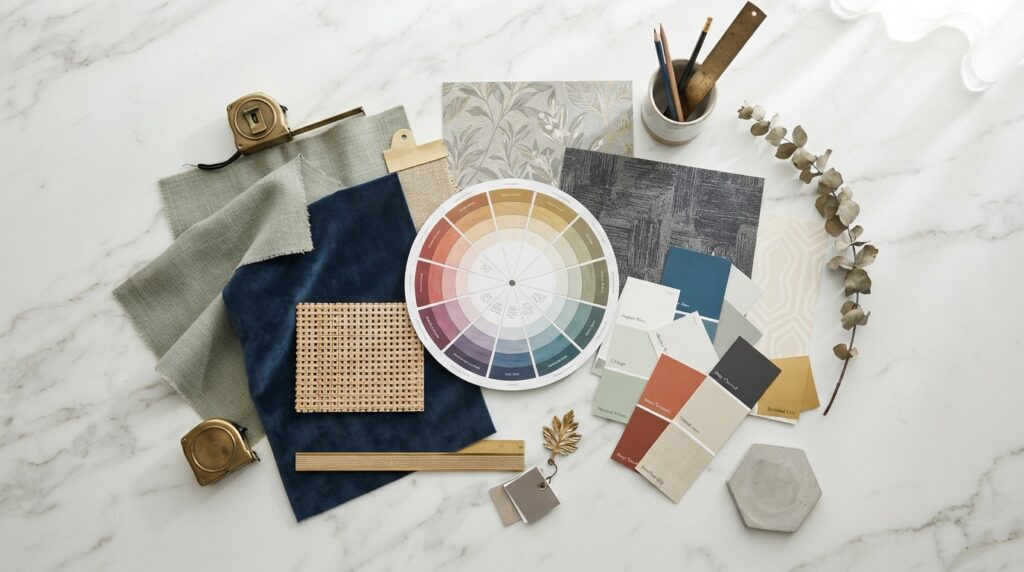
Color choice plays a major role in how the wallpaper pattern will feel once applied to the full wall. Neutral tones like beige, grey, and soft white blend easily with most furniture and are safer for long-term use.
Bold colors such as deep blue, emerald green, or mustard yellow work well when the room already has simple furniture, since the wallpaper becomes the main statement. It is also useful to match wallpaper undertones with existing curtains, cushions, or rugs so the room does not feel disconnected. Testing a small sample on the wall before full installation can prevent costly color mistakes later.
Placement Ideas That Work
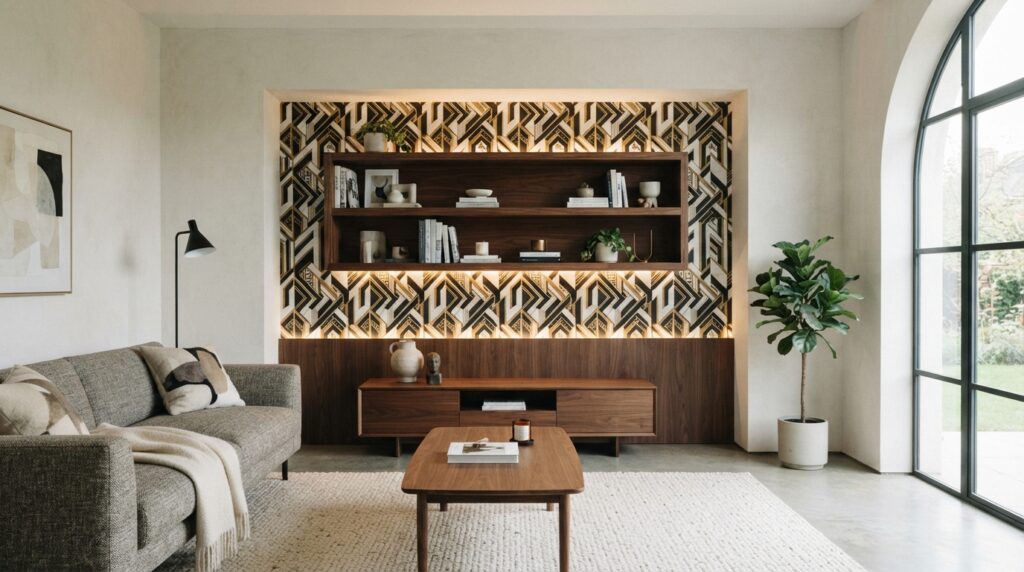
Certain wall placements consistently perform well when applying living room wallpaper decor. The wall behind the television unit is one of the most popular choices, since it naturally draws attention without competing with furniture.
Fireplace walls are another strong option, as the wallpaper enhances the fireplace as a design centerpiece. Placing wallpaper behind the sofa also works well, especially with patterns that add height or depth to the seating area. Some homeowners are now also experimenting with ceiling wallpaper, sometimes called the fifth wall trend, for a more dramatic effect.
Small vs Large Room Tips
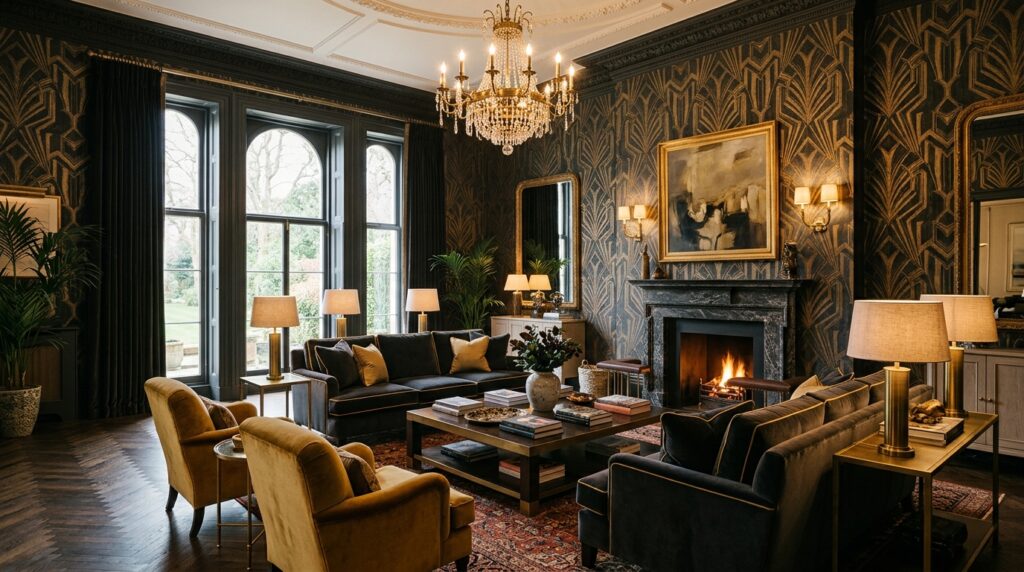
Room size should directly influence pattern and color choice to avoid an unbalanced final look. In smaller living rooms, lighter colors and smaller or vertical patterns help the space feel open rather than cramped.
Large rooms can handle bolder colors, oversized prints, or darker tones without feeling overwhelming. Lighting also plays a role here, since rooms with more natural light can support deeper wallpaper shades better than dimly lit spaces. Matching pattern scale with room size is one of the most overlooked steps in the decorating process.
Installation and Maintenance Basics
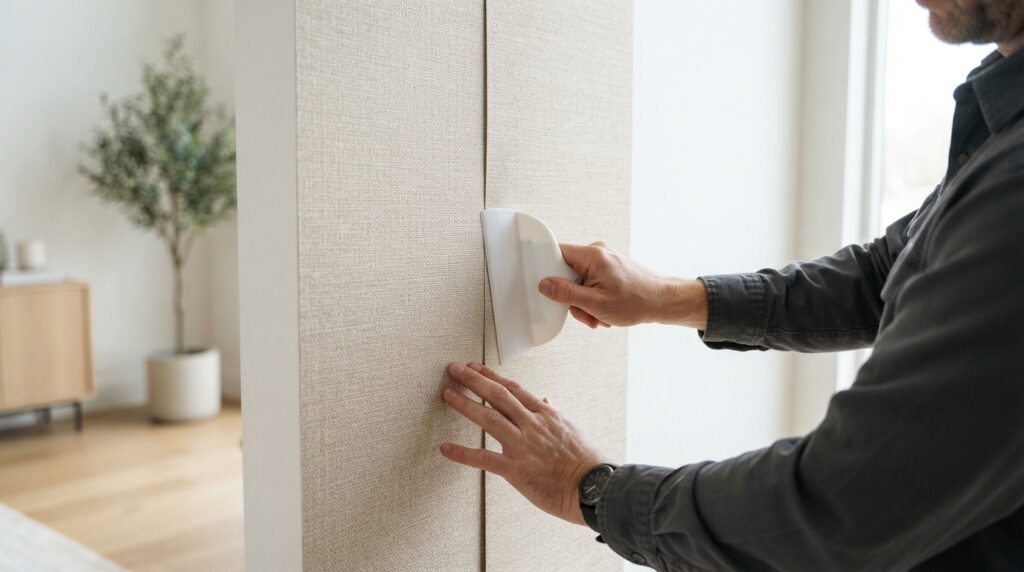
Proper wall preparation is essential before installing any wallpaper, since dust or uneven surfaces can affect how well it sticks. Walls should be cleaned, dried, and smoothed before application begins.
For peel and stick types, installation can usually be done without professional help, while vinyl or fabric wallpaper may require more careful handling. Maintenance mostly involves gentle wiping with a slightly damp cloth, while avoiding harsh chemicals that could damage the print or texture. Keeping the room ventilated also helps prevent moisture buildup behind the wallpaper over time.
What Top Design Sites Get Right
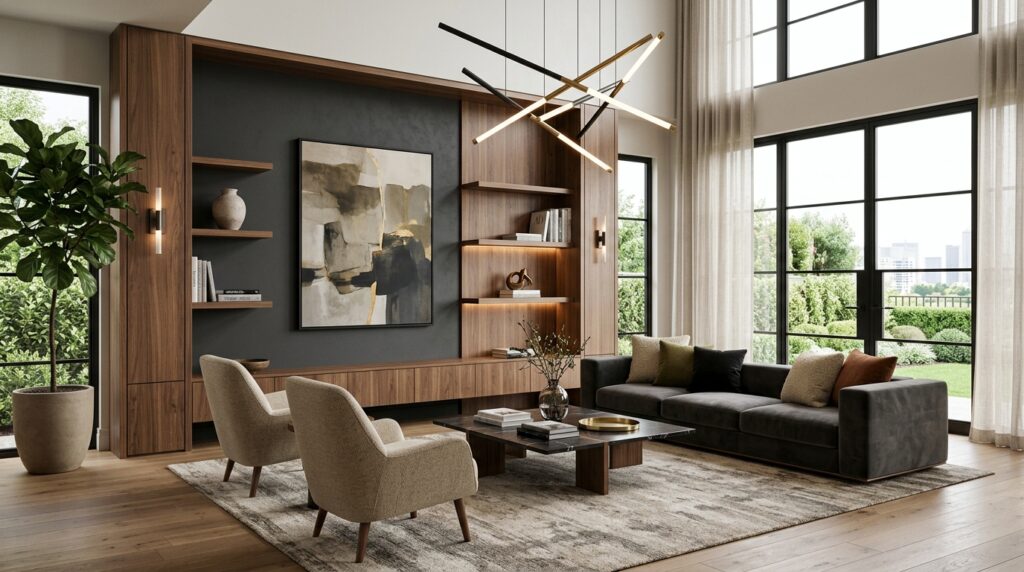
Popular platforms like Houzz succeed by showing large volumes of real project photos, which helps homeowners visualize ideas before deciding. Retailers such as World of Wallpaper and Love vs. Design focus more on guiding buyers through material and pattern choices with simple comparisons.
Smaller niche sites tend to focus on emotional appeal, describing the living room as the heart of the home to connect with buyers. Combining strong visuals with clear buying guidance, as seen across these platforms, is what makes living room wallpaper decor content genuinely useful to readers.
FAQs
Is wallpaper better than paint for a living room?
Wallpaper offers more texture, pattern variety, and depth compared to paint, though paint remains easier for quick touch-ups.
What is the best wallpaper for a small living room?
Light colors with vertical or subtle patterns work best, since they help the room appear more open and spacious.
Can wallpaper be installed without professional help?
Peel and stick wallpaper can usually be installed at home, while vinyl or fabric types may need more careful handling.
How long does living room wallpaper typically last?
With proper care, most quality wallpaper types last several years before needing replacement or updates.
Conclusion
Living room wallpaper decor offers a practical and creative way to transform a space without committing to a full renovation.
From choosing the right material to selecting a pattern that suits your room size, small decisions make a big visual difference. Whether you prefer a bold accent wall or a soft full-room finish, wallpaper remains one of the easiest upgrades for lasting impact.
Related Articles
Home Decor Australia: A Complete Guide to Styling Every Room in Your Home
Christmas Home Decor: A Complete Guide to a Festive and Beautiful Home
DIY Room Decor: A Complete Guide to Decorating Your Space on Any Budget
KeikiCo Sandshell Home Decor Set: Complete Buying Guide
Goth Home Decorating: A Complete Guide to Dark, Elegant Interiors