Bedroom Mirror : Feng Shui, Vastu & Science
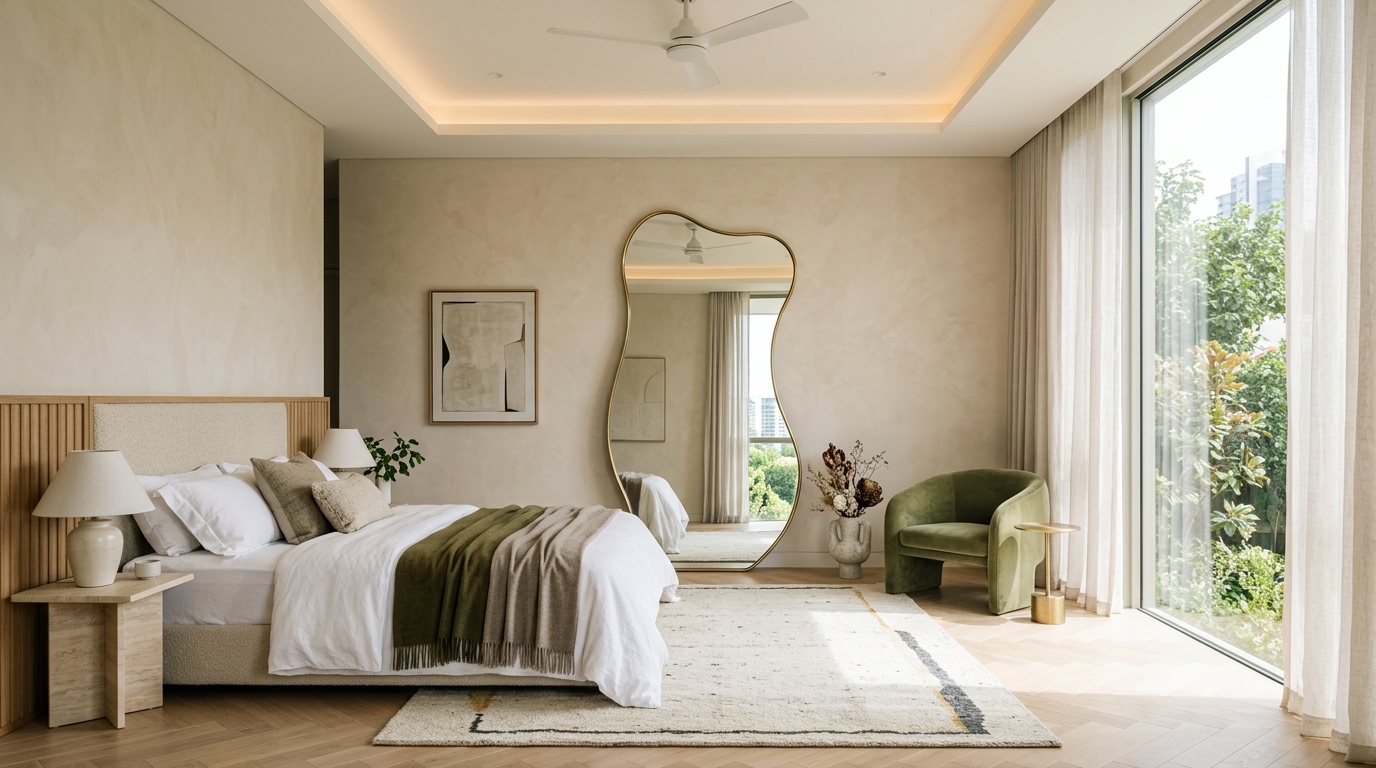
A bedroom mirror can make a room feel brighter, bigger and more finished, yet its position is one of the most argued-about details in home design. Some people swear that a mirror facing the bed ruins their sleep, while others have lived with one for years without any issue.
Feng Shui, Vastu Shastra and modern sleep research each offer a different lens on the same question. This guide walks through the beliefs, the science and the practical placement options so you can decide what actually makes sense for your own bedroom mirror setup.
Why Mirror Placement Sparks So Much Debate
The disagreement around bedroom mirror placement comes from four different worlds colliding at once — ancient energy practices, regional spiritual traditions, modern sleep studies and simple personal taste. Each of these groups below explains the topic from its own angle.
Common Myths About Bedroom Mirrors
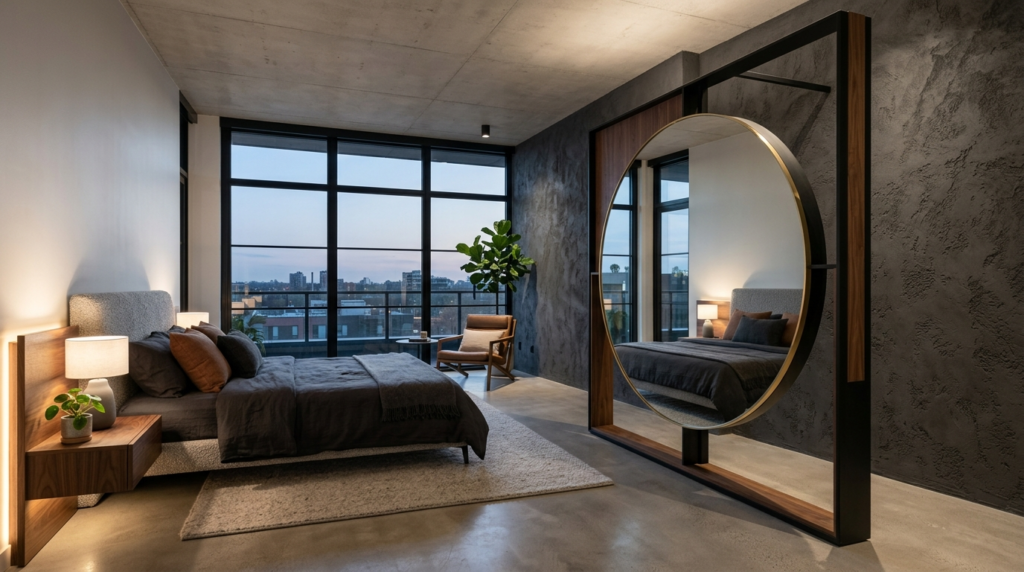
Before looking at what Feng Shui or science actually says, it helps to separate the folklore from the guidance. The beliefs below are widely repeated online, and each one has a distinct cultural root.
The Soul-Stealing Belief
In certain Asian folk traditions, a mirror reflecting a sleeping person is thought to confuse or trap part of their spirit during the night.
This idea predates modern interior design entirely and has no scientific grounding. It survives mainly as a cultural caution passed down through generations rather than a tested claim.
The Negative Energy Myth
A related belief holds that a bedroom mirror doubles whatever energy is present in the room, including stress, clutter or tension between partners.
This idea overlaps with Feng Shui thinking but is often repeated as a standalone superstition. It reflects a general discomfort with mirrors as “active” objects in a space meant for rest.
Nightmares and Bad Dreams
Many people report that catching a glimpse of movement in a mirror during the night unsettles them, and over time this has grown into a belief that mirrors directly cause nightmares.
There is no controlled study proving this link. It is more likely a mix of light sensitivity and the startle response some sleepers experience.
The Aging Myth
A newer claim circulating online says mirrors drain “vital energy” and speed up aging if placed near a sleeping body. This has no basis in biology or in classical Feng Shui texts. It appears to be a modern reinterpretation of older energy beliefs rather than an established tradition.
What Feng Shui Says About Bedroom Mirror Placement
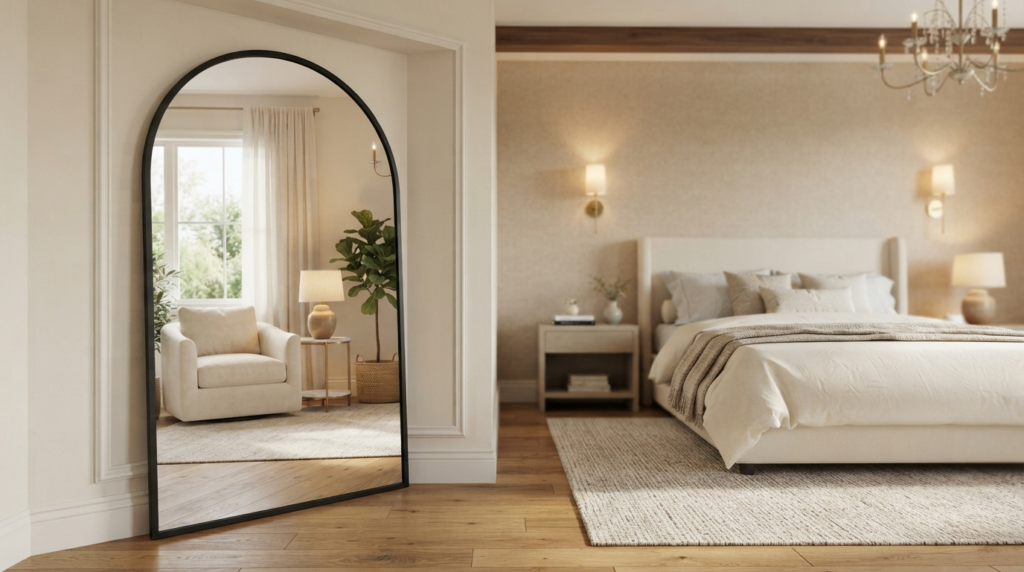
Feng Shui treats the bedroom as a space that should stay calm and restorative, which is why mirrors are handled with specific rules. The three ideas below explain the reasoning behind those rules in more detail.
Yin and Yang Balance
Feng Shui divides energy into yin, which is passive and restful, and yang, which is active and stimulating.
A bedroom is considered a yin space meant to support deep rest, while a mirror is classified as a yang object because it reflects and amplifies whatever is placed in front of it. Introducing a strong yang element into a yin space is believed to create an imbalance that works against restful sleep.
Chi Energy and the Bed
According to Feng Shui, a mirror positioned to reflect a sleeping body bounces personal chi, or life energy, back into the room instead of letting it settle.
This constant circulation is said to keep the body in a subtly alert state through the night. Practitioners describe this as one reason people feel tired even after a full night in bed.
Mirror Facing the Door
A lesser-known Feng Shui guideline warns against a bedroom mirror positioned opposite the door, since it is believed to push beneficial energy straight back out of the room before it can circulate.
This rule is separate from the bed-facing guideline but is often mentioned alongside it. Both rules share the same underlying goal of keeping energy contained and settled within the space.
Vastu Shastra Guidance for Bedroom Mirrors
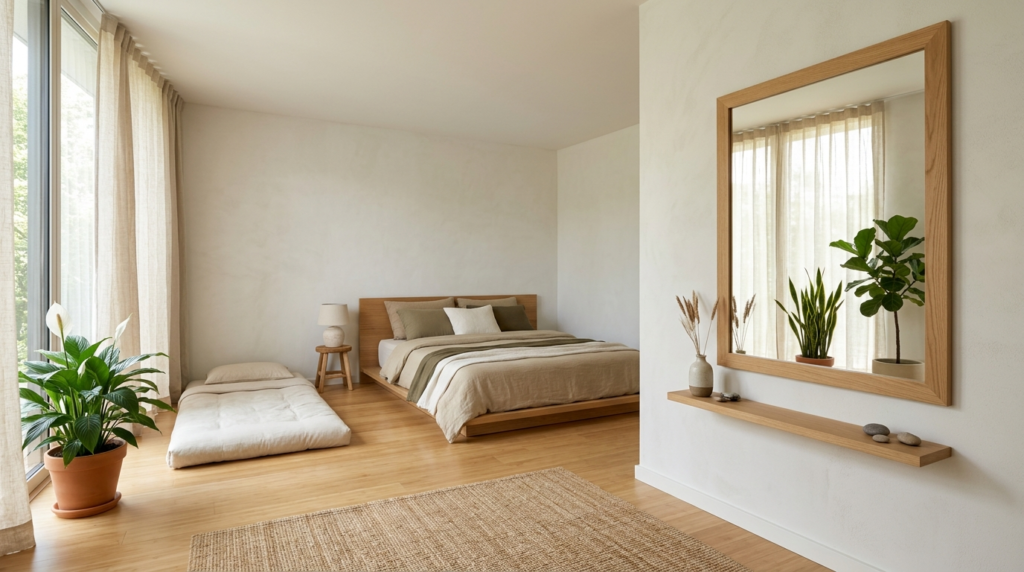
Vastu Shastra, the traditional Indian system of architecture, treats mirrors as water elements capable of disturbing the earth energy associated with sleep. It generally recommends placing a bedroom mirror on the north or east wall and keeping it away from direct alignment with the bed.
When relocation is not possible, Vastu suggests covering the mirror at night with a cloth or curtain as a practical remedy that many households already follow without labeling it a formal fix.
Does Science Support These Beliefs?
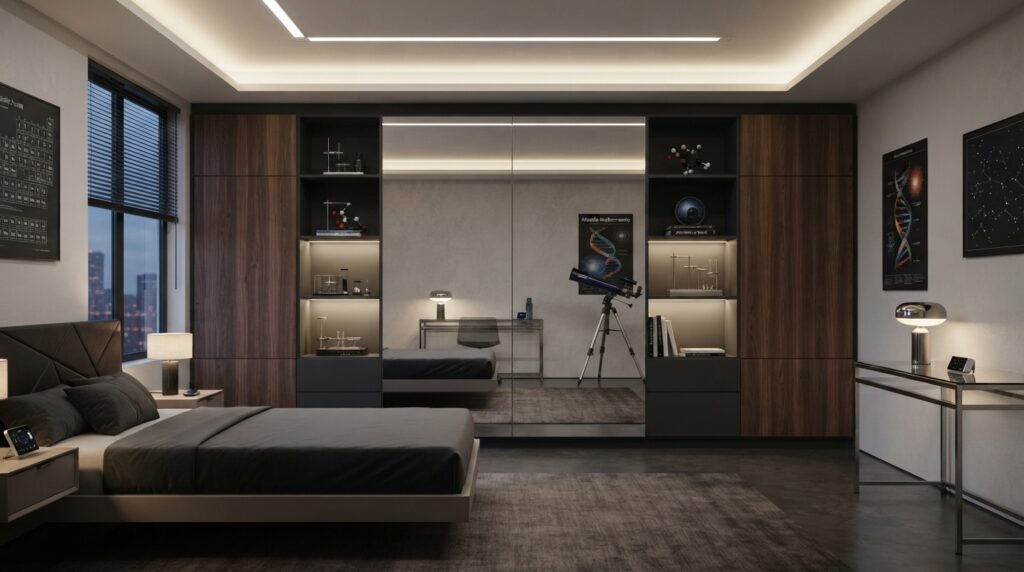
Modern sleep research does not study Feng Shui or Vastu directly, but it does examine the physical effects a mirror can have on a sleeping environment. The three factors below explain what actually happens from a sleep-science perspective.
Light Disruption
A bedroom mirror can reflect ambient light from streetlamps, electronics or early morning sun back into the sleeping area.
This added light exposure can delay melatonin release and make it harder to fall or stay asleep. The effect is more noticeable in rooms with thin curtains or nearby outdoor lighting.
Movement and Micro-Awakenings
Even small movements, such as rolling over or a partner shifting position, can appear as motion in a mirror’s reflection.
Some researchers suggest this reflected movement can register faintly in the brain even during light sleep stages, contributing to brief awakenings. These micro-awakenings are usually too short to remember but can still reduce overall sleep quality.
The Psychological Effect
Beyond physical light and motion, some people simply feel uneasy being watched by their own reflection while trying to fall asleep.
This sensation is more psychological than physiological, but it is real enough to affect relaxation for sensitive sleepers. People who already struggle with anxiety at bedtime tend to notice this effect more strongly.
Best Bedroom Mirror Placements
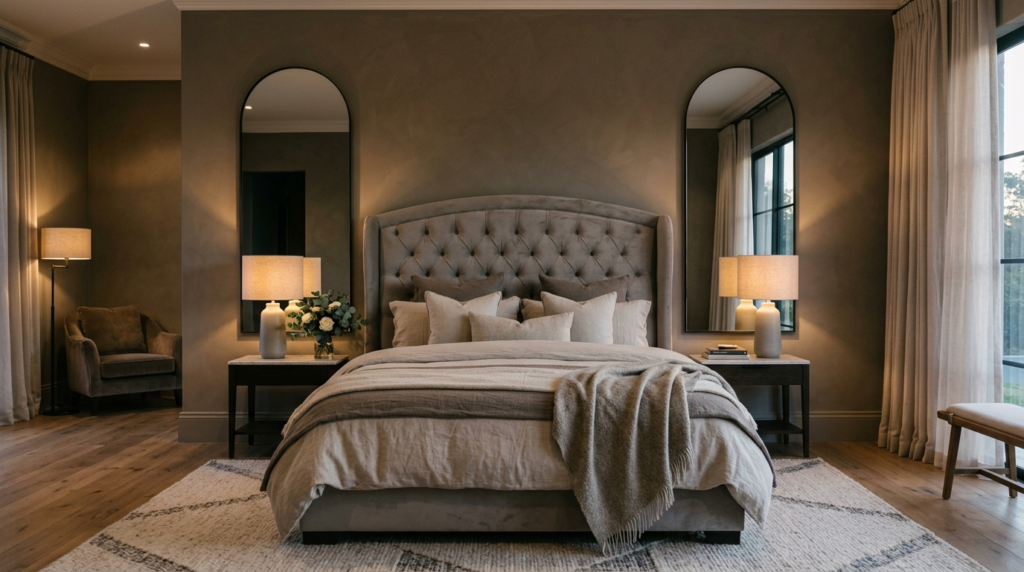
Choosing the right spot for a bedroom mirror depends on the room’s layout, but some positions consistently work better than others across Feng Shui, Vastu and practical design standards.
| Placement | Faces the Bed | Feng Shui/Vastu Rating | Best Suited For |
| Side wall, perpendicular to bed | No | Excellent | Most bedroom layouts |
| Inside a closet door | No | Excellent | Small or shared bedrooms |
| Leaning in a corner | No | Very Good | Renters and flexible spaces |
| Opposite a window | Sometimes | Good, needs checking | Dark rooms needing more light |
| Above a dresser on a side wall | No | Good | Everyday grooming routines |
| Directly opposite the bed | Yes | Poor | Not recommended |
How to Fix a Mirror Already Facing Your Bed
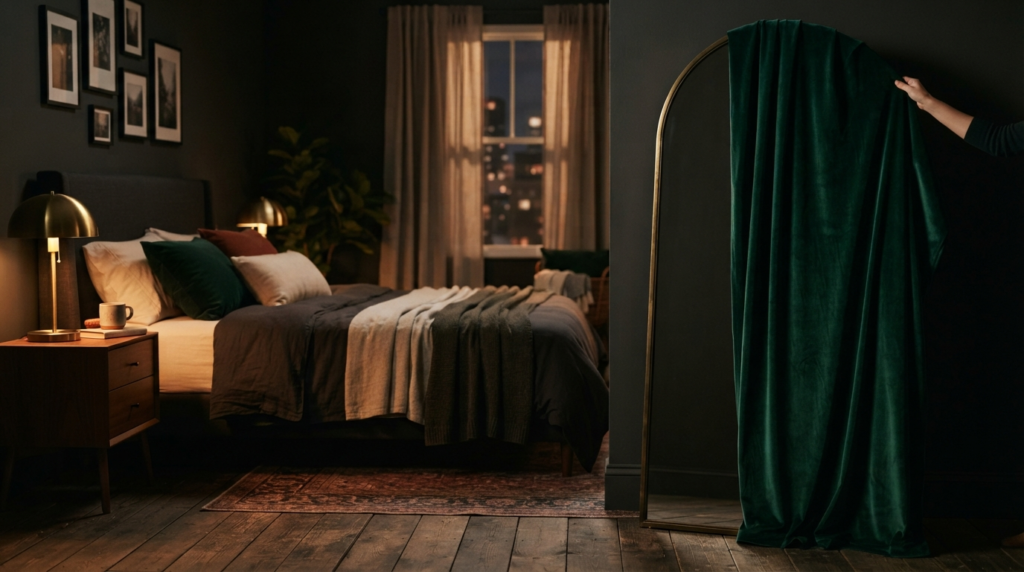
If moving the mirror to another wall is not practical, there are still a few reliable ways to reduce its effect without buying new furniture. Angling the mirror slightly so it no longer reflects the sleeping area is often enough on its own.
A lightweight curtain, fabric cover or folding screen placed over the mirror at night is a traditional and still widely used solution in many households. Rearranging the bed itself, when the room allows it, removes the issue entirely without touching the mirror at all.
Common Mistakes to Avoid
A few placement habits tend to cause more disruption than people expect, and they are worth checking even in an already-furnished room.
- Mounting a mirror directly across from the bed without ever testing the reflection from a lying-down position
- Positioning a mirror so it also faces the bedroom door, which both traditions advise against
- Hanging two large mirrors opposite each other, creating a repeating reflection loop
- Letting a mirror reflect cluttered surfaces, which visually doubles the mess in the room
When a Mirror Facing the Bed Is Actually Fine
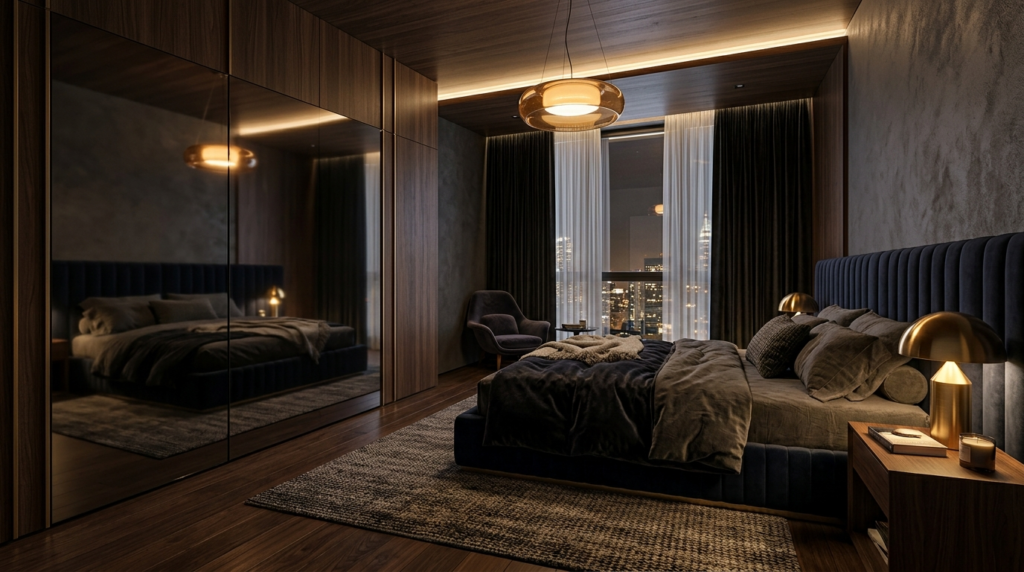
Not every household reports discomfort from this setup, and plenty of people sleep well regardless of where their bedroom mirror sits.
If the room has good curtains, minimal ambient light and a mirror angled even slightly away from direct reflection, the practical risks drop significantly. Personal comfort and how a person actually feels in their space should carry more weight than any single rule.
Frequently Asked Questions
Is a mirror facing the bed really bad for sleep?
Feng Shui and Vastu both advise against it, while sleep science points to light and movement as the more measurable factors. The combined effect varies by person and room setup.
Do Feng Shui and Vastu agree on mirror placement?
Largely yes. Both discourage a mirror facing the bed and both suggest covering it at night as a simple remedy when repositioning is not possible.
Is covering a bedroom mirror at night necessary?
It is not mandatory, but it is a commonly used solution across multiple traditions when the mirror cannot be moved to another wall.
Where should a mirror go in a small bedroom?
A side wall, the inside of a closet door, or a leaning corner mirror all work well without facing the bed directly.
Does science actually prove mirrors disrupt sleep?
There is no direct study on mirrors specifically, but the light reflection and movement-awareness factors are supported by general sleep research.
Conclusion
Bedroom mirror placement sits at the crossroads of tradition, psychology and simple room design, and no single rule fits every household.
Testing the reflection from where you actually sleep, keeping the mirror off a direct line with the bed, and using a cover or angle adjustment when needed covers most of the concern raised by Feng Shui, Vastu and sleep science alike. The right placement is ultimately the one that leaves the room feeling calm and functional for the people actually sleeping in it.
Related Articles
Japanese Home Decor: A Complete Guide to Minimalist and Calm Interiors
Modern Classic Home Decor: A Complete Guide to Timeless Interior Design
Nkuku Home Decor: The Complete Guide to Ethical, Handcrafted Homeware
Quirky Home Decor: A Complete Guide to Styling a Home With Personality
Victorian Gothic Home Decor: A Complete Guide to Dark, Elegant Interiors