Architectural Salvage Vintage Home Decor: The Complete Buying & Styling Guide
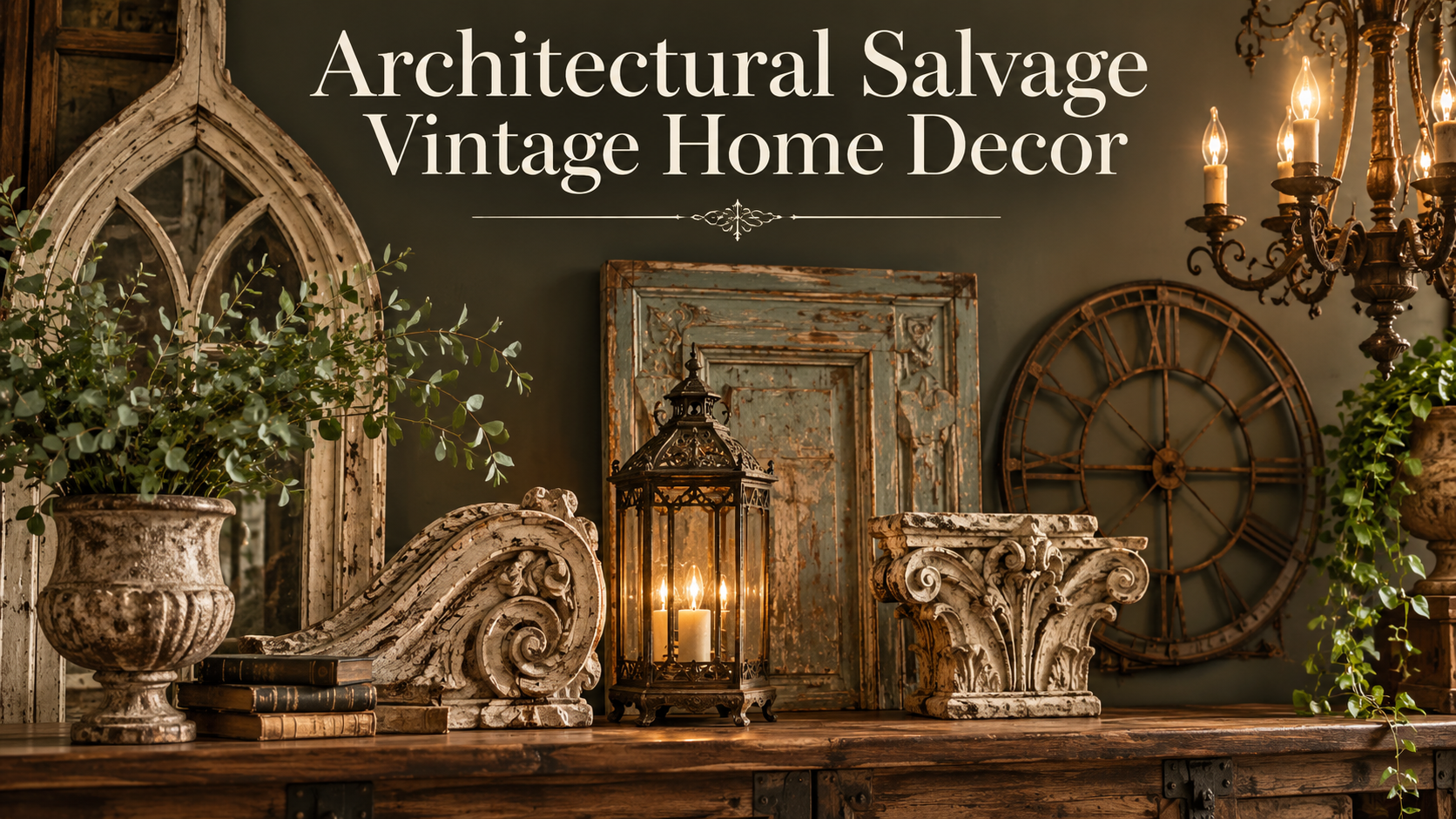
Architectural salvage vintage home decor is the practice of rescuing old building materials and fixtures from demolished or renovated structures and giving them a new life inside modern homes. Instead of buying mass-produced furniture, homeowners search for reclaimed doors, windows, mantels, and hardware that carry real history in every scratch and patina.
This approach has grown popular because it combines sustainability with a look that simply cannot be replicated by factory-made products. People who love character-filled interiors often turn to architectural salvage vintage home decor as their main design language. In the sections below, you will learn what it means, why it matters, and exactly how to bring it into your own space.
What Is Architectural Salvage Vintage Home Decor

At its core, this term describes reclaimed structural or decorative elements that are repurposed as functional decor. Below, we break down its definition and how it differs from other vintage categories.
Definition and Origins
Architectural salvage refers to items physically removed from old buildings before demolition, such as doors, beams, tiles, and iron gates.
The practice began as a way to prevent usable materials from ending up in landfills during urban redevelopment. Today it has evolved into a full design movement centered on reuse and craftsmanship.
Salvage vs Antique vs Vintage
Antique items are generally over a hundred years old and valued mainly for age and rarity, while vintage pieces are simply older than current trends but not necessarily historic.
Salvage, on the other hand, refers specifically to material removed from architecture rather than furniture or standalone objects. A single piece can technically be salvage, vintage, and antique all at once, depending on its origin and age.
Why Homeowners Are Choosing Architectural Salvage

More people are turning to reclaimed decor because it offers something new products cannot: authenticity paired with responsibility. This shift is driven by both environmental awareness and a desire for individuality.
Sustainability Benefits
Reusing old materials keeps usable wood, metal, and glass out of landfills, reducing the demand for freshly manufactured goods. Producing new lumber or ironwork consumes significant energy and raw resources, while salvage simply extends the life of what already exists. Choosing reclaimed pieces is one of the simplest ways homeowners can lower their household’s environmental footprint.
Unique Character and Cost Value
Because no two salvaged pieces are identical, they bring a level of individuality that new furniture rarely offers. Many salvage items are also priced lower than custom-built alternatives, especially when compared to hand-carved mantels or solid wood doors made today. This combination of originality and value is a major reason the trend keeps growing.
Popular Types of Salvage Pieces
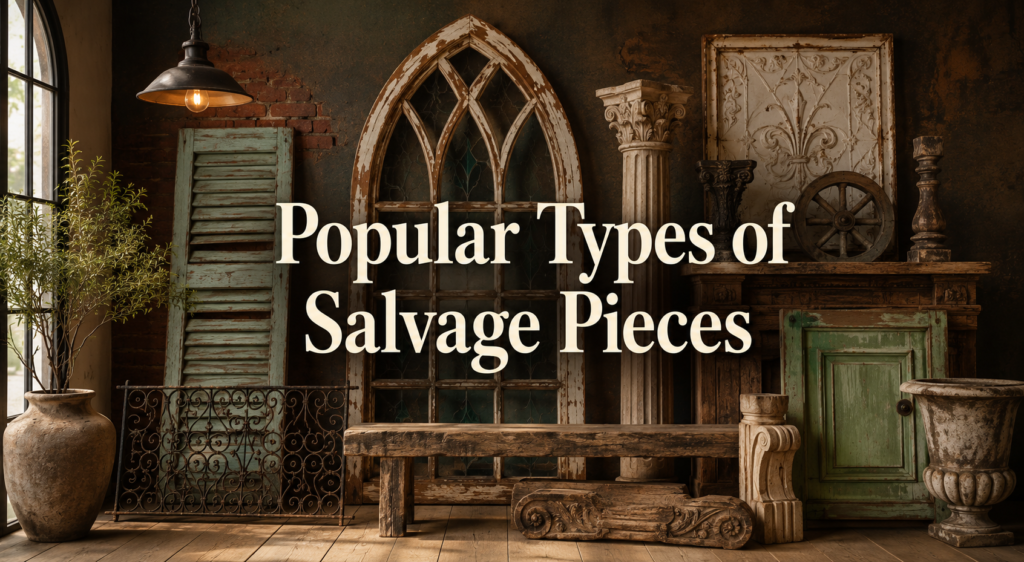
Reclaimed decor spans almost every part of a home, from entryways to lighting. The table below summarizes the most common categories before we explain a few in more depth.
| Category | Common Examples | Typical Use |
| Doors and Windows | Panel doors, shutters, transoms | Entryways, room dividers, wall art |
| Fireplace Elements | Mantels, surrounds, grates | Living room focal points |
| Hardware | Knobs, hinges, locks | Cabinet and door upgrades |
| Glass Work | Stained glass, leaded panels | Window inserts, hanging art |
| Lighting | Chandeliers, sconces | Dining rooms, hallways |
| Wood and Beams | Flooring, ceiling beams | Structural or decorative accents |
Doors Windows and Mantels
Old doors and windows are among the most requested salvage items because they instantly add architectural depth to a plain wall or entry.
Fireplace mantels serve a similar purpose, acting as a natural focal point even when the fireplace itself is purely decorative. These larger pieces usually require the most space and planning during installation.
Hardware Lighting and Glass
Vintage hardware such as brass knobs or forged hinges can transform ordinary cabinets without any major renovation. Reclaimed chandeliers and stained glass panels add warmth and color that modern lighting fixtures often lack. These smaller items are also the easiest entry point for beginners exploring architectural salvage vintage home decor for the first time.
Where to Find Quality Salvage
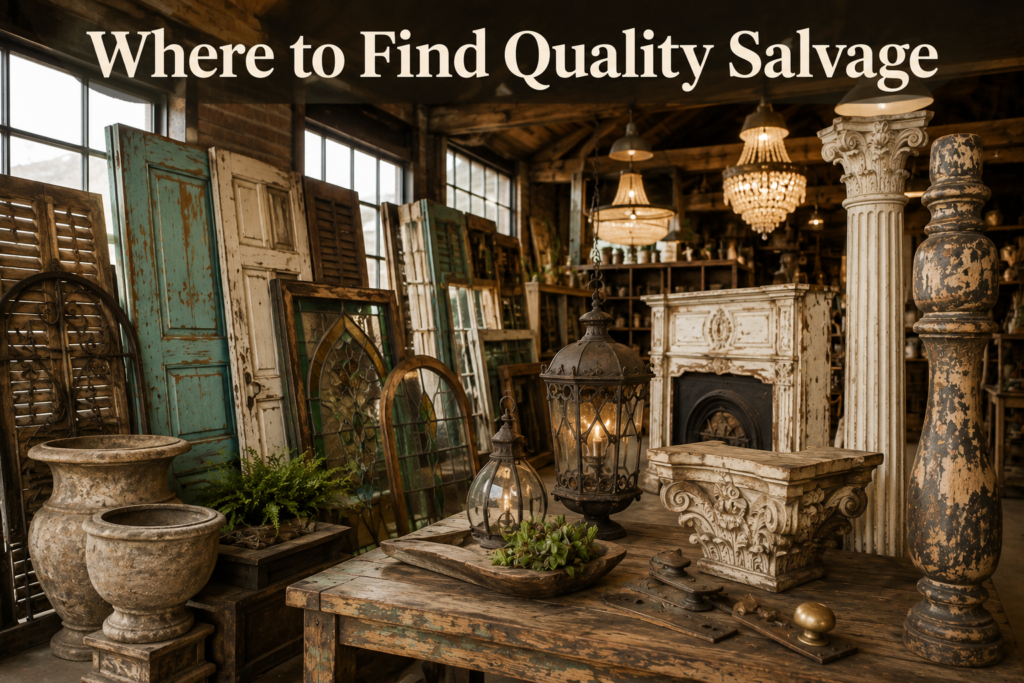
Sourcing genuine salvage requires knowing where sellers and collectors actually gather. The two main routes are physical salvage venues and digital marketplaces.
Salvage Yards and Auctions
Dedicated salvage yards remain the most reliable source because staff usually know the history and condition of each item. Estate sales and demolition auctions are another strong option, often offering rare pieces at lower starting prices. Visiting in person also allows buyers to inspect materials closely before committing.
Online Marketplaces
Platforms such as Etsy, eBay, and Facebook Marketplace have made salvage shopping accessible to people outside major cities.
Buyers should always request multiple photos and ask about dimensions before purchasing, since shipping large architectural pieces can be costly. Local pickup is generally the safer and cheaper choice when buying bulky items online.
How to Choose the Right Piece
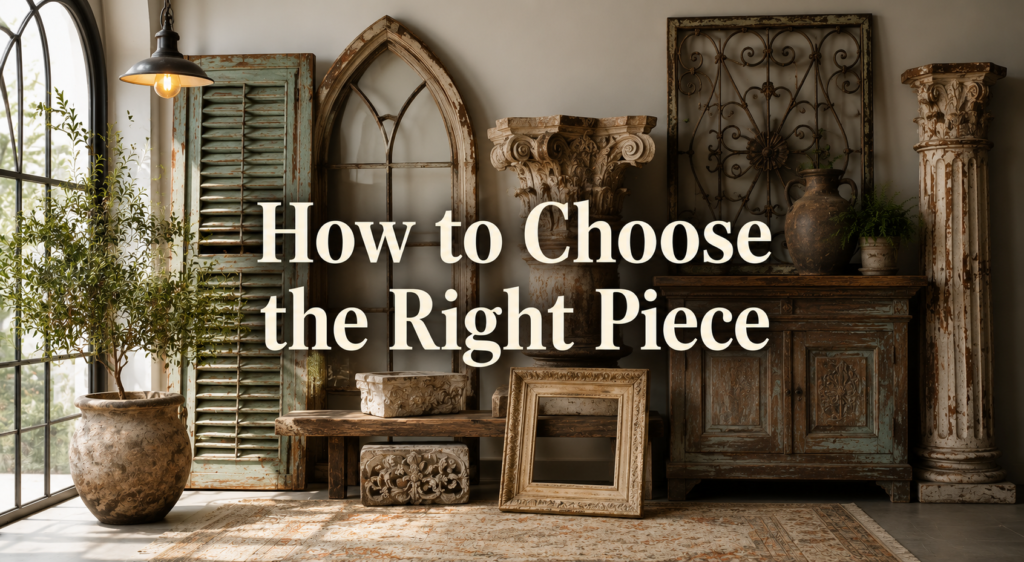
Not every reclaimed item is worth buying, so a careful inspection process matters. The following points help separate valuable finds from damaged goods.
Checking Condition and Safety
Wood should be checked for rot, warping, and insect damage before purchase, while metal pieces need a check for excessive rust or structural weakness.
Older painted items may contain lead paint, so protective handling and proper sealing are important, especially in homes with children. A quick inspection under good lighting can prevent costly problems later.
Verifying Authenticity
Genuine salvage often shows uneven wear, hand-tool marks, or slight asymmetry that mass-produced reproductions lack.
Asking the seller about the item’s building of origin or approximate age can also confirm authenticity. Buyers who take time to verify these details usually end up with pieces that hold long-term value.
Styling Salvage Into Modern Homes

Blending old architectural pieces with contemporary interiors is easier than most people expect once a few principles are followed. The right placement can make a single item the centerpiece of an entire room.
Room by Room Ideas
Different spaces call for different salvage treatments:
- Living room: reclaimed mantel as a fireplace focal point
- Kitchen: vintage hardware on updated cabinetry
- Bedroom: an old door repurposed as a headboard
- Bathroom: a salvaged window used as a decorative mirror frame
Blending Old with New
The easiest way to mix eras is by keeping the surrounding furniture simple so the salvage piece stands out. Neutral wall colors also help older materials feel intentional rather than mismatched. This balance between old and new is what gives architectural salvage vintage home decor its distinctive, curated look.
Restoration and Maintenance
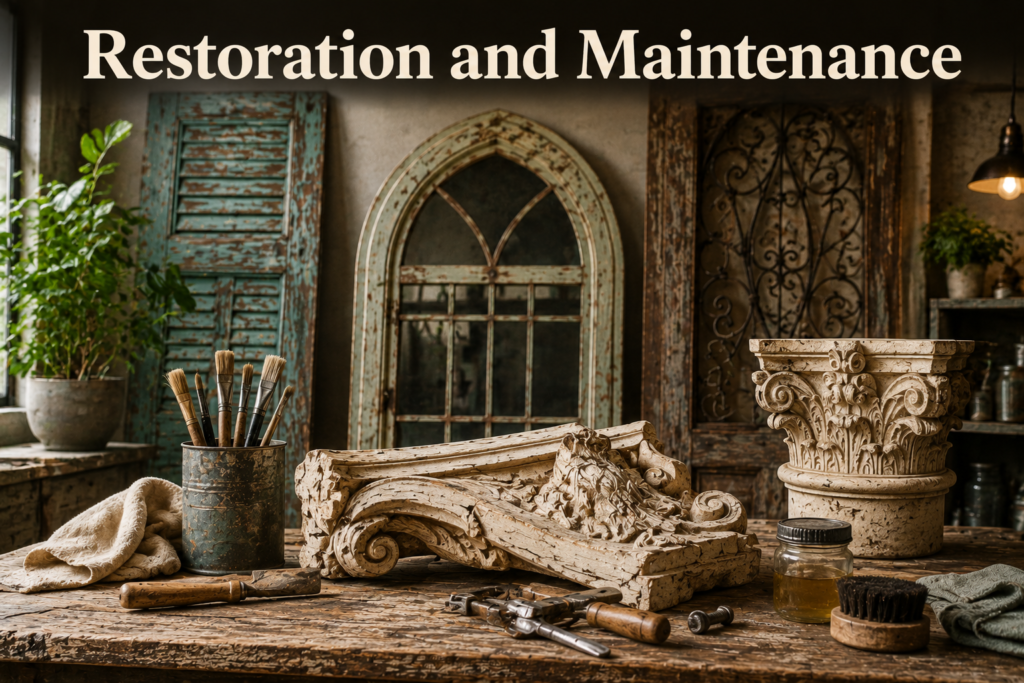
Reclaimed materials often need gentle care to stay in good condition for years. Cleaning and long-term upkeep both play a role in preserving their value.
Cleaning and Refinishing
Wood pieces generally respond well to mild soap, soft cloths, and occasional oiling, while metal items may need light rust removal with appropriate tools.
Refinishing should be done carefully to avoid stripping away the natural patina that gives salvage its charm. When in doubt, testing any cleaning product on a small hidden area first is a safe practice.
Long Term Care
Keeping salvaged wood away from excess moisture and direct sunlight helps prevent warping and fading over time. Periodic dusting and occasional resealing of finishes will keep hardware and glass pieces looking their best. Simple, consistent care is usually enough to protect these items for decades.
Budgeting Tips

Reclaimed decor can fit almost any budget once buyers understand typical pricing and negotiation norms.
| Item Type | Approximate Price Range |
| Vintage door | $80 – $400 |
| Fireplace mantel | $150 – $900 |
| Stained glass panel | $60 – $500 |
| Hardware set | $10 – $60 |
| Chandelier | $100 – $700 |
Negotiation Tips
Prices at salvage yards are often flexible, especially for items that have been in stock for a long time. Buying multiple pieces from the same seller can also lead to a better overall deal. Being polite and asking directly about discounts is usually enough to save a meaningful amount.
FAQs
Is architectural salvage the same as antique furniture?
No, salvage refers specifically to material removed from buildings, while antique furniture covers standalone pieces regardless of origin.
Is buying salvaged materials safe for older homes?
Yes, as long as items are inspected for structural damage and lead paint is handled properly before installation.
Where is the best place to start collecting salvage decor?
Local salvage yards are the easiest starting point since staff can guide first-time buyers toward safe, well-priced pieces.
Does salvage decor increase home value?
Unique architectural details can improve a home’s character and appeal, though value impact depends on quality and installation.
Conclusion
Architectural salvage vintage home decor offers a practical way to add history, sustainability, and individuality to any home. Compared to generic vintage decor guides that only list product ideas, this approach focuses on sourcing, safety, and long-term care, giving readers a more complete and trustworthy picture.
Starting with one meaningful piece, such as a mantel or a set of hardware, is often the easiest way to begin building a home filled with genuine character.
Related Articles
Mens Home Decor: A Complete Guide to Masculine Interior Style
Home Decor China Import Products: A Complete Guide for Buyers and Retailers
Religious Home Decor: Ideas, Types & Tips for Every Faith
Home Decor Ideas TheHomeTrotters: A Complete Room-by-Room Guide
French Country Home Decor: A Complete Style Guide for Every Room