 homeofdecor.online
A dining room can have the perfect table, the right chairs, and flattering lighting, yet still feel incomplete without the right wall decor. Dining room wall art is often the missing piece that turns a functional eating area into a warm, inviting space where people actually enjoy gathering.
This guide walks through every major decision involved in choosing dining room wall art, from selecting a style that matches your furniture to understanding hanging height and budget. Whether you are decorating a formal dining room, a casual family space, or an open-plan area, the ideas below will help you make confident, informed choices for your walls.
Why Dining Room Wall Art Matters
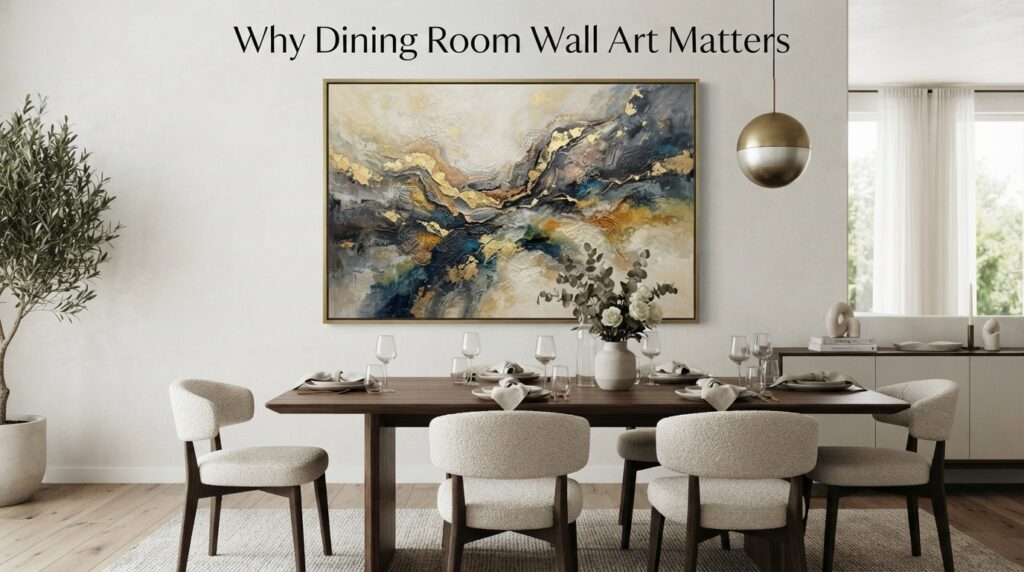
Dining rooms are social spaces, and the walls around them shape how comfortable people feel while sharing a meal. The right dining room wall art adds warmth, personality, and a sense of completion that furniture alone cannot achieve.
The Psychology of a Dining Space
A dining room is where conversations happen, memories are made, and families reconnect over meals. Art on the walls influences mood far more than most homeowners realize, since color, texture, and subject matter subtly affect how relaxed or energized a room feels during a gathering.
How Art Makes a Room Feel More Expensive
Even a modestly furnished dining room can look significantly more polished once well-chosen art is added to the walls. A single well-framed piece or a coordinated arrangement creates visual weight that makes the entire space feel intentional rather than unfinished.
The Empty Wall Versus Overcrowded Wall Mistake
Many homeowners either leave dining room walls completely bare or fill them with too many mismatched pieces. Both extremes work against the room’s balance, and the goal should always be a curated, purposeful display rather than an accidental one.
How to Choose the Right Dining Room Wall Art
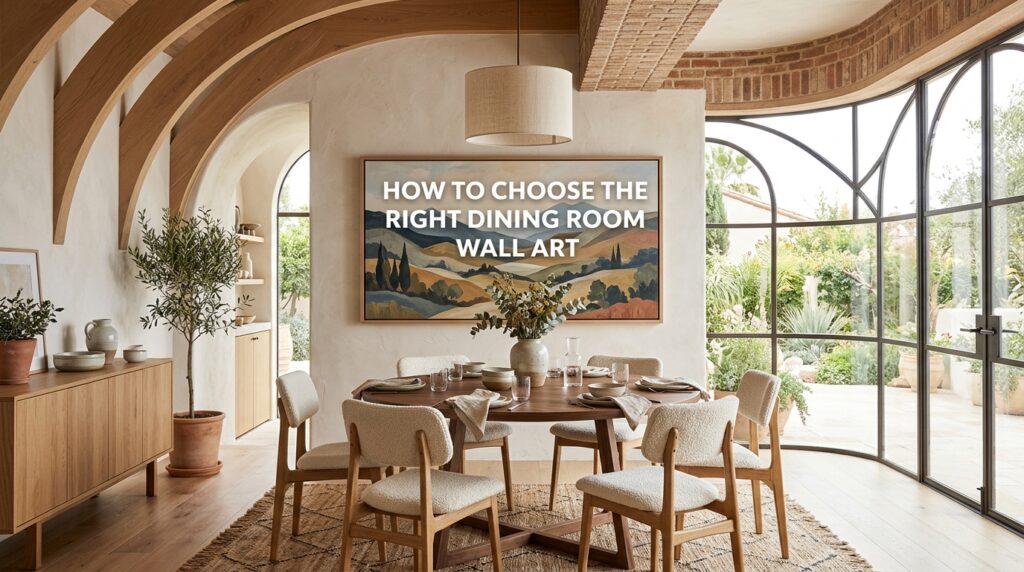
Choosing dining room wall art becomes far easier once you consider your existing furniture, wall space, and the mood you want to create. The following factors will guide almost every decision you make.
Matching Art With Furniture and Wall Color
Before buying any piece, look closely at your dining table, rug, and wall paint, then choose artwork that shares two or three common colors with the room. This approach keeps the space visually connected rather than looking like the art was added as an afterthought.
Choosing the Right Size for Your Space
Undersized art is one of the most common styling mistakes in dining rooms, since a small piece on a large wall can make the entire room feel unbalanced. As a general guide, artwork above a table or sideboard should cover roughly two-thirds of the furniture’s width for proper visual proportion.
| Wall or Furniture Width | Recommended Art Width |
| Small sideboard (under 4 feet) | 24 to 30 inches |
| Standard dining table wall | 36 to 48 inches |
| Large open-plan wall | 50 inches or wider, or a gallery arrangement |
The Correct Hanging Height Rule
A widely used design rule suggests hanging the center of your artwork about fifty-seven inches from the floor, which aligns with average eye level whether guests are standing or seated. Following this measurement consistently across a room creates a professional, gallery-like appearance.
Comparing Materials: Canvas, Framed Prints, and Originals
Canvas prints offer texture and depth at an accessible price, framed prints provide a clean and classic look, while original paintings bring richness and a premium finish that reproductions cannot fully match. Metal or acrylic prints are also worth considering for a more modern, reflective finish.
Best Styles for Dining Room Wall Art
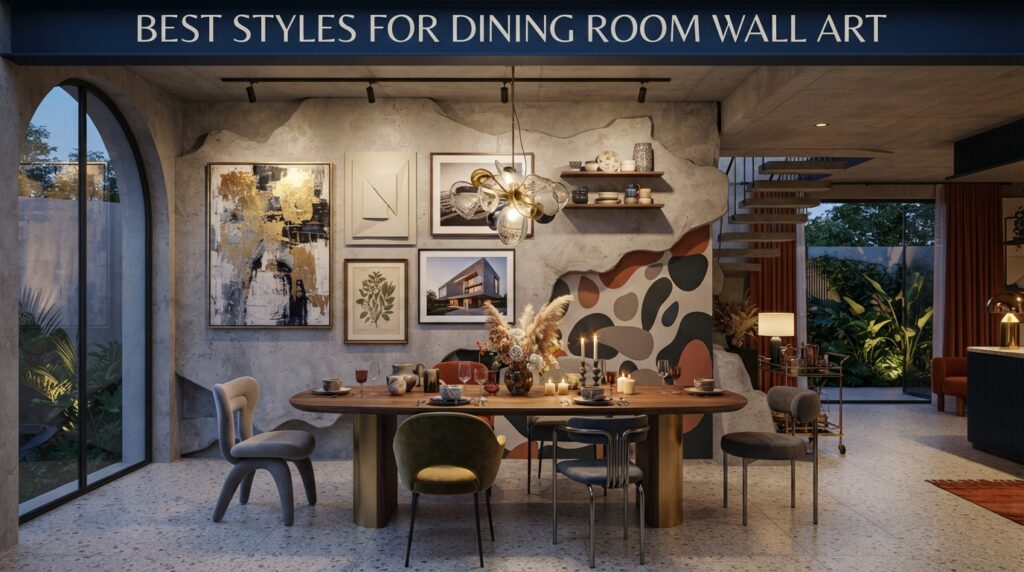
Dining room wall art comes in many styles, and choosing one that matches your home’s overall character helps the room feel cohesive rather than disconnected from the rest of the house.
| Style | Best Suited For |
| Modern and minimalist | Contemporary homes with clean lines and neutral palettes |
| Farmhouse and rustic | Warm, casual dining spaces with wood furniture |
| Abstract and bold | Spaces meant to feel energetic and conversation-starting |
| Botanical and nature-inspired | Transitional and family homes seeking softness |
| Still life and food or wine themes | Traditional dining rooms with a classic feel |
| Fine art reproductions | Formal or upscale dining spaces |
| Personalized or word art | Casual homes wanting a sentimental touch |
| Heritage or culturally inspired art | Homes wanting to reflect regional identity and tradition |
Each of these styles can be adapted to almost any room size, and many homeowners successfully mix two complementary styles, such as botanical prints paired with a single abstract accent piece, to add depth without visual clutter.
Real Dining Room Wall Art Ideas by Scenario
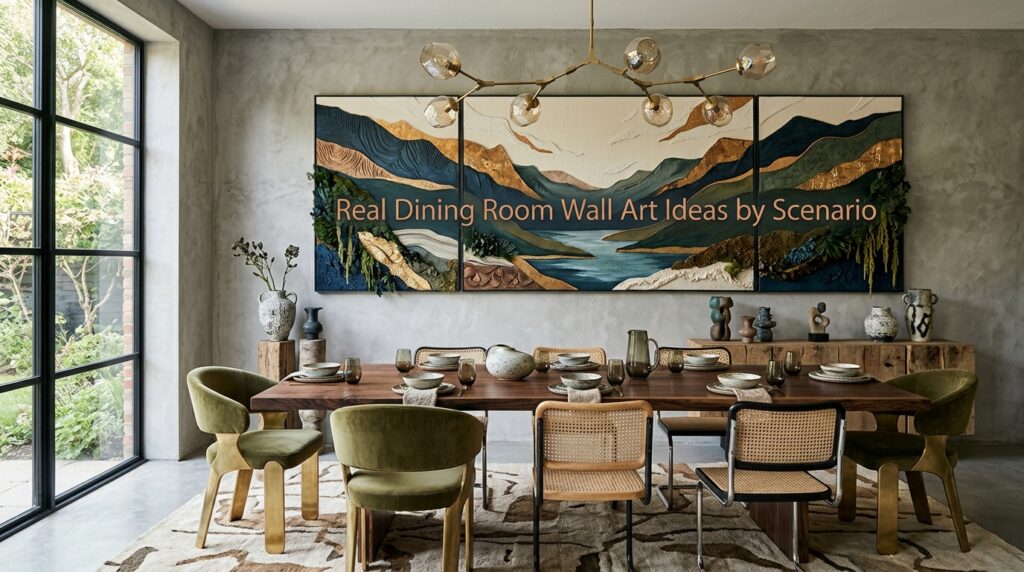
Seeing dining room wall art applied to real situations makes it easier to picture how it might work in your own home. The scenarios below cover the most common dining room layouts.
Art Above a Sideboard or Buffet
A horizontal piece of dining room wall art above a sideboard ties the furniture into the rest of the wall and prevents that section of the room from feeling like an afterthought.
This works especially well when the room already has a strong focal point elsewhere, such as a chandelier over the table.
Gallery Walls for Open-Plan Dining Areas
In open-plan homes, a gallery wall of coordinated frames helps define the dining zone as its own distinct space rather than an extension of the kitchen or living room.
Keeping the frame colors and spacing consistent is essential, since too many unrelated styles can make the arrangement feel chaotic instead of curated.
Statement Pieces and Murals
For dining rooms with minimal architectural detail, a single oversized piece or a floor-to-ceiling mural can become the room’s main attraction. This approach pairs particularly well with dimmer, ambient lighting, since it allows the artwork’s depth and atmosphere to stand out during evening meals.
Triptychs for Long Walls
A three-panel triptych works especially well on long dining room walls, since it creates rhythm and balance across a wide surface without requiring a single oversized canvas. This layout is popular in both modern and transitional dining rooms.
Color Palette Guide for Dining Room Wall Art
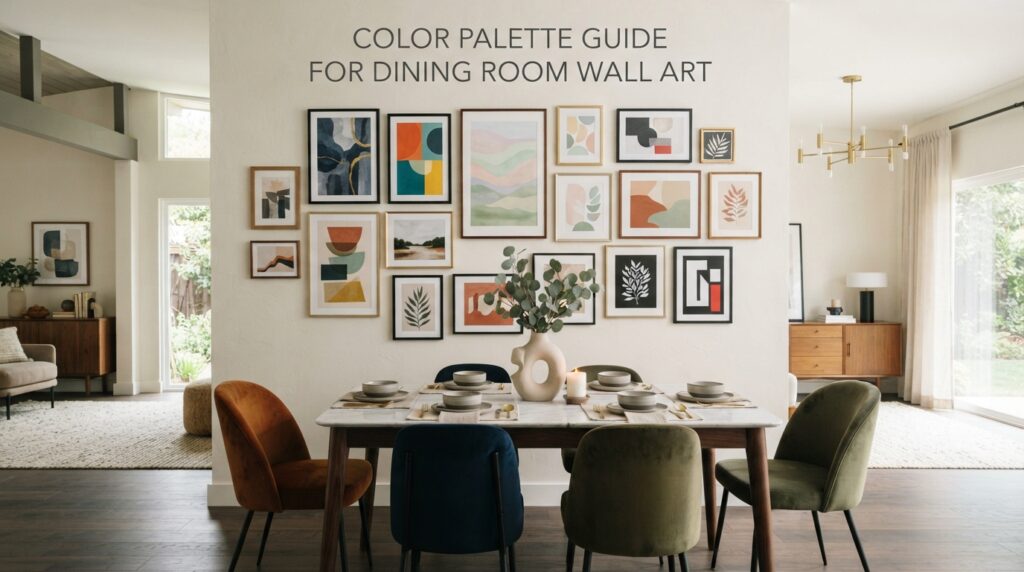
The color of your dining room wall art plays a major role in setting the room’s overall mood, so it is worth choosing intentionally rather than picking whatever looks appealing in isolation.
Warm Tones for a Cozy Feel
Terracotta, gold, sand, and soft brown tones create a welcoming atmosphere that suits family dining rooms and casual gathering spaces. These colors pair especially well with wood furniture and natural textures.
Neutral Tones for an Elegant Feel
Beige, taupe, cream, and gray tones feel calming and sophisticated, and they pair effortlessly with both wood and black furniture finishes. Neutral art is also the safest choice for homeowners who plan to change other decor elements frequently.
Bold Colors for an Energetic Feel
Bold, saturated artwork suits dining rooms meant to feel lively and social, particularly in homes that host frequent gatherings. This approach works best when the surrounding walls and furniture remain relatively neutral, allowing the art to stand out as the room’s centerpiece.
Placement and Styling Tips
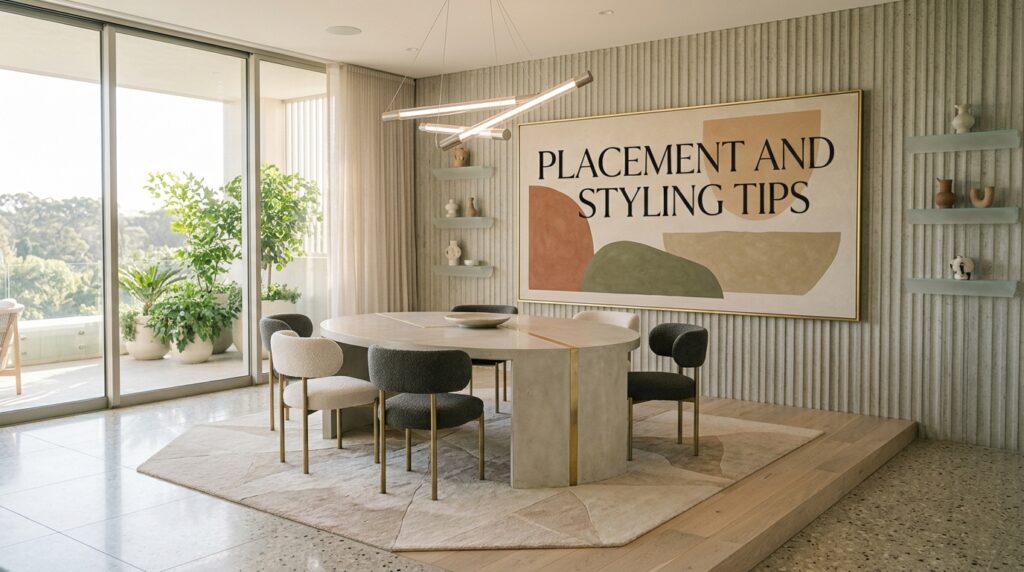
Beyond choosing the right piece, how you position and light your dining room wall art has a direct impact on how polished the final result looks.
Lighting and Art Placement
Lighting interacts closely with wall art, and a statement chandelier paired with slightly darker adjacent walls can make artwork appear more immersive during evening meals. Natural light during the day should also be considered, since certain finishes reflect glare more than others.
Gallery Wall Layout Rules
When arranging multiple pieces, choose either a symmetrical grid for a formal look or an eclectic, staggered layout for a more relaxed feel, but avoid mixing both approaches within the same wall. Consistent spacing between frames, typically two to three inches, keeps the arrangement looking intentional.
Framing Choices That Tie a Room Together
The frame you choose can either blend into the wall or become part of the room’s design statement, so consider matching frame color to existing metal fixtures like light fittings or cabinet hardware. A well-chosen frame often does more to elevate a room’s appearance than the artwork itself.
Budget Guide for Dining Room Wall Art
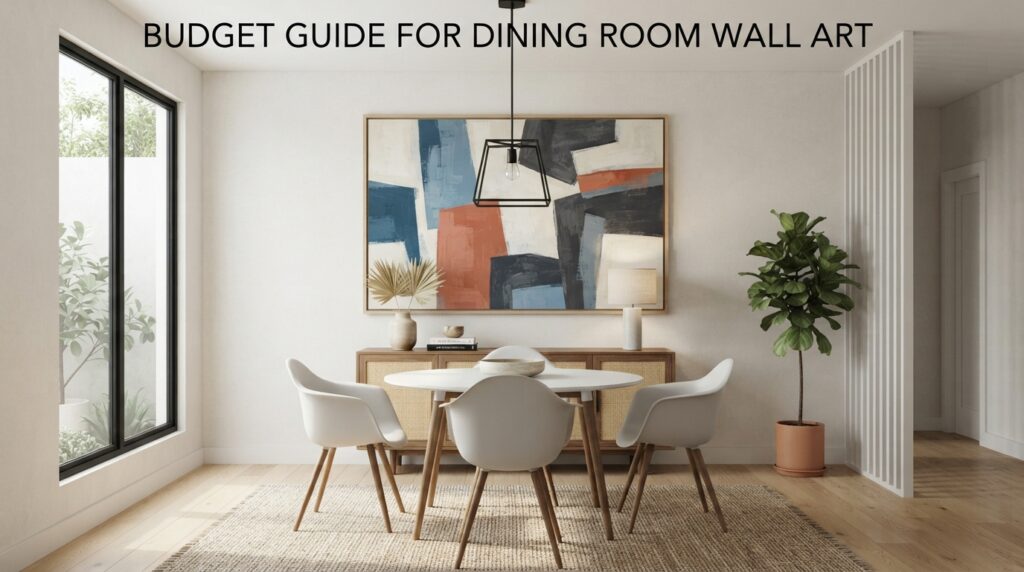
Dining room wall art is available across a wide price range, and understanding what each budget tier typically offers helps set realistic expectations before shopping.
| Budget Level | What to Expect |
| Budget-friendly | Printed posters and basic framed prints, ideal for renters or frequent redecorating |
| Mid-range | Framed canvas prints with better material quality and longer-lasting finishes |
| Premium | Original paintings or high-quality fine art reproductions with richer texture and depth |
Spending more does not always mean better results, since a well-proportioned budget print can outperform an expensive but poorly sized piece.
Common Mistakes to Avoid
Several recurring mistakes prevent dining room wall art from looking its best, and avoiding them makes a noticeable difference in the final result.
- Choosing artwork that is too small for the available wall space
- Hanging pieces above or below the recommended fifty-seven inch eye-level guideline
- Selecting colors that clash with existing furniture or flooring
- Overcrowding a single wall with too many unrelated pieces
- Ignoring lighting conditions when choosing glossy or reflective finishes
How This Guide Compares to Other Resources
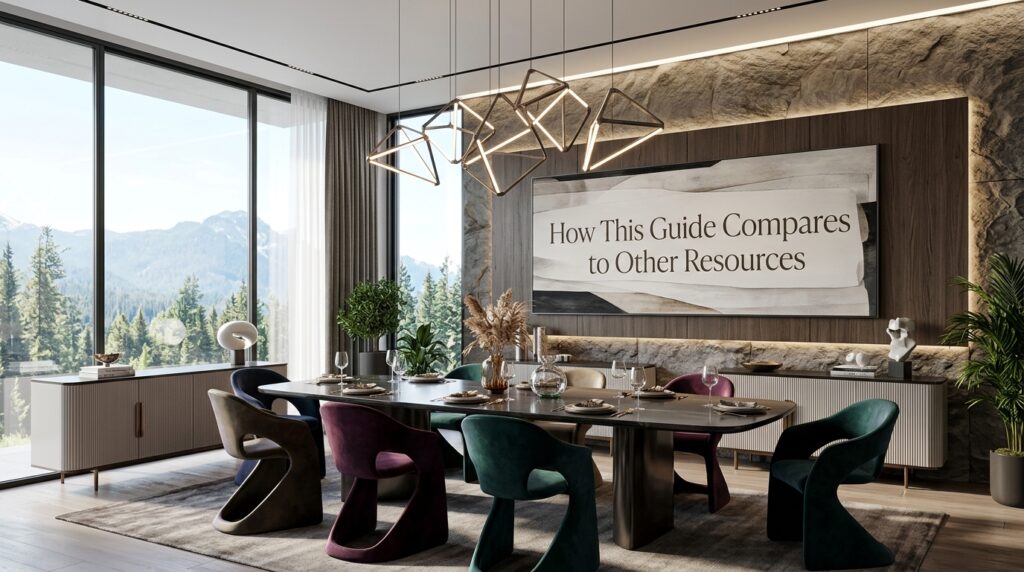
Most existing guides on dining room wall art focus narrowly on either style inspiration or basic buying advice, rarely combining both with practical measurements like hanging height and size ratios.
This guide brings together sizing, styling, budgeting, and real-world placement scenarios in one place, offering a more complete resource than typical style-only or product-only articles.
Frequently Asked Questions
How much dining room wall art should I use on one wall?
One well-proportioned statement piece or a coordinated gallery arrangement is usually enough; avoid mixing multiple unrelated art groupings on the same wall.
What size should dining room wall art be relative to the table?
As a general rule, artwork should cover about two-thirds the width of the furniture beneath it, such as a table or sideboard, for balanced proportions.
Can dining room and living room art share the same style?
Yes, as long as the color palette stays consistent, though the dining room can lean slightly more formal or thematic since it serves a more specific social purpose.
What are the best colors for a small dining room?
Neutral tones like beige, cream, and soft gray work best in small dining rooms, since they keep the space feeling open rather than visually heavy.
Conclusion
Dining room wall art is one of the most effective ways to transform a functional eating space into a room people genuinely enjoy spending time in.
By considering size, color, placement height, and budget together, rather than focusing on just one factor, you can create a dining room that feels complete, intentional, and welcoming for every meal and gathering.
Related Articles
How to Create a Functional Home Office
How to Style a Modern Apartment: The Complete Guide
Custom Home Decor: Unique Personalized Pieces for Every Room (2026 Guide)
Shiny Brite Decorations: Complete Guide to Vintage & Modern Ornaments
Art Wall Home Decor: A Complete Guide to Transform Your Space