Art Deco Home Decor: A Complete Guide to Glamorous Interior Style
Introduction
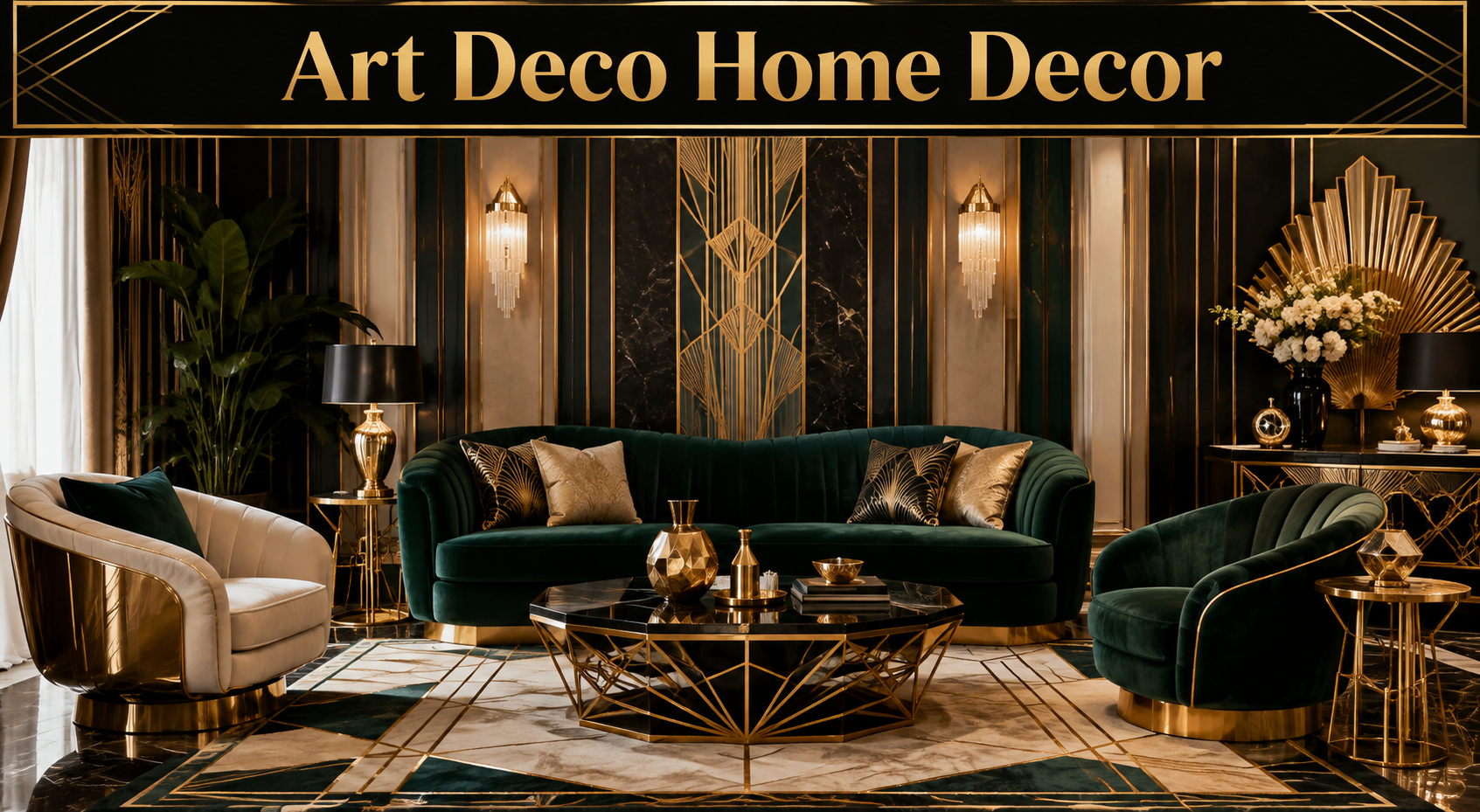
Interior design trends come and go, but few have the lasting charm of art deco. Born during an era of optimism and industrial progress, this style captured the glamour of jazz clubs, grand hotels, and city skylines.
Today, art deco home decor is loved for its ability to turn an ordinary room into something that feels curated and intentional. Whether you want to redesign a single room or your entire home, understanding the basics of this style will help you make choices that feel authentic rather than random.
Introduction to Art Deco Style
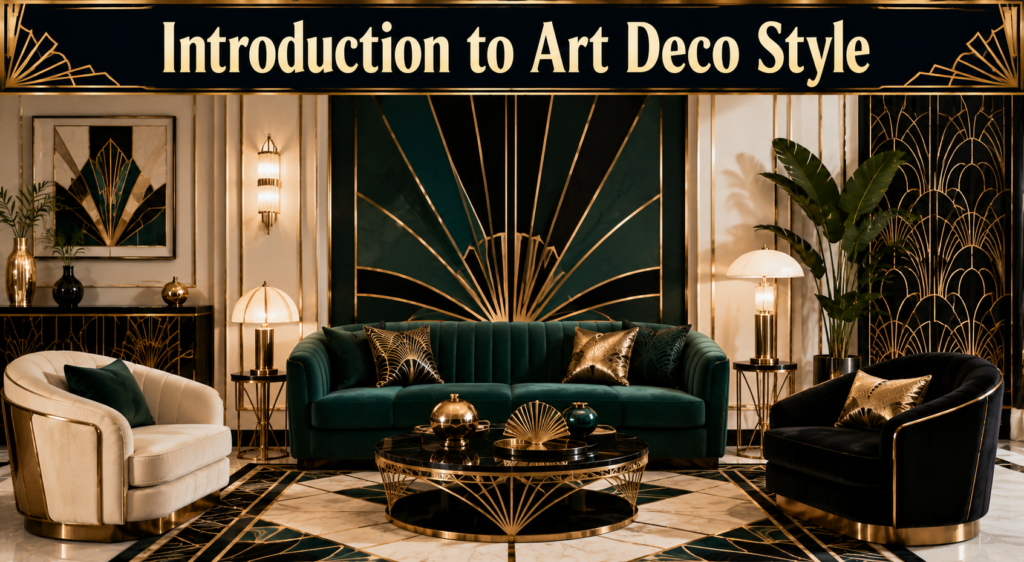
Before diving into furniture and colors, it helps to understand where this style came from and why it still matters. This section covers the meaning, history, and current popularity of art deco design.
What is Art Deco?
Art deco is a design movement known for clean geometric shapes, symmetry, and a sense of luxury. It blends modern industrial materials like chrome and glass with traditional craftsmanship such as lacquered wood. The result is a style that feels polished, confident, and visually striking without being overly busy.
A Brief History
The style emerged in France in the early 1920s and quickly spread across Europe and America. It reached its peak during the 1930s, influencing architecture, fashion, and interior design alike. Famous buildings from this era still showcase the same geometric detailing seen in art deco home decor today.
Why Art Deco is Making a Comeback Today
Modern homeowners are drawn to art deco because it offers a break from plain, minimalist interiors. It allows people to add personality and richness to their spaces through color and pattern. Many designers now mix art deco pieces with contemporary furniture to create a balanced, updated look.
Core Characteristics of Art Deco Design
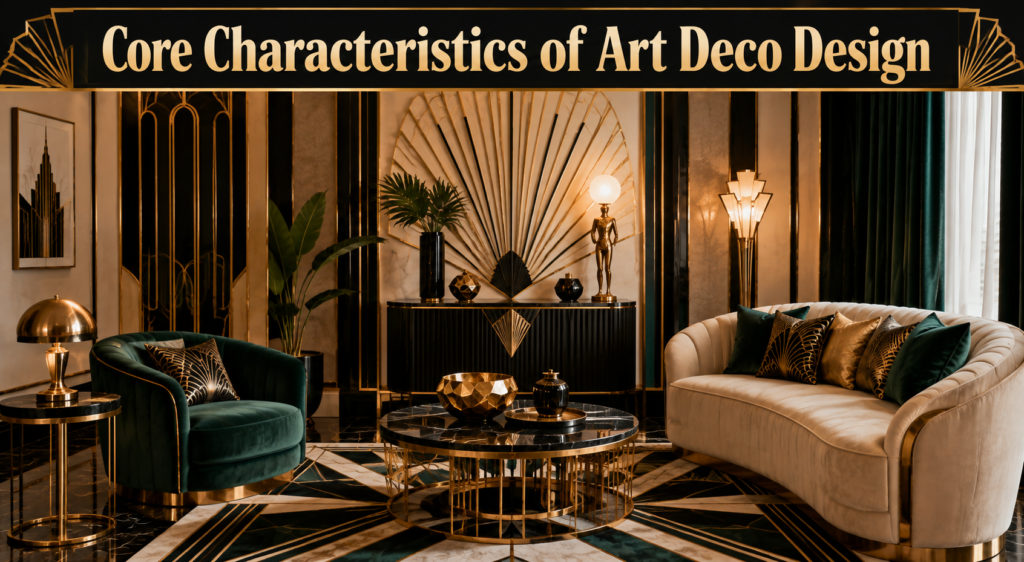
Every art deco interior follows a few consistent design principles. Understanding these basics makes it easier to recognize and recreate the style correctly.
Geometric Shapes and Patterns
Art deco relies heavily on shapes like chevrons, sunbursts, and stepped forms. These patterns appear on furniture, rugs, and wall panels throughout a room. The repetition of clean lines gives spaces a structured and orderly feel.
Symmetry and Bold Lines
Symmetrical layouts are a hallmark of this style, often seen in matching furniture pairs or centered decor arrangements. Bold outlines and defined edges replace the soft, rounded shapes common in other design styles. This creates a strong visual impact the moment you enter a room.
Luxurious, High-Contrast Materials
Materials such as brass, chrome, marble, and lacquered wood are central to achieving an authentic look. These finishes are often paired together to create contrast and depth. The mix of shiny and matte textures adds richness without overwhelming the space.
The Art Deco Color Palette
Deep, saturated colors like emerald green, navy blue, and black are commonly used as a base. These are then paired with metallic accents in gold or silver to add glamour. The contrast between dark tones and bright metallics is what gives art deco its signature look.
Art Deco Furniture

Furniture plays one of the biggest roles in defining an art deco home decor scheme. This section explains the styles, materials, and placement strategies that work best.
Signature Furniture Styles
Curved sofas, geometric cabinets, and low-profile chairs are common in this style. Pieces often feature bold silhouettes with clean, defined edges rather than intricate carvings. Statement furniture is meant to be noticed rather than blended into the background.
Popular Materials
Lacquered finishes, chrome legs, and velvet upholstery are frequently used across art deco furniture. These materials help achieve the smooth, reflective surfaces associated with the style. Combining two or three of these materials in one piece is a common design approach.
Statement Pieces versus Functional Pieces
Some furniture, like an ornate cabinet or mirrored console, works purely as a visual statement. Other pieces, such as dining chairs or sofas, need to balance style with everyday comfort. A good art deco room usually mixes both types thoughtfully.
Mixing Art Deco Furniture with Modern Interiors
Many homeowners today combine one or two art deco pieces with otherwise modern furniture. This approach avoids an overly themed look while still capturing the glamour of the style. A single statement chair or sideboard can be enough to set the tone.
Color Schemes and Palettes
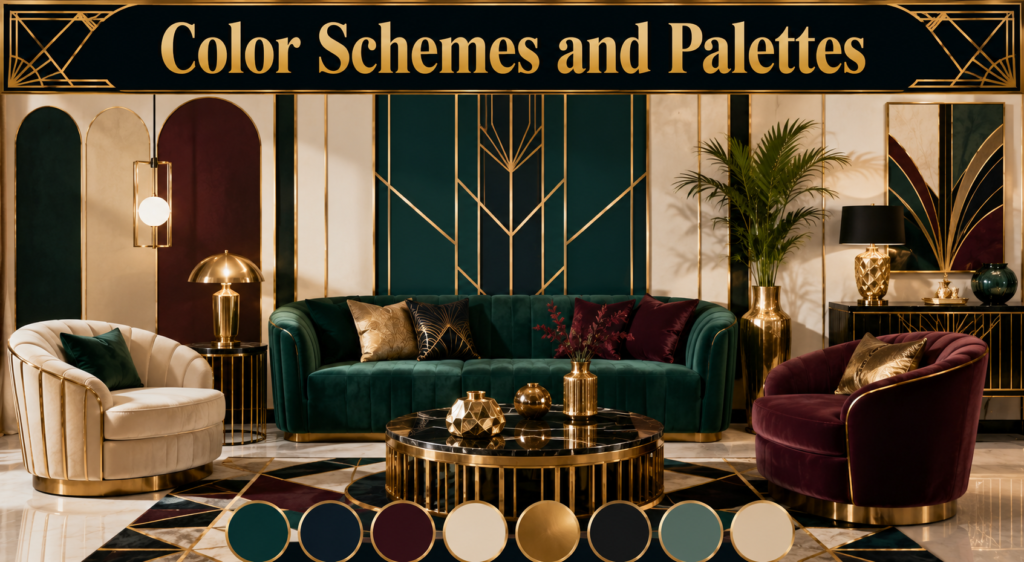
Color choice can make or break an art deco design. This section covers classic combinations and how to apply them across different spaces.
Classic Combinations
Black paired with gold remains one of the most recognizable art deco color schemes. Emerald green with brass accents is another popular option that feels rich without being too dark. These pairings work well as a base for walls, furniture, or textiles.
Metallic Accents
Gold, brass, and chrome are used throughout art deco spaces to add shine and sophistication. These metals appear in light fixtures, furniture legs, and decorative trim. A consistent metal tone across the room helps keep the design cohesive.
Choosing a Palette for Different Rooms
Darker, moodier palettes tend to work well in living rooms and dining areas. Lighter variations with softer metallics can be used in bedrooms for a calmer effect. Matching the palette to the room’s purpose keeps the design practical as well as stylish.
Lighting in Art Deco Homes

Lighting fixtures are one of the easiest ways to introduce art deco style into a home. This section explains the most common fixture types and how they enhance a space.
Chandeliers and Pendant Lights
Geometric chandeliers with layered glass or metal detailing are a signature feature of this style. They often serve as the focal point of a dining room or entryway. Pendant lights with angular shapes also work well over kitchen islands or bars.
Wall Sconces and Fan Shaped Fixtures
Sconces shaped like fans or sunbursts add subtle glamour to hallways and bedrooms. These fixtures are often placed in symmetrical pairs to reinforce the balanced look of the style. Their soft glow also adds warmth to otherwise bold color schemes.
Lamps with Geometric Bases
Table and floor lamps with stepped or angular bases complement the overall theme without dominating a room. They are especially useful for adding art deco touches to smaller spaces. Pairing two matching lamps on either side of a sofa is a common styling trick.
Patterns, Textures and Motifs
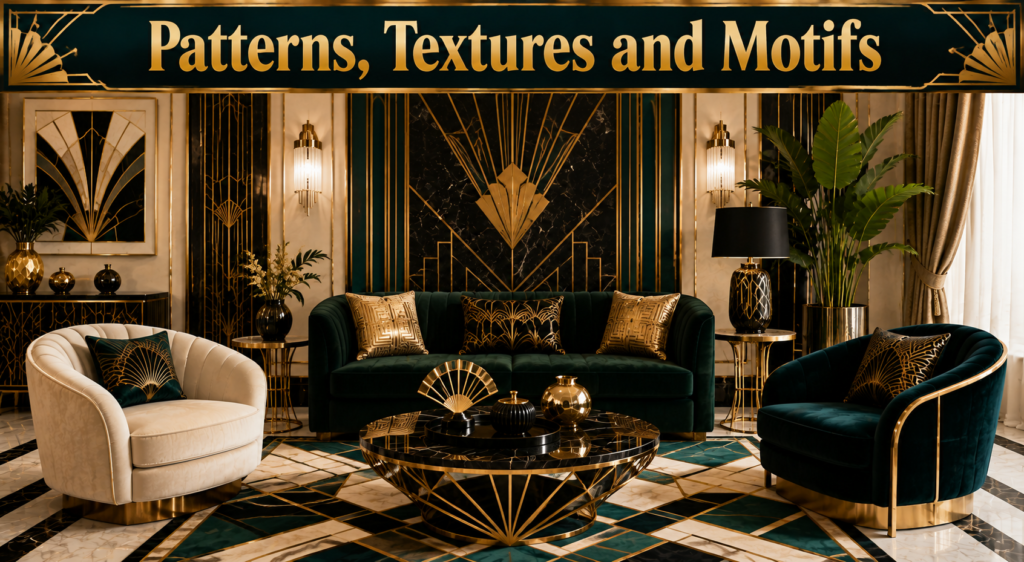
Patterns and textures bring depth and movement to an otherwise structured design style. This section looks at the most common motifs used in art deco interiors.
Chevron, Sunburst and Zigzag Patterns
These patterns frequently appear on rugs, wallpaper, and decorative tiles. They help reinforce the geometric theme found throughout the rest of the room. Using one dominant pattern per space usually works better than mixing several at once.
Fabrics: Velvet, Silk and Animal Prints
Velvet is a staple fabric choice for sofas, cushions, and curtains due to its rich texture. Silk is often used for smaller accents like throw pillows or lampshades. Animal prints appear occasionally as accent pieces to add a touch of drama.
Wallpaper and Flooring Motifs
Wallpaper featuring geometric or botanical patterns can transform a plain wall into a statement feature. Flooring often includes contrasting tile or wood patterns laid in geometric arrangements. These details help tie the entire room together visually.
Room by Room Art Deco Ideas
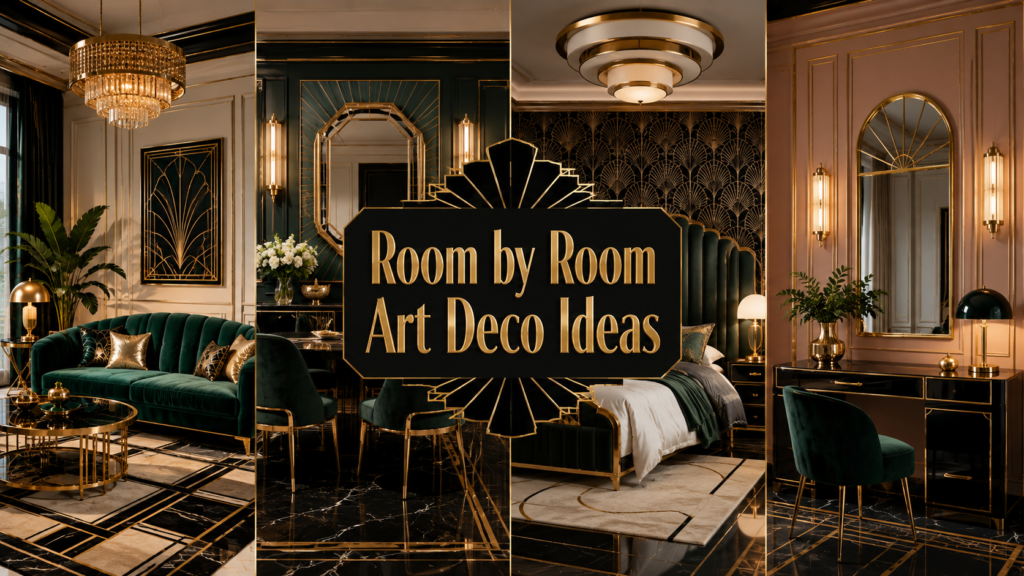
Applying art deco style differs slightly depending on the room. This section offers practical guidance for the most common spaces in a home.
Living Room
A bold sofa paired with a statement coffee table works well as the centerpiece of the room. Adding a geometric rug and metallic light fixture completes the look. Wall art with abstract or symmetrical designs reinforces the theme further.
Bedroom
A tufted or velvet headboard is a simple way to introduce art deco style into a bedroom. Soft lighting from bedside lamps adds warmth while maintaining the glamorous feel. Mirrored nightstands are another popular addition for this space.
Dining Room
A statement chandelier above the dining table instantly sets an art deco tone. Chairs with geometric backs or velvet seating add both comfort and style. A patterned rug beneath the table helps define the space.
Bathroom
Black and white tile in geometric patterns is a classic choice for art deco bathrooms. Brass fixtures and mirrors add a touch of luxury to smaller spaces. Even minor updates like hardware and lighting can shift the overall mood.
Home Office
A structured desk with clean lines pairs well with a leather or velvet chair. Adding a geometric rug and brass desk lamp keeps the space professional yet stylish. Wall art with bold shapes can also inspire creativity while working.
Art Deco Wall Decor and Accessories
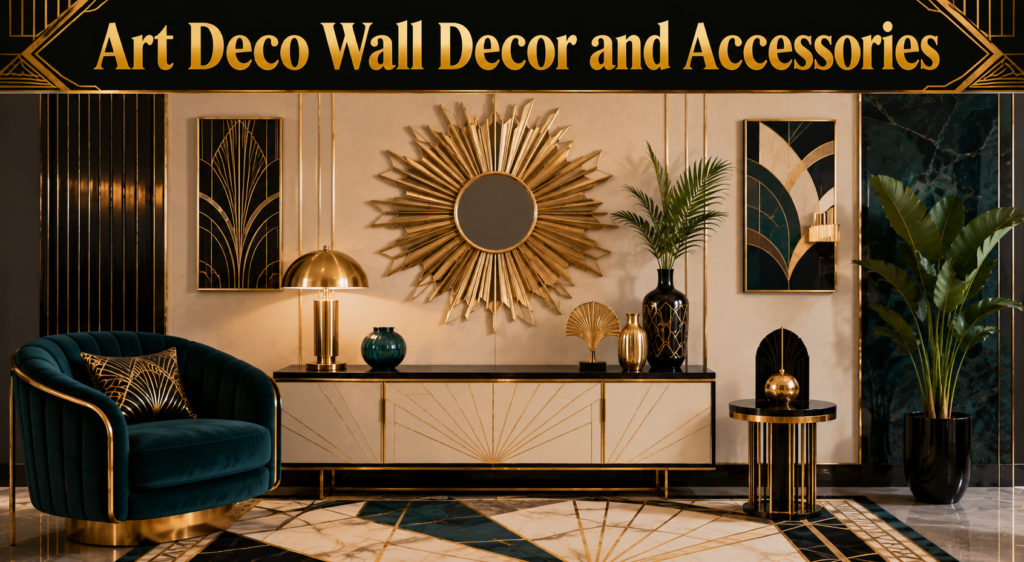
Accessories are often what complete an art deco look after the larger furniture pieces are in place. This section highlights the most effective decorative choices.
Mirrors
Sunburst and geometric mirrors are among the most recognizable art deco accessories. They not only add style but also help reflect light around the room. Placing a large statement mirror above a mantel or console table works particularly well.
Wall Art and Prints
Abstract prints with geometric shapes or metallic tones fit naturally into this style. Framed art with gold or black borders adds a cohesive finishing touch. Grouping several smaller prints together can also create an interesting focal wall.
Decorative Objects
Vases, sculptures, and trays with clean geometric forms make excellent accent pieces. These objects are often placed on coffee tables or shelving units. Choosing a few well-placed items works better than overcrowding a space with small decor.
Flooring and Wall Treatments

The right flooring and wall finishes provide the foundation for the entire art deco theme. This section explains the most common approaches used by designers.
Geometric Tile Patterns
Tiles laid in bold, contrasting patterns are frequently used in kitchens, bathrooms, and entryways. These patterns immediately signal the art deco style before any furniture is added. Black and white combinations remain the most timeless option.
Herringbone and Parquet Flooring
Wood flooring arranged in herringbone or parquet patterns adds texture and visual interest underfoot. This type of flooring works especially well in living rooms and dining areas. It pairs naturally with the geometric theme found elsewhere in the home.
Textured or Paneled Walls
Wall paneling with geometric detailing adds depth without requiring bold color choices. This treatment works well in bedrooms or hallways where a subtler approach is preferred. Paired with soft lighting, paneled walls create a warm, layered effect.
How to Blend Art Deco with Modern Style
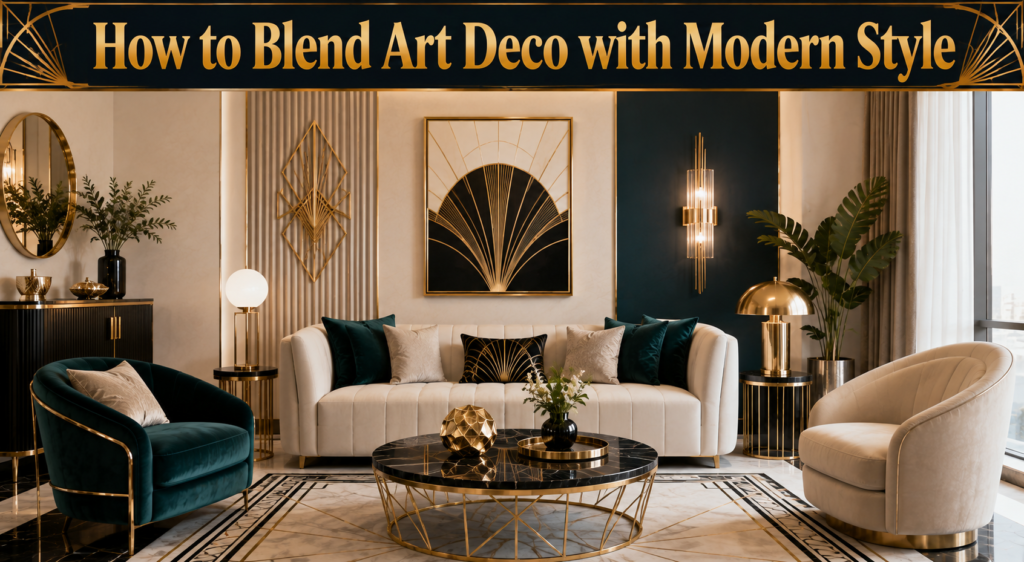
Not everyone wants a fully themed room, and that is where blending styles becomes useful. This section explains how to combine old and new design elements successfully.
Art Deco Meets Minimalism
Using one or two bold art deco pieces within a mostly minimal space keeps the design from feeling overwhelming. This approach works well for smaller apartments or modern homes. It allows the statement piece to stand out clearly.
Combining Vintage and Contemporary Pieces
Pairing an antique art deco cabinet with modern seating creates an interesting visual contrast. This mix keeps the space feeling current while still honoring the original style. It also makes decorating more affordable since not every piece needs to match.
Budget Friendly Ways to Add Art Deco Touches
Small changes like cushions, lamps, or a single accent wall can introduce the style without a full renovation. Thrifted or vintage finds often work just as well as new purchases. Gradually adding pieces over time also helps avoid decision fatigue.
Where to Shop for Art Deco Decor
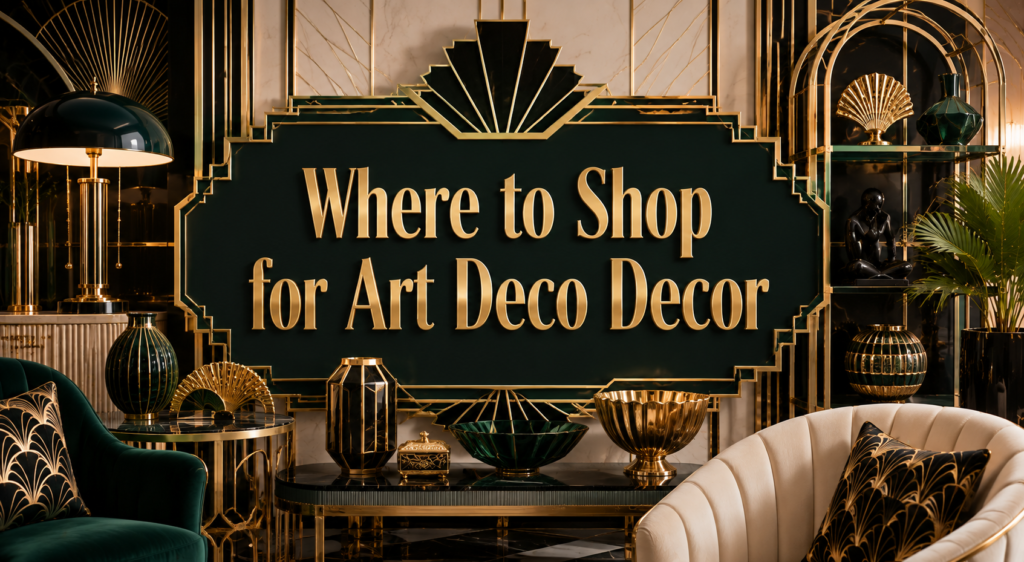
Finding the right pieces is easier when you know where to look. This section covers both vintage and modern shopping options.
Vintage and Antique Stores
Vintage shops often carry authentic pieces from the original art deco era. These items add character and history that new furniture cannot replicate. Prices vary widely, so it helps to compare a few different sellers.
Modern Retailers with Art Deco Lines
Many furniture brands now offer collections inspired by art deco design. These pieces are often more affordable and easier to find than genuine antiques. They also tend to fit better with modern room dimensions.
DIY and Upcycling Ideas
Painting old furniture in bold colors or adding brass hardware can mimic the art deco look on a budget. Simple upcycling projects allow homeowners to personalize their space without large expenses. This approach also reduces waste by reusing existing furniture.
Common Mistakes to Avoid

Even a well-loved style can go wrong if applied incorrectly. This section highlights the most frequent mistakes homeowners make.
Overdoing the Glamour
Using too many metallics or patterns at once can make a room feel cluttered rather than elegant. It is better to choose a few standout pieces and let them shine. Balance is key to keeping the space livable.
Poor Color Balance
Relying too heavily on dark colors without enough light or metallic contrast can make a room feel heavy. Adding lighter accents or reflective surfaces helps maintain visual balance. This keeps the space feeling luxurious rather than gloomy.
Ignoring Scale and Proportion
Oversized furniture in a small room can overwhelm the space and disrupt the clean lines art deco relies on. Choosing pieces that fit the room’s actual size ensures the design looks intentional. Proportion is just as important as color or pattern choice.
How Art Deco Compares to Other Popular Styles

Compared to minimalist or Scandinavian design, art deco home decor is bolder and more ornamental. While minimalism favors simplicity and neutral tones, art deco embraces color, pattern, and shine. This makes it a better fit for homeowners who want their space to feel distinctive rather than understated.
Frequently Asked Questions
Is art deco still popular today?
Yes, it remains popular because it adds character and luxury to modern interiors without feeling outdated.
What colors work best for art deco home decor?
Black, emerald green, and navy paired with gold or brass accents are the most common choices.
Can I mix art deco with modern furniture?
Yes, combining a few statement art deco pieces with modern furniture is a popular and practical approach.
Is art deco decor expensive?
It can be, but budget friendly options like accessories, paint, and upcycled furniture make it accessible for most homes.
Conclusion
Art deco home decor offers a timeless way to add glamour, structure, and personality to any living space. By focusing on geometric patterns, rich materials, and a balanced color palette, homeowners can recreate this iconic style authentically.
Whether you choose to fully commit to the theme or simply add a few statement pieces, art deco remains one of the most rewarding design styles to explore.
Related Articles
Architectural Salvage Vintage Home Decor: The Complete Buying & Styling Guide
Mexican Home Decor: A Complete Guide to Colors, Materials, and Styling
Living Room Wallpaper Decor: Ultimate Guide to Styles, Colors & Tips
Japanese Home Decor: A Complete Guide to Minimalist and Calm Interiors
Modern Classic Home Decor: A Complete Guide to Timeless Interior Design