3 Piece Wall Art: Complete Guide to Sizing, Spacing & Styling
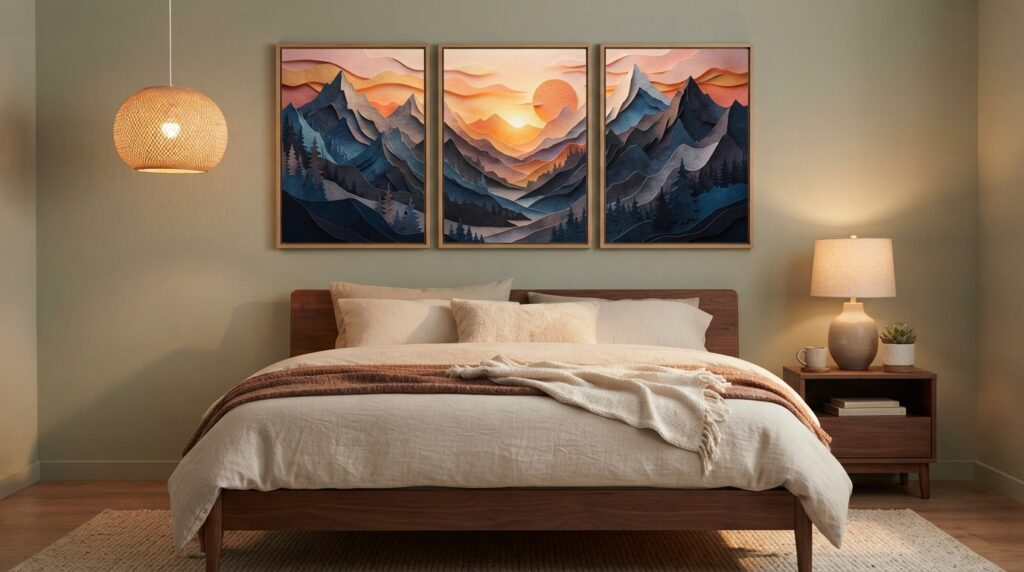
A plain wall above the sofa or bed often feels unfinished, and a single small frame rarely solves that problem on its own. This is exactly where 3 piece wall art comes in, offering width, balance, and visual interest without the complexity of building a full gallery wall.
Also known as a triptych, this format spreads one idea or theme across three connected panels, giving a room a sense of intention rather than randomness. Choosing the right set, however, involves more than picking a pretty design, since sizing, spacing, and placement all play a role in how finished the final result looks.
This guide walks through every part of that process in plain language, from selecting a style that fits your room to hanging the panels evenly. By the end, you will know exactly how to plan, size, and install 3 piece wall art with confidence.
What Is 3 Piece Wall Art?
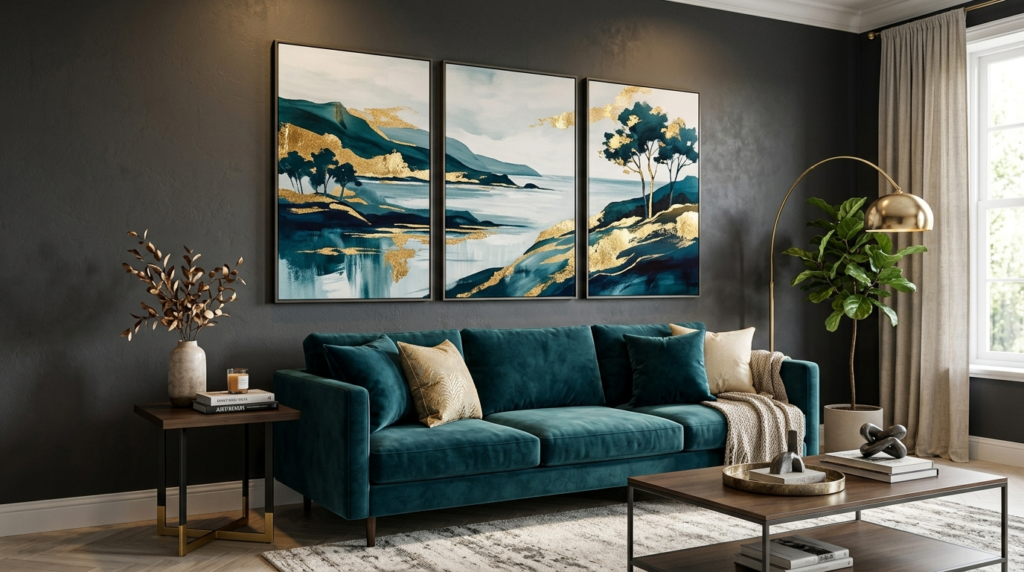
3 piece wall art, commonly called a triptych, is a wall decor format made up of three separate panels that are designed to be displayed together. Instead of relying on one large canvas to fill a space, the composition is broken into three sections that work as a single unit once they are hung side by side.
This approach gives a room more width and visual rhythm than a lone frame ever could, while still feeling far more organized than a scattered gallery wall.There are two common ways this format is designed. In the first, a single image such as a landscape or a panoramic photo is split across three panels, so the picture only reads as complete once all three pieces are hung together.
In the second, three separate but related images are grouped, sharing a color palette, subject, or mood without literally connecting into one picture. Both approaches fall under the same 3 piece wall art category, and the right choice usually depends on how bold or subtle you want the wall to feel.
| Type | How It Looks | Best For |
| Split-image triptych | One picture divided across three panels | Wide walls, dramatic focal points |
| Coordinated three-piece set | Three related but independent images | Flexible styling, layered rooms |
Why Choose 3 Piece Wall Art Over a Single Piece or Full Gallery Wall?
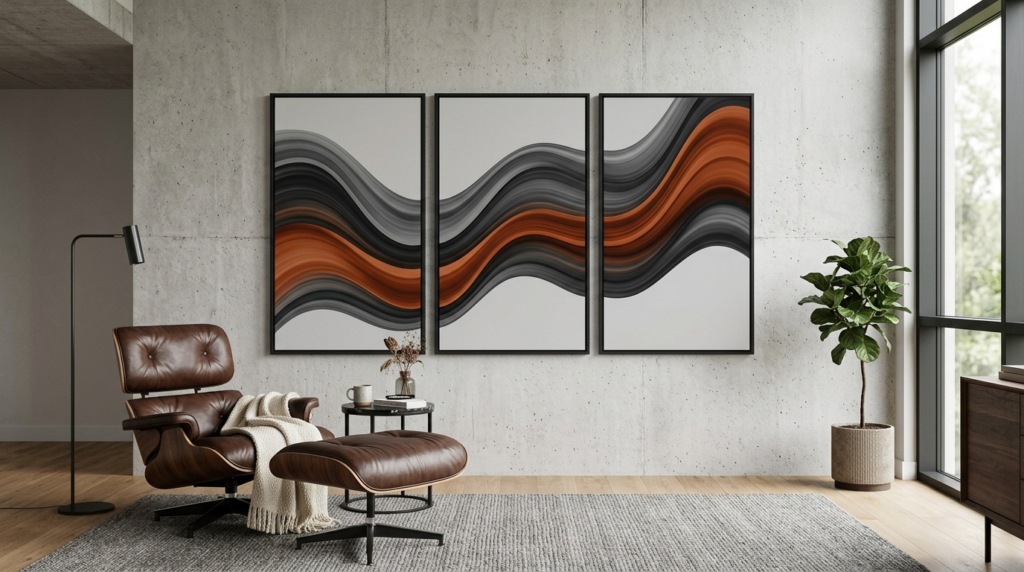
Odd-numbered groupings tend to look more balanced and deliberate than even ones, which is part of why three panels feel more finished on a wall than a matching pair. A set of 3 piece wall art also covers more linear width than a single canvas of similar size, which matters above furniture like a sofa, bed, or console where width is usually the real challenge.
At the same time, it avoids the long list of decisions that come with arranging a full gallery wall, where frame sizes, spacing, and layout all need to be solved from scratch.This format also tends to be more forgiving over time.
If your taste changes or the color scheme in a room shifts, you can often replace just one panel instead of rebuilding the entire arrangement, which is not usually possible with a single oversized piece. For anyone who wants a styled, intentional wall without spending hours planning a complex layout, 3 piece wall art offers a practical middle ground between simplicity and visual impact.
How to Choose the Right 3 Piece Wall Art
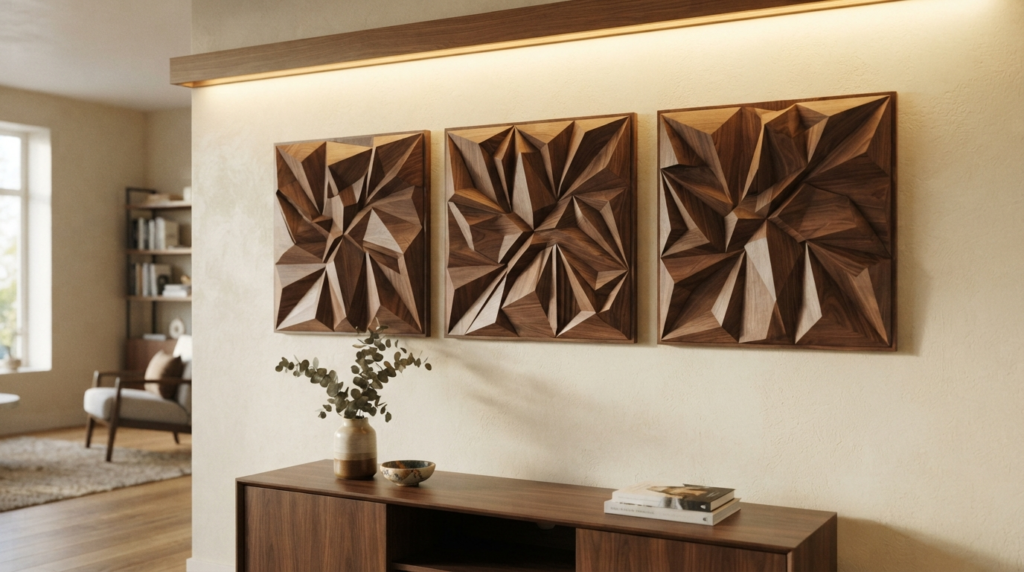
Picking the right set starts with understanding the mood you want the room to have, not just the colors you like. Once that direction is clear, matching style, color, and format becomes much easier to narrow down.
Matching Style to Your Room’s Mood
Abstract triptychs tend to bring energy and movement, which works well in living rooms or spaces that already feel a little quiet.
Landscape or botanical scenes have the opposite effect, softening a room and making it feel calmer, which is often preferred in bedrooms. Before choosing a design, it helps to decide in one or two words how you want the room to feel, since that instantly narrows the options.
Keeping Colors and Themes Cohesive
For three panels to read as one intentional set rather than three unrelated purchases, at least one element needs to repeat across them.
This is usually a dominant color, a consistent subject, or a matching frame style that ties the pieces together visually. Even a small repeated detail is often enough to make 3 piece wall art feel like a single, planned composition instead of a coincidence.
Picking Between Canvas, Framed, or Unframed Prints
Canvas prints tend to feel more relaxed and casual, which suits laid-back or eclectic interiors.
Framed prints look cleaner and more defined, making them a better fit for rooms that already lean formal or minimal. Unframed paper prints offer the most flexibility, since they allow you to choose your own frame style later if you already know the exact look you want.
| Format | Look | Best Suited For |
| Canvas | Soft, relaxed texture | Casual, gallery-style rooms |
| Framed print | Clean, defined edges | Formal or modern interiors |
| Unframed paper | Fully customizable | Custom framing projects |
Sizing Your 3 Piece Wall Art the Right Way
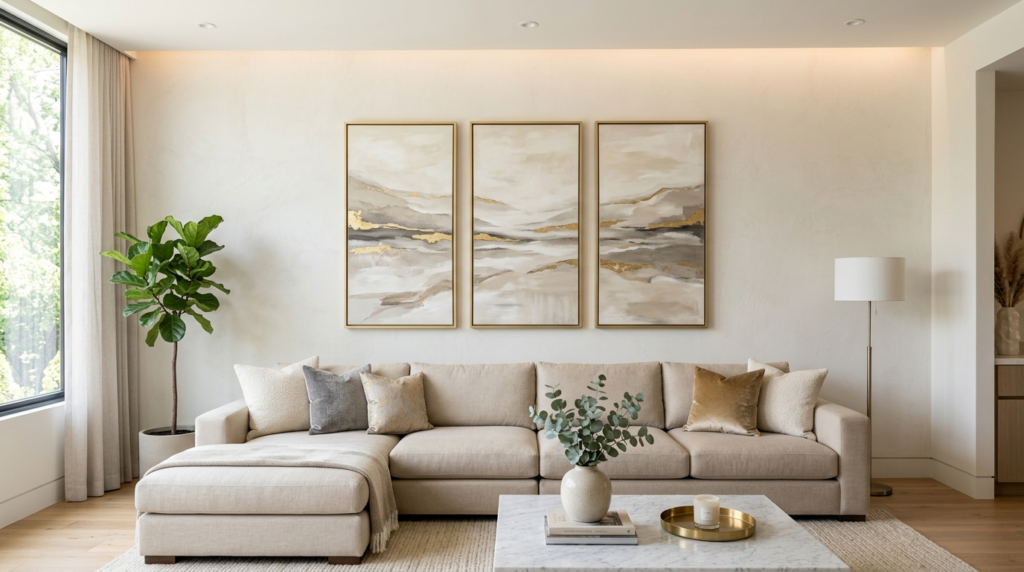
Getting the size right is often the difference between a wall that feels balanced and one that feels either too empty or too crowded. The most reliable method ties the total width of your 3 piece wall art directly to the furniture placed beneath it.
The 60 to 75 Percent Rule
A widely used sizing guideline suggests that the full triptych, including the gaps between panels, should span roughly 60 to 75 percent of the furniture width below it.
For example, an 84 inch wide sofa would generally work well with a set spanning somewhere between 50 and 63 inches in total. Staying within this range keeps the composition from feeling disconnected from the furniture or from overwhelming the wall.
Why the Gaps Between Panels Count Too
Many people size their 3 piece wall art by measuring only the panels themselves, but the empty space between them is part of what the eye reads on the wall.
If your panels are 16, 24, and 16 inches wide with 2 inch gaps between them, the true total width is 60 inches rather than 56. Including these gaps in your measurement gives a far more accurate sense of how much wall space the finished arrangement will actually occupy.
Spacing and Hanging Height Guide
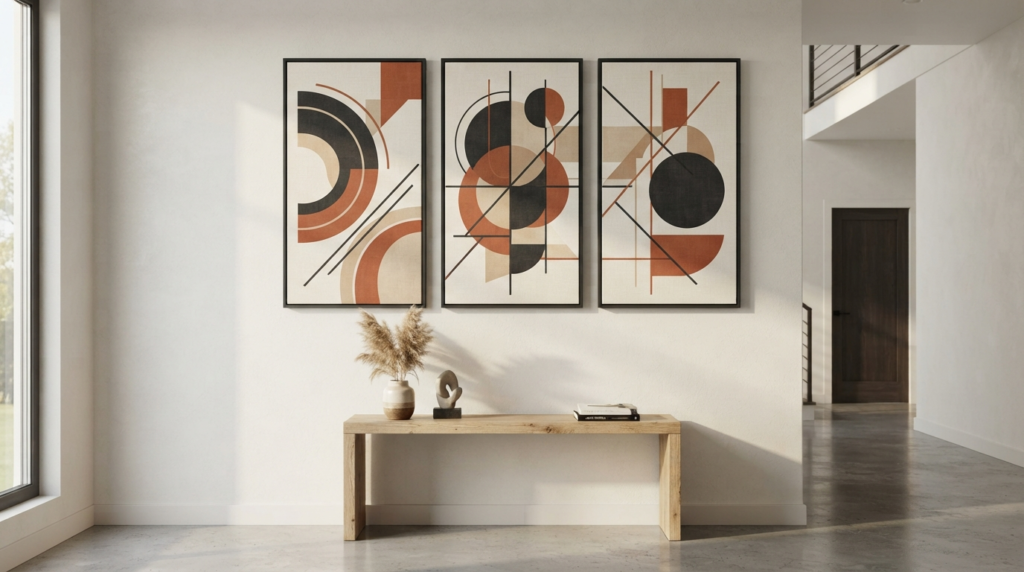
Even a well-chosen set of 3 piece wall art can look off if the spacing between panels is uneven or the height feels disconnected from the furniture nearby. These two details are what separate a polished result from one that feels slightly accidental.
Ideal Spacing Between Panels
For most standard-sized panels, a gap of around 1.5 to 3 inches between each piece tends to look clean and connected without feeling cramped.
Larger panels can generally handle a slightly wider gap, while smaller tiles often look best with a tighter spacing. The most important rule is consistency, since even a small difference between the left and right gaps is usually noticeable once the pieces are on the wall.
Correct Hanging Height for Sofas, Beds, and Open Walls
Above a sofa, the bottom edge of the artwork typically looks best sitting about 6 to 10 inches above the back cushions. Above a bed, that same bottom edge usually works well around 8 to 12 inches above the headboard.
On an open wall with no furniture underneath, centering the middle panel at roughly 57 inches from the floor keeps it at a comfortable eye level for most viewers.
| Placement | Recommended Bottom Edge Height |
| Above a sofa | 6 to 10 inches above the sofa back |
| Above a bed | 8 to 12 inches above the headboard |
| Open wall | Centered around 57 inches from the floor |
Styling 3 Piece Wall Art in Different Rooms
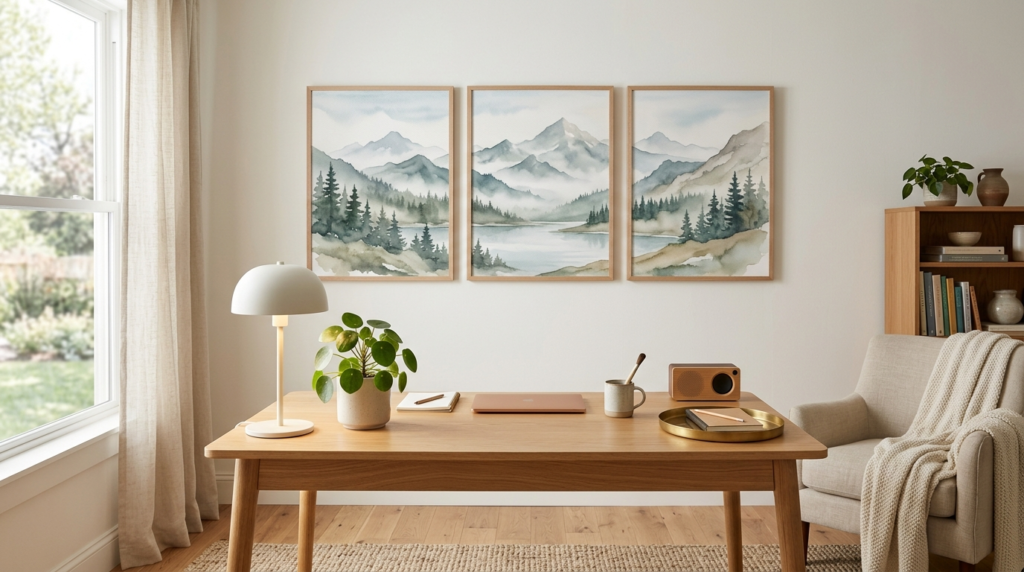
The same triptych can serve very different purposes depending on where it is placed, since each room asks the artwork to do a slightly different job. Living rooms, bedrooms, and hallways in particular tend to benefit from different orientations and subject choices.
Living Room
A horizontal arrangement of 3 piece wall art above the sofa usually works best here, since it echoes the width of the seating area and helps anchor the whole space.
Abstract or landscape designs are popular choices, as they add visual interest without competing with other decor in an already busy room. This placement is often the first one people plan for, since living rooms typically have the widest open wall space.
Bedroom
A quieter, softer triptych tends to suit bedrooms better than a bold or high-contrast one, since the goal here is to support rest rather than draw constant attention.
Botanical scenes, calm landscapes, or muted abstract designs are common choices above the headboard. Keeping the color palette gentle helps the room feel settled rather than visually busy.
Hallway and Entryway
Narrow spaces like hallways often benefit from a vertical arrangement of 3 piece wall art, since it draws the eye upward and makes the passage feel more considered.
Smaller panels with slightly tighter spacing usually look more appropriate here than large, widely spaced pieces. Because people pass through these areas quickly, simple and clean designs tend to work better than highly detailed ones.
Common Mistakes to Avoid With 3 Piece Wall Art
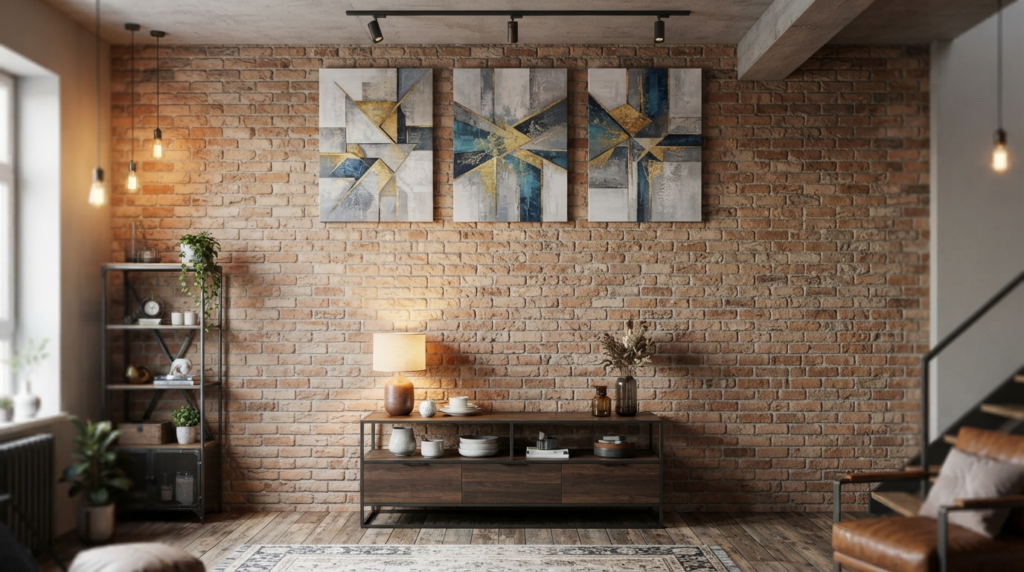
A few small errors show up repeatedly when people hang 3 piece wall art for the first time, and most of them are easy to prevent with a little planning. Hanging the set too high above furniture is one of the most common issues, since it visually disconnects the art from the piece below it.
Uneven gaps between panels are another frequent problem, as even a small inconsistency tends to catch the eye more than expected. Choosing a set that is wider than about 75 percent of the furniture width can also make the arrangement feel heavy rather than balanced.
Using painter’s tape to mark the outline of each panel and the gaps between them before drilling any holes is one of the simplest ways to avoid these issues. This lets you step back, check the layout at true scale, and make adjustments without leaving unnecessary marks on the wall.
Frequently Asked Questions
What is 3 piece wall art usually called?
3 piece wall art is most commonly referred to as a triptych, particularly when the three panels form one continuous image. When the pieces are related but not literally connected, the term “three-piece set” is also used interchangeably.
How far apart should the panels be spaced?
Most panels look best spaced around 1.5 to 3 inches apart, with the exact gap depending on the overall size of the pieces. Keeping the spacing identical across all panels is more important than the exact number chosen.
How do I know what size to buy?
A helpful starting point is sizing the full set to about 60 to 75 percent of the furniture width beneath it, including the gaps between panels. Measuring your wall and furniture before shopping makes this calculation much easier.
Do all three pieces need to match exactly?
No, the strongest sets usually share one connecting element such as color, subject, or frame style rather than being identical. This repetition is enough to make the pieces read as a cohesive set.
Conclusion
Choosing and hanging 3 piece wall art becomes far simpler once the core rules around sizing, spacing, and room placement are clear. A well-planned triptych brings balance and personality to a wall without the guesswork that often comes with a full gallery arrangement.
With the sizing formulas, spacing guidelines, and room-specific tips covered in this guide, you now have everything needed to plan a set of 3 piece wall art that looks intentional from the moment it goes up.
Related Articles
Dining Room Mirror: The Complete Guide to Choosing, Sizing and Styling
Crate and Barrel Lighting: A Complete Buying Guide for Every Room
West Elm Lighting: A Complete Buying Guide for Every Room in Your Home
Large Wall Art for Living Room: The Complete Buying and Styling Guide
Garage Wall Shelves: A Complete Guide to Smart Garage Storage