70s Home Decor: The Ultimate Guide to Retro Style for Your Home
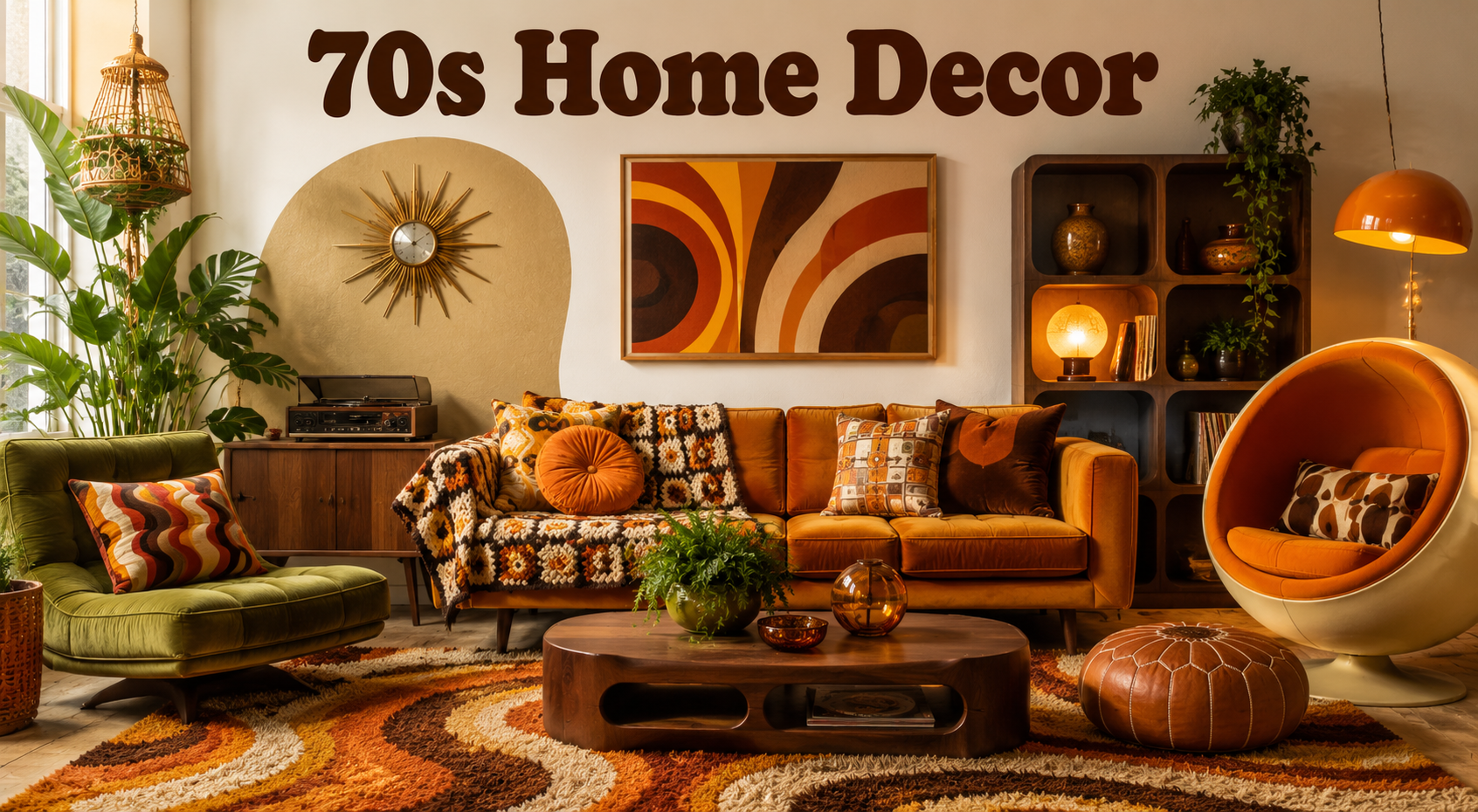
70s home decor is one of the most loved retro styles because it feels warm, cozy, and full of personality. It grew out of a decade that valued self-expression, nature, and comfort over strict formality.
This style mixes earthy colors, bold patterns, and natural materials to create spaces that feel relaxed yet stylish. Even today, many homeowners are bringing back 70s home decor because it adds character that modern minimalism often lacks.
This guide walks you through every element of the style, from color palettes to furniture, so you can understand it fully. By the end, you will know exactly how to recreate this timeless look in your own home.
The Cultural Roots of 70s Home Decor
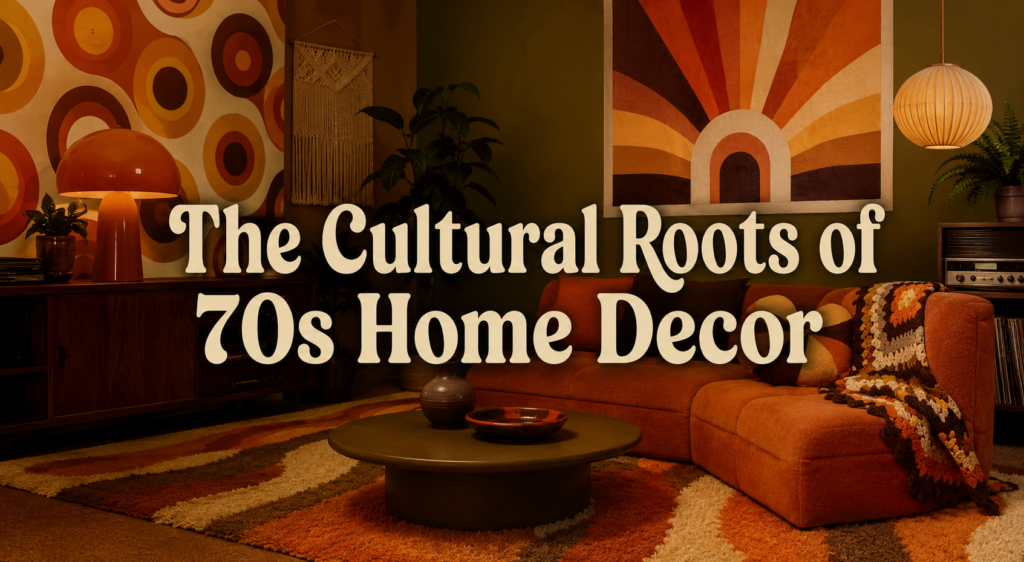
70s home decor did not appear randomly; it was shaped by the social and cultural mood of the time. Understanding these roots helps explain why the style still feels so personal and expressive today.
The Hippie Movement and Free-Spirited Living
The hippie movement of the late 1960s carried into the 70s and shaped how people decorated their homes. Comfort, individuality, and a relaxed lifestyle became more important than rigid formal design rules. This is why 70s interiors often feel casual, layered, and personal rather than perfectly matched.
Space Age Fascination and Futurism
The excitement around space travel during this era influenced furniture shapes and materials. Designers experimented with curved forms, plastic finishes, and metallic accents that felt futuristic.
This fascination gave 70s home decor a slightly experimental and playful edge alongside its earthy tones.
Rise of DIY Culture and Handmade Decor
Many families in the 70s embraced do-it-yourself projects to decorate their homes affordably. Macrame, hand-thrown pottery, and sewn textiles became common because they were both creative and budget-friendly. This handmade quality is part of why the style still feels warm and authentic today.
Signature Color Palettes of 70s Home Decor
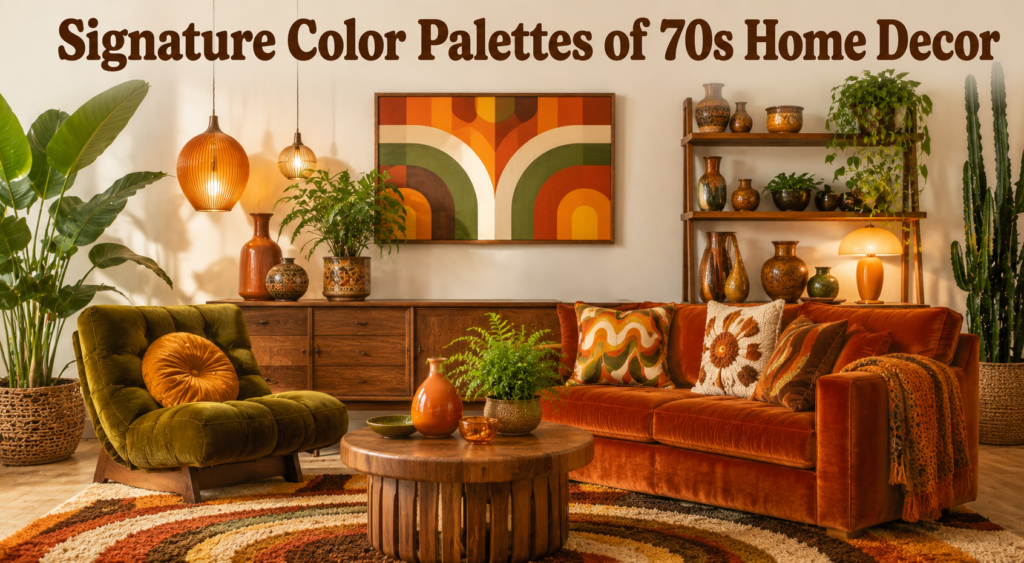
Color is one of the easiest ways to identify 70s home decor at a glance. The palette leans heavily on tones inspired by nature, balanced occasionally with brighter accent shades.
Earth Tones That Define the Look
Browns, rust, mustard yellow, and olive green formed the backbone of most 70s color schemes. These shades were inspired by nature and gave rooms a grounded, cozy feeling. They still work beautifully in modern homes when paired with natural materials like wood and jute.
Bold and Psychedelic Accents
Alongside earthy shades, homeowners often added pops of orange, turquoise, or hot pink for energy and contrast. These bold colors appeared in cushions, artwork, or a single accent wall rather than covering entire rooms. This balance kept spaces lively without feeling overwhelming.
Neutral Bases for Balance
Cream, beige, and soft white were commonly used as base colors on walls and larger furniture pieces. These neutrals allowed the bolder earth tones and accent colors to stand out without clashing. This layering technique is still a smart approach for anyone recreating 70s home decor today.
Here is a quick reference table for common color pairings used in this style:
| Color Category | Common Shades | Typical Use |
| Earth Tones | Rust, Mustard, Olive, Brown | Walls, sofas, rugs |
| Bold Accents | Orange, Turquoise, Hot Pink | Cushions, art, accent walls |
| Neutral Bases | Cream, Beige, White | Ceilings, trims, large furniture |
Patterns and Textures That Defined the Decade
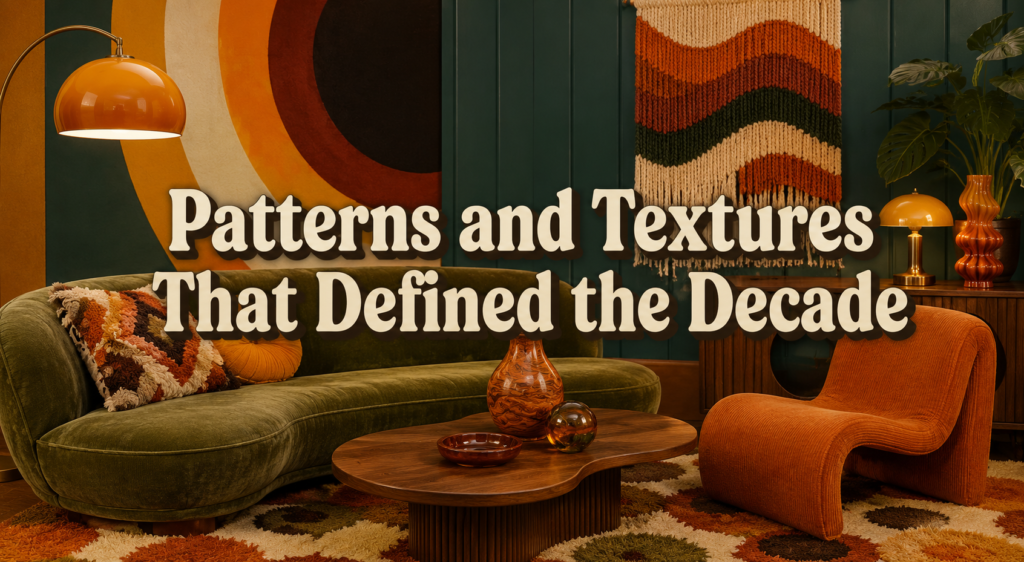
Patterns played a huge role in giving 70s home decor its distinctive personality. Textures added depth, making rooms feel layered and tactile rather than flat.
Geometric Prints on Fabrics and Walls
Bold geometric shapes appeared frequently on wallpaper, curtains, and upholstery during this decade. These prints often used repeating circles, hexagons, or zig-zag lines in warm color combinations. They remain a strong visual cue whenever people picture classic 70s home decor.
Floral and Paisley Designs
Soft floral prints and swirling paisley patterns added a bohemian touch to many interiors. These designs were common on curtains, bedspreads, and accent chairs throughout the decade. They paired naturally with the earthy color palette already popular at the time.
Shag Textures and Natural Weaves
Shag carpeting and textured woven fabrics gave rooms a soft, inviting feel underfoot and on furniture. Natural weaves like jute and rattan added a similar tactile quality to walls and seating. This mix of textures is one reason 70s interiors always felt so comfortable.
Furniture Styles of the 70s
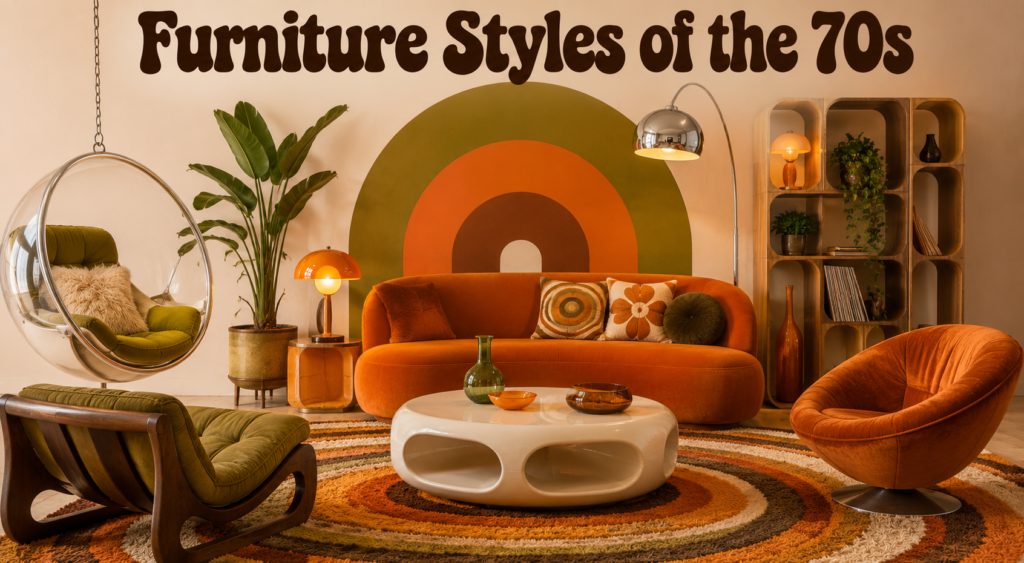
Furniture from this era prioritized comfort and casual living over stiff formality. The shapes were often low, curved, and inviting rather than sharp and rigid.
Low-Profile Sofas and Sunken Seating
Sofas sat lower to the ground and often featured deep, plush cushions for lounging comfortably. Some homes even included sunken conversation pits, a dedicated lowered seating area built into the living room floor. This design encouraged relaxed, social gatherings among family and friends.
Curved and Sculptural Shapes
Furniture pieces frequently featured rounded edges and sculptural silhouettes instead of straight lines. This softened the overall look of a room while adding a slightly futuristic touch inspired by the era’s fascination with design experimentation. Coffee tables and chairs were common places for this style.
Wicker, Rattan and Statement Chairs
Natural materials like wicker and rattan were popular for both indoor and outdoor furniture. Iconic pieces such as egg chairs and oversized bean bags became symbols of relaxed 70s living. These pieces remain popular today for adding retro charm to modern rooms.
Lighting and Wall Treatments
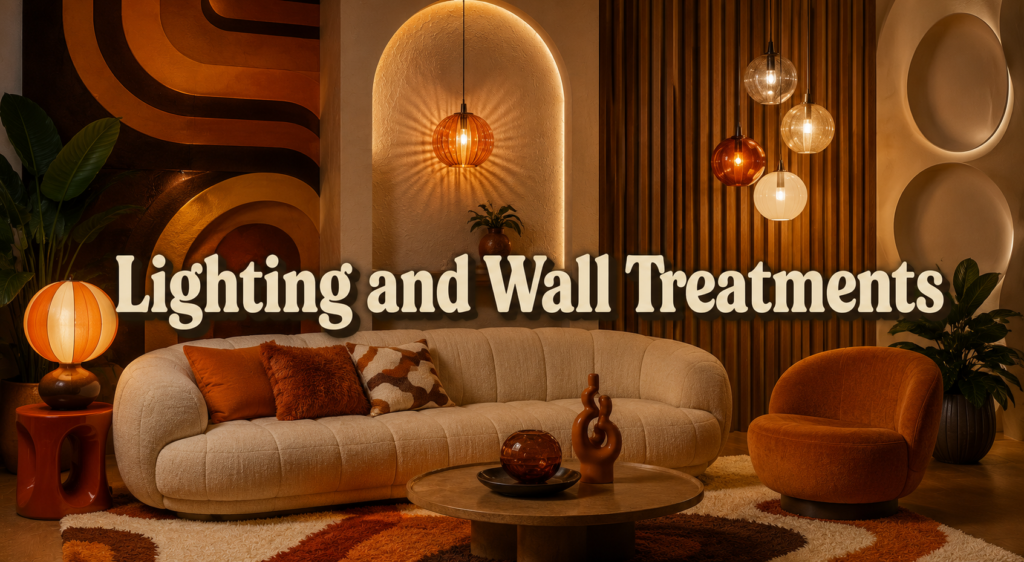
Lighting and wall choices helped set the mood in 70s interiors, often adding warmth and a touch of playfulness. These elements worked together with furniture and color to complete the overall look.
Lava Lamps and Ambient Lighting
Lava lamps became a playful lighting choice that added movement and a warm glow to rooms. Beyond lava lamps, dimmable ambient lighting was preferred over harsh overhead lights. This created a relaxed atmosphere suited to evening gatherings and casual living.
Statement Pendant Lights and Sunburst Mirrors
Large globe pendant lights often hung over dining tables as a bold focal point. Sunburst mirrors were also popular, both reflecting light and serving as decorative wall art. Together these pieces added a touch of glamour to otherwise casual spaces.
Wood Paneling and Bold Wallpaper
Wood paneling covered many living room and study walls, adding warmth and texture. Where paneling was not used, bold wallpaper with floral or geometric prints filled the space instead. Both choices reinforced the cozy, layered feeling central to 70s home decor.
Textiles, Soft Furnishings and Decorative Accents
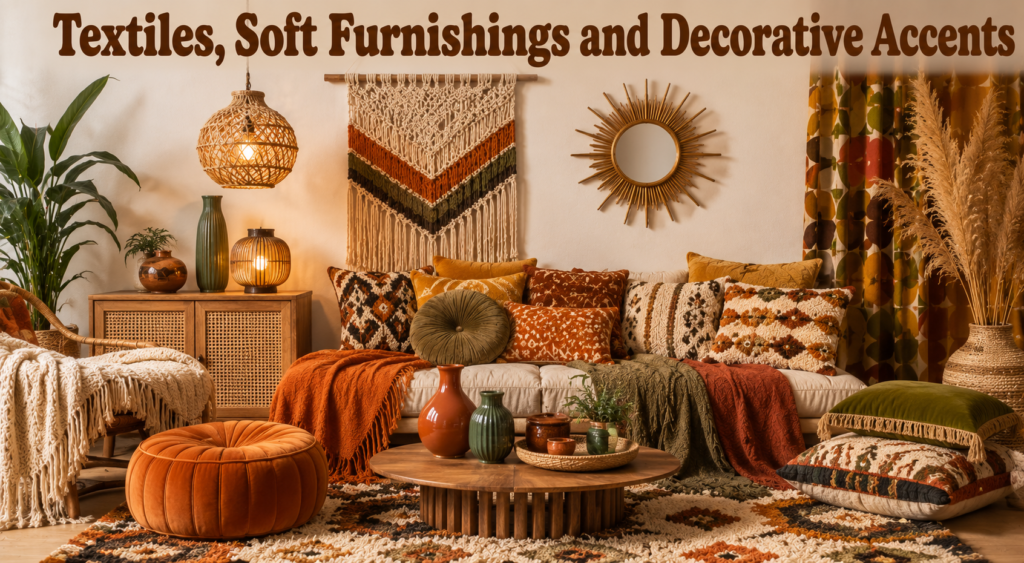
Soft furnishings and decorative accents brought the finishing touches to any 70s-inspired room. These smaller details often made the biggest difference in tying a space together.
Velvet, Fringe and Macrame Details
Velvet and corduroy upholstery added a soft, luxurious feel to sofas and chairs. Fringe and tassel trims decorated cushions, lampshades, and curtains for extra texture. Macrame wall hangings and plant holders became especially popular handmade additions.
Houseplants and Natural Greenery
Houseplants such as ferns and spider plants were essential in almost every 70s home. They were often displayed in hanging pots or ceramic planters to add life and color. This love for greenery connected interiors back to the era’s appreciation of nature.
Ceramic Pottery and Vintage Collectibles
Handmade ceramic pottery in earthy glazes was a common decorative accent on shelves and tables. Vintage record players and radios also served as both functional items and nostalgic decor pieces. These small details added personality without requiring a full room redesign.
The following list summarizes the smaller accents that complete any 70s home decor scheme:
- Macrame wall hangings and plant holders
- Ceramic vases and pottery in earthy glazes
- Fringed cushions and lampshades
- Hanging houseplants in woven or ceramic pots
- Vintage record players as functional decor
Room-by-Room 70s Decor Ideas
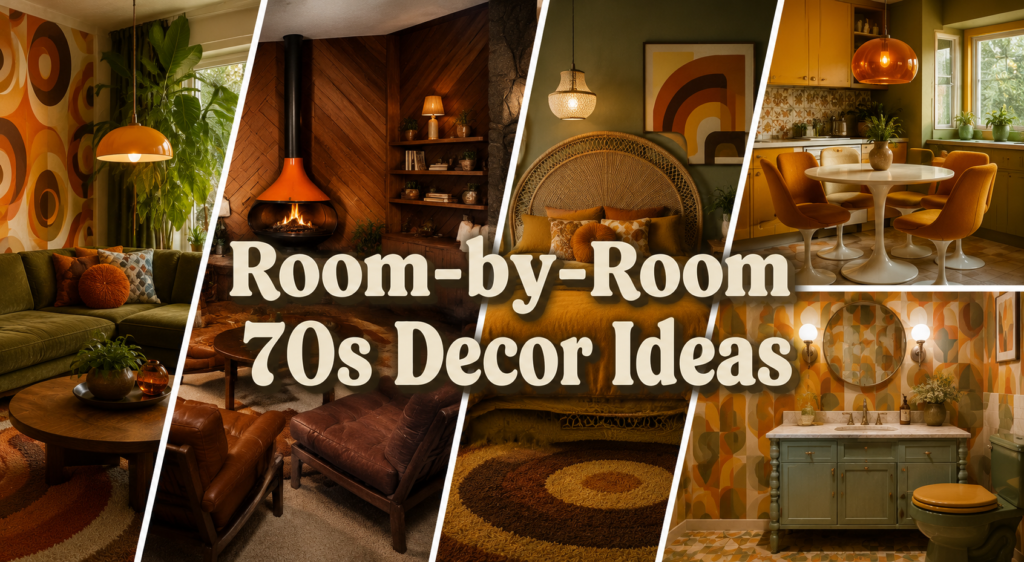
Applying 70s home decor works best when adapted to the specific needs of each room. Each space can borrow different elements from the era while staying functional for modern life.
Living Room and Dining Essentials
The living room is the best place to showcase low sofas, bold rugs, and statement lighting together. In dining areas, a large pendant light over a wooden table completes the retro feel. These two spaces benefit most from bold color and texture combinations.
Bedroom and Bathroom Styling
Bedrooms can use soft floral or paisley bedspreads paired with warm wall colors for a cozy retro feel. In bathrooms, patterned tiles or warm-toned fixtures capture the era without overwhelming a smaller space. Both rooms work well with subtle rather than heavy styling.
Bringing 70s Decor Into Modern Homes
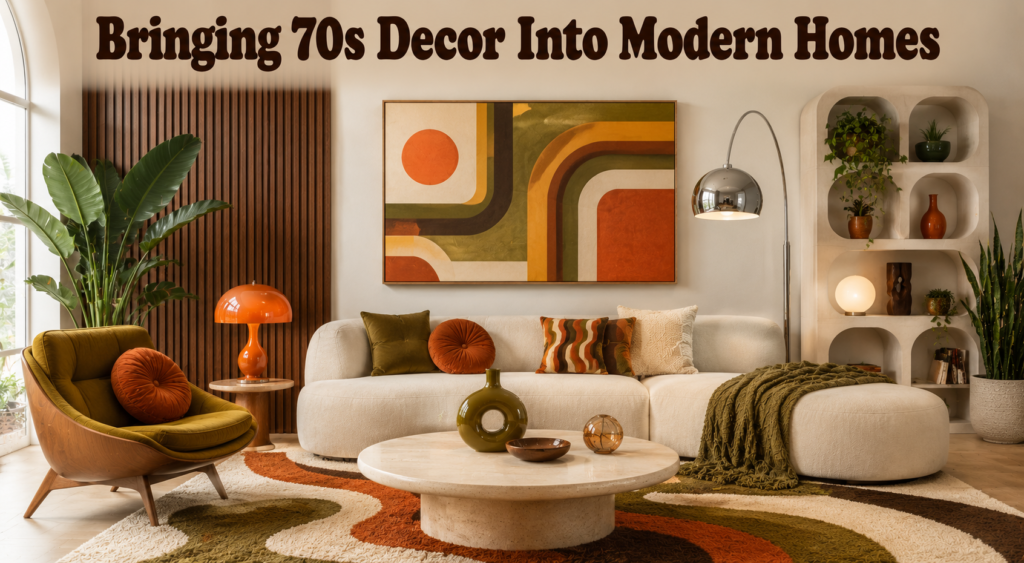
Recreating 70s home decor today does not mean copying every element exactly. Instead, most homeowners blend select retro pieces with contemporary furniture for a balanced, livable space.
Mixing Vintage Pieces with Contemporary Furniture
Pairing one or two authentic vintage pieces, like a rattan chair or vintage lamp, with modern furniture creates an updated retro look. This approach avoids making a room feel like a costume set from the past. It keeps the space functional while honoring the original style.
Budget-Friendly Ways to Start
Small additions like macrame hangings, ceramic pottery, or a bold throw pillow are affordable ways to test this style. Thrift stores and vintage markets are excellent sources for authentic 70s pieces at low prices. Starting small allows homeowners to build the look gradually over time.
Frequently Asked Questions
What colors are most associated with 70s home decor?
Earth tones like rust, mustard, and olive green are the most recognizable, often paired with bold accent colors like orange or turquoise.
Is 70s home decor coming back in style?
Yes, many homeowners are mixing retro pieces like rattan furniture and macrame decor with modern interiors for a warm, nostalgic feel.
How can I add 70s decor without a full renovation?
Start with small accents such as houseplants, ceramic pottery, patterned cushions, or a statement light fixture to introduce the style gradually.
Conclusion
70s home decor remains popular because it brings warmth, texture, and personality into modern spaces. From earthy color palettes to handmade accents, every element of this style reflects a relaxed and expressive way of living.
Whether you choose to fully commit to the look or simply add a few retro touches, this style offers a timeless charm that continues to inspire homeowners today.
Related Articles
Handmade Home Decor: A Complete Guide to Warmth, Style & Authenticity
Lower Middle Class Home Decor: Meaning, Style Guide & Modern Update Tips
Bold Color Home Decor: A Complete Guide to Vibrant Interior Design
Gothic Home Decor: A Complete Guide to Dark, Dramatic Interior Design