 homeofdecor.online
Kitchen counter decor is the art of arranging everyday and decorative items on your countertops so the space feels warm, organized, and personal. It is not about filling every inch with objects, but about choosing a few meaningful pieces that support how you actually cook and live.
A well-styled counter mixes function with beauty, using things like bowls, boards, and plants that you already reach for daily. This guide breaks decor down by style, budget, and kitchen size so you can build a look that fits your real routine, not just a photo.
Instead of a random list of ideas, every section here answers a specific question you are likely searching for. By the end, you will know exactly what to keep, what to remove, and how much decor is genuinely too much.
Quick Answer: What Every Beautiful Kitchen Counter Needs
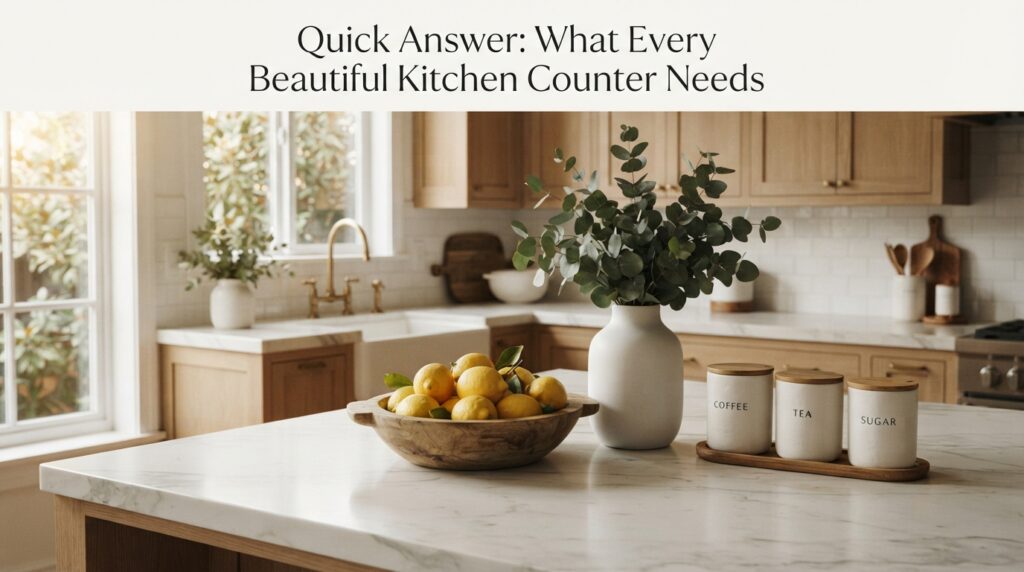
A beautiful kitchen counter combines four basic elements: a clear work surface, one or two functional items you use daily, a single decorative accent, and enough open space for the eye to rest.
You do not need trendy accessories to achieve this; you need editing. Most kitchens look cluttered not because they lack style, but because too many objects compete for attention at once. Focus on function first, then let one or two decorative touches, such as a bowl of fruit or a small vase, complete the look.
Declutter Before You Decorate
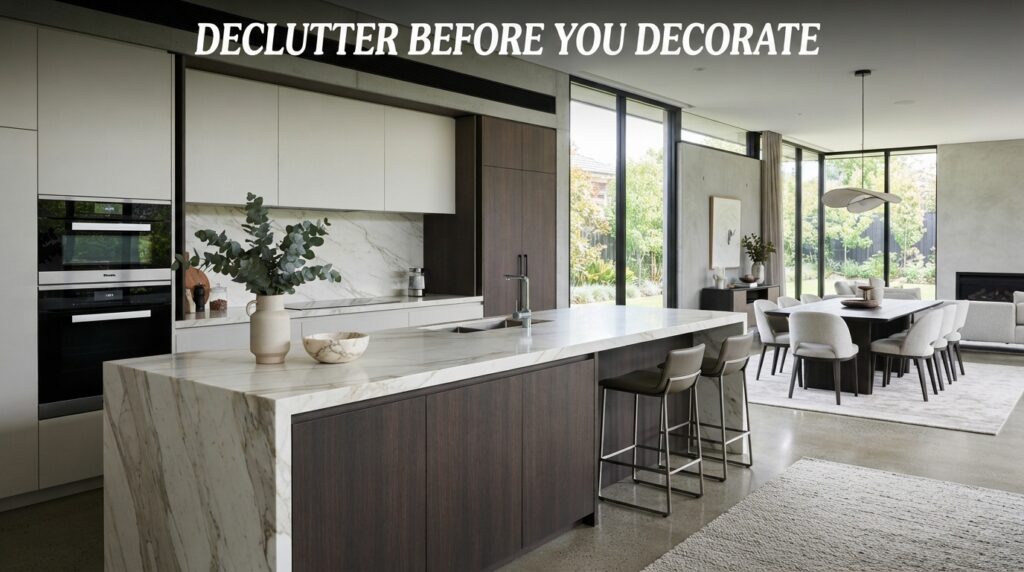
Before adding any new kitchen counter decor, the counter needs to be cleared completely so you can see what you are actually working with. This first step matters more than any single decorative object you might buy.
What to Remove From Your Counters
Start by removing anything that does not belong in the kitchen at all, such as mail, keys, school papers, or random chargers that tend to collect near the stove.
Next, take away small appliances you do not use on a daily basis, including blenders, slow cookers, or extra toasters that can live in a cabinet or pantry instead. Once these items are gone, you will immediately notice how much visual space opens up on the counter.
What Can Stay (The Daily-Use Test)
A simple way to decide what belongs on your counter is the daily-use test: if you touch an item every single day, it earns a spot; if not, it goes into storage. Coffee makers, knife blocks, and utensil crocks usually pass this test because they support daily cooking.
Everything else, no matter how attractive, should only stay if it adds genuine beauty without blocking your ability to prep food comfortably.
Kitchen Counter Decor by Style
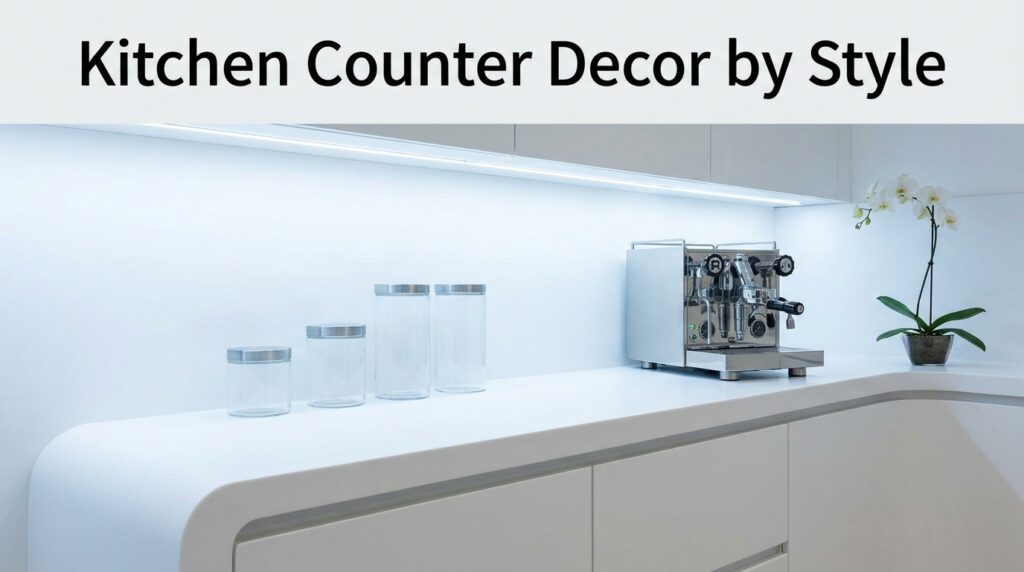
Kitchen counter decor should reflect the same design language as the rest of your kitchen, whether that is rustic, sleek, relaxed, or classic. Choosing decor that matches your existing cabinets and finishes creates a far more cohesive result than picking random trending pieces.
Farmhouse Kitchen Counter Decor
Farmhouse-style counters lean on natural materials like wood, rattan, and stoneware to create a warm, lived-in feel.
A large wooden cutting board leaned against the backsplash, paired with a ceramic crock of wooden spoons, instantly signals this style. Mason jars filled with dried herbs or grains add practicality while keeping the rustic theme consistent across the counter.
Modern Minimalist Kitchen Counter Decor
Modern minimalist counters rely on clean lines, neutral tones, and very few objects to create a calm, uncluttered look.
A sleek soap dispenser, one sculptural bowl, and a single plant are usually enough to complete this style without feeling empty. The goal here is negative space; every object left visible should feel intentional rather than accidental.
Coastal and Boho Kitchen Counter Decor
Coastal and boho kitchens use texture and organic shapes, such as woven trays, light wood tones, and greenery, to create a relaxed atmosphere.
A rattan tray holding oil bottles or a trailing plant in a textured pot fits naturally into this palette. Soft, sun-washed colors work better here than bold or heavily saturated accessories.
Kitchen Counter Decor Ideas by Zone
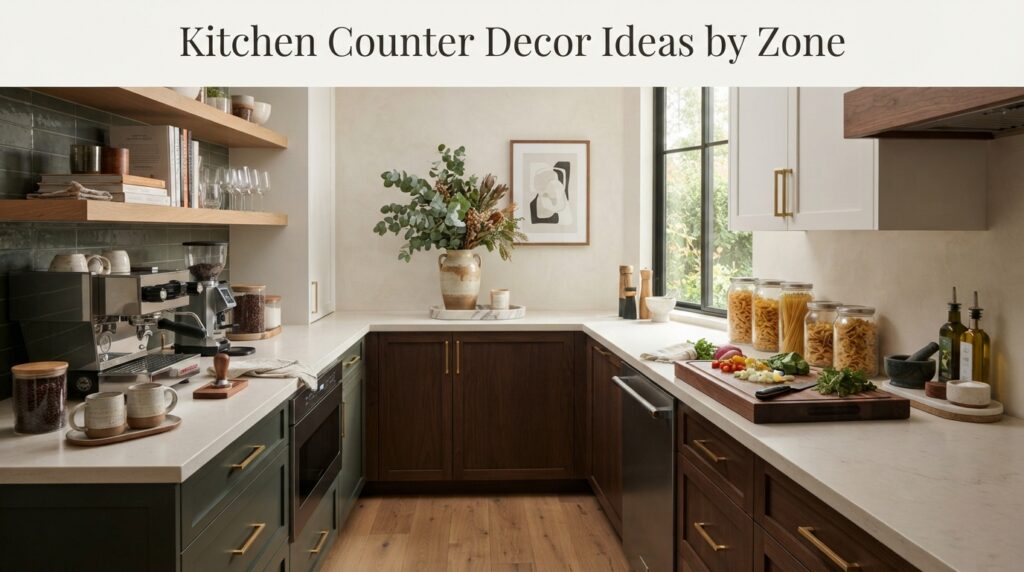
Instead of scattering decor randomly, organizing your kitchen counter decor into functional zones keeps the space looking intentional and easy to clean. Each zone below focuses on a specific task, so decor and function work together rather than competing.
Cooking Zone
The cooking zone typically sits beside the stove and benefits from a utensil crock, a small oil bottle, and a salt cellar kept within easy reach.
Grouping these items together, rather than spreading them along the whole counter, keeps this area functional without looking cluttered. A wooden cutting board leaned nearby adds warmth while still serving a practical prep purpose.
Sink Zone
Around the sink, a shallow tray can hold hand soap and dish soap so bottles are not standing loose beside the faucet.
Choosing two coordinated dispensers instantly makes this practical area look more polished. A small folded towel placed beside the tray adds color without creating extra mess.
Coffee Station Zone
A coffee station works well when the coffee maker, a few mugs, and any beans or filters are grouped on one small tray.
This containment trick prevents the beverage area from spreading across the whole counter over time. Adding a small potted plant nearby brings a touch of life to this frequently used corner.
Decorative Zone
The decorative zone is where you can add a vase of flowers, a stack of cookbooks, or a piece of small artwork without worrying about function.
This is the one area of the counter meant purely to bring personality and color into the kitchen. Keep this zone limited to just one or two objects so it does not compete visually with the functional zones nearby.
Small Kitchen Counter Decor Tips
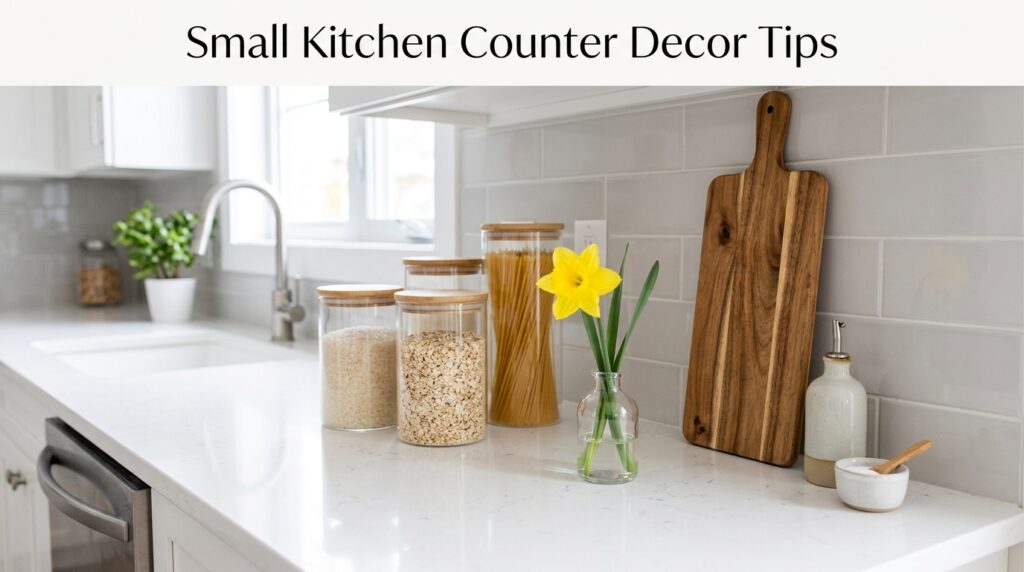
Small kitchens benefit most from vertical decor and multi-purpose objects rather than adding more small items across limited counter space. A narrow vase, a leaned cutting board, or a tall canister uses height instead of width, keeping the counter surface clearer for actual prep work.
Trays are especially useful in small kitchens because they group several small items into one visual unit instead of scattering them individually. When space is tight, one well-chosen object almost always looks better than several small decorative pieces competing for the same few inches.
Budget-Friendly Kitchen Counter Decor
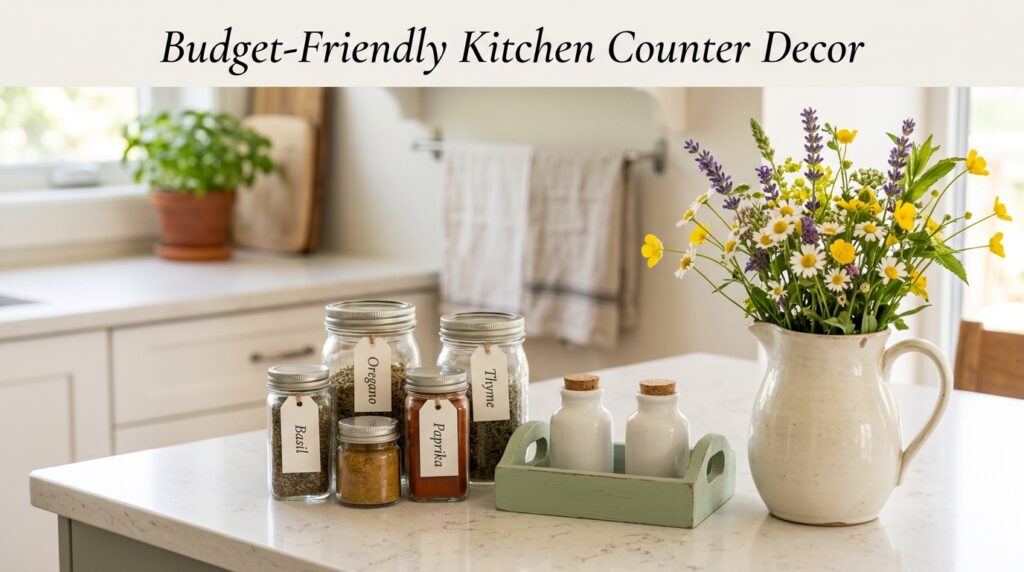
You do not need a large budget to improve your kitchen counter decor, since many upgrades come from reorganizing items you already own. The table below breaks ideas down by realistic spending levels.
| Budget Level | What to Do | Example Items |
| No cost | Rearrange existing items into zones and remove clutter | Existing bowls, boards, jars |
| Under $50 | Add one small decorative accessory | Tray, small vase, plant |
| $50 to $150 | Invest in one statement piece | Ceramic crock, stone tray, lamp |
This tiered approach lets you improve your kitchen counter decor gradually instead of buying everything at once.
How Much Decor Is Too Much?
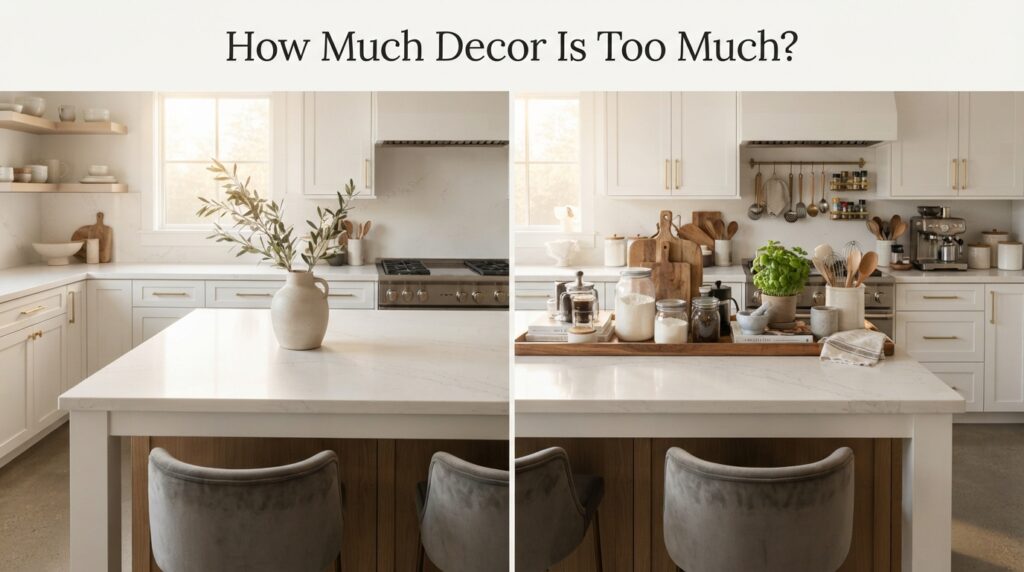
The simplest test for over-decorating is function: if you have to move three or four objects just to chop vegetables, the counter has too much on it. Visual breathing room matters just as much as the objects themselves, so leaving clear stretches between each zone keeps the kitchen feeling calm rather than crowded.
As a general rule, a small kitchen should have only one or two decorative pieces per section of counter, while larger kitchens can support slightly more without feeling busy.
Common Kitchen Counter Decorating Mistakes
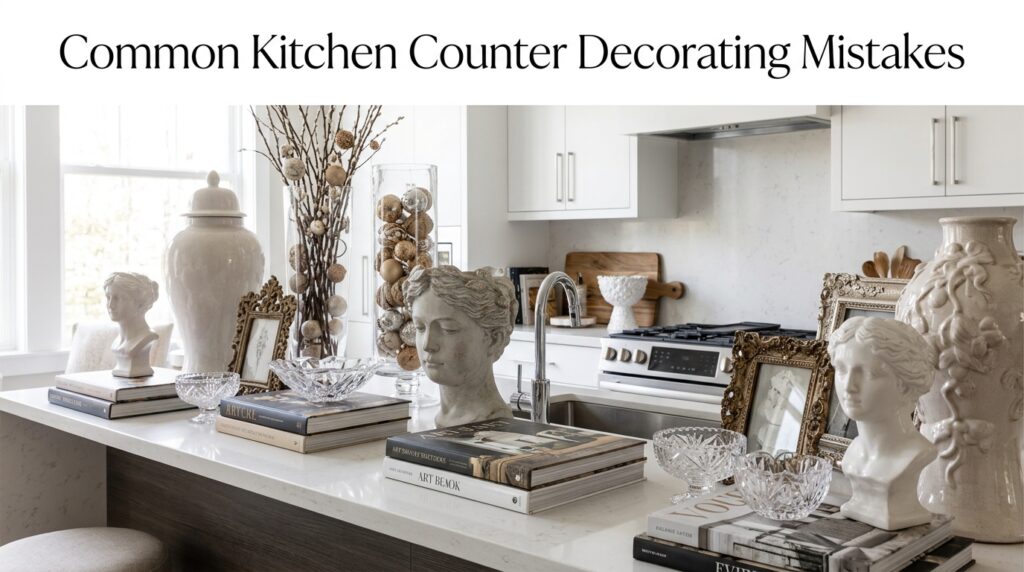
Several repeated mistakes can quietly undo an otherwise good kitchen counter decor plan, and knowing them in advance helps you avoid the same issues.
- Displaying too many small objects, such as several tiny jars or figurines, which fragments the counter visually instead of creating a clean focal point.
- Placing decorative items directly in front of appliance doors or vents, making everyday tasks harder than they should be.
- Matching every single container and canister exactly, which can make the kitchen feel like a showroom rather than a lived-in home.
- Ignoring regular cleaning around trays, boards, and vases, allowing grease and dust to build up behind decorative pieces.
Avoiding these habits keeps your counter both attractive and genuinely easy to live with.
Frequently Asked Questions
What should I put on my kitchen counters?
Keep only items you use daily, such as a coffee maker or utensil crock, along with one or two decorative accents like a fruit bowl or small plant.
Should kitchen counters be completely empty?
They do not need to be empty, but a mix of open space and a few organized zones usually looks more balanced than either extreme.
How do I decorate a small kitchen counter?
Focus on vertical pieces and trays that group items together, since this saves surface space while still adding visual interest.
How can I make my kitchen counters look more expensive?
Choose fewer, better-quality materials like wood, stone, or ceramic instead of many small plastic or mismatched accessories.
Conclusion
Good kitchen counter decor comes down to editing, zoning, and choosing pieces that match both your kitchen’s style and your daily routine. Most existing guides online offer long, repetitive idea lists without addressing budget, kitchen size, or how much is genuinely too much, which often leaves readers with inspiration but no clear plan.
This guide fills that gap by combining style-based direction, zone-based organization, and practical limits in one place. Apply even a few of these ideas, and your counters will feel noticeably calmer, more functional, and more like home.
Related Articles
Decor — A Complete, No-Fluff Guide for Every Room
Decor Steals : Affordable Farmhouse & Vintage Home Decor Deals
Cool Room Decor : Ideas to Transform Your Space
Hometown Furniture and Decor: Complete Buying Guide, Locations & Financing
How to Furnish a Small Apartment: A Complete Room-by-Room Guide