Victorian Gothic Home Decor: A Complete Guide to Dark, Elegant Interiors
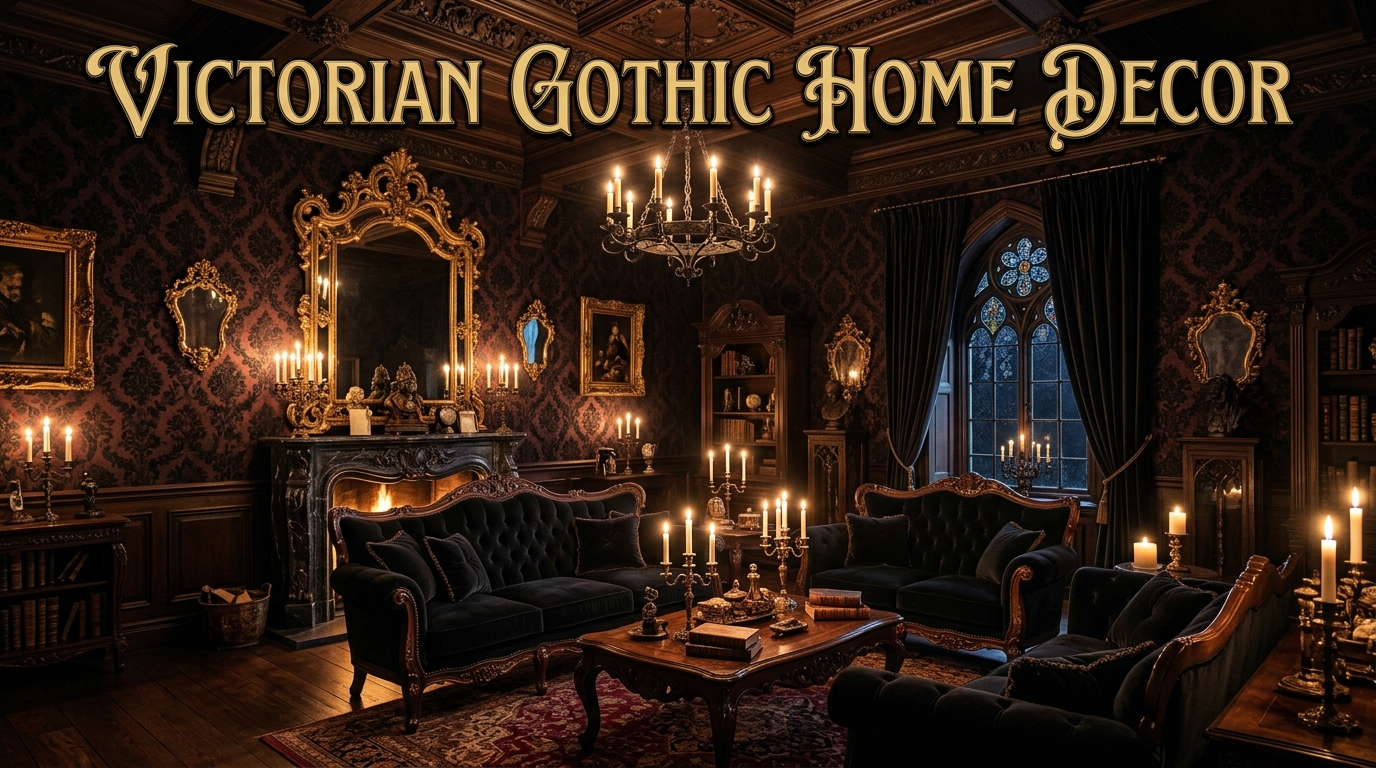
Victorian Gothic home decor is a design style that brings together the richness of the Victorian era with the mysterious charm of Gothic Revival architecture. It focuses on deep colors, carved wood furniture, heavy fabrics, and dramatic lighting that together create a home full of character.
This guide walks you through everything you need to know, from the history behind the style to practical room-by-room ideas. Whether you are starting from scratch or slowly transforming your space, this article gives you a clear path to follow. By the end, you will understand exactly how to bring Victorian Gothic home decor into your own house.
Understanding the Style’s Roots
Before decorating your home, it helps to know where this style actually came from. The sections below explain the historical background and how it separates itself from other design movements.
The Victorian Era and Its Influence on Design
The Victorian era ran from 1837 to 1901, during the reign of Queen Victoria in England. This period was known for its love of detail, luxury, and craftsmanship in furniture, textiles, and architecture.
Homes during this time were filled with layered patterns, dark wood, and ornamental objects that showed off wealth and taste. Many of the design habits from this era still shape how we think about classic, formal interiors today.
Gothic Revival Architecture and Interiors
Gothic Revival was an architectural movement that borrowed ideas from medieval European churches and castles, such as pointed arches and tall windows. When this style moved into home interiors, it brought a sense of drama and mystery that felt very different from plain, simple rooms.
Carved wooden ceilings, stained glass, and heavy stonework became popular features in grand Victorian homes. This is where the “gothic” half of victorian gothic home decor really comes from.
Victorian vs Gothic vs Victorian Gothic
People often confuse these three terms, so it is worth breaking them apart. “Victorian” alone usually refers to soft, romantic, and highly decorated interiors with pastel or warm tones.
“Gothic” alone leans toward darker, more dramatic, and sometimes eerie visuals with medieval influence. Victorian Gothic home decor combines both, keeping the elegance of Victorian furniture while adding the moodier colors and architectural drama of Gothic style.
Core Elements of Victorian Gothic Decor
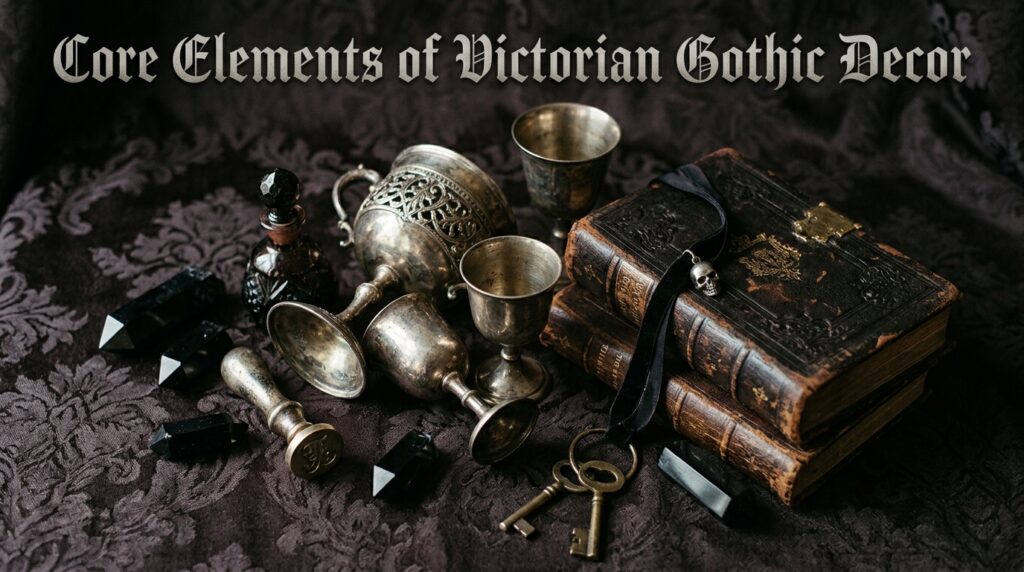
Every Victorian Gothic room is built from a handful of repeating elements. Below, each of these building blocks is explained so you can apply them anywhere in your house.
Color Palette
The color scheme is one of the fastest ways to recognize this style. Deep burgundy, forest green, black, plum purple, and navy blue dominate the walls, furniture, and fabrics. Gold or brass accents are usually added in small doses to break up the darkness and add a touch of shine.
Furniture Styles
Furniture in this style is heavy, carved, and built to last. Think mahogany or walnut wood with curved legs, decorative carvings, and tufted velvet upholstery on chairs and sofas. Pieces often feel like they belong in an old estate rather than a modern showroom.
Architectural Details
Even if you cannot rebuild your house, small architectural touches can bring this feeling into a room. Arched doorways, wainscoting on the lower half of walls, and exposed wooden beams all add to the gothic character. These details give a room a sense of age and permanence.
Fabrics and Textiles
Soft materials play a huge role in Victorian Gothic home decor. Velvet, damask, and brocade fabrics are used for curtains, cushions, and upholstery to add texture and richness. Lace is sometimes layered on top of heavier fabrics to soften the overall look.
Lighting Choices
Lighting in this style is meant to be atmospheric rather than bright and flat. Candelabras, wrought iron chandeliers, and wall sconces create pools of warm light rather than harsh overhead glare.
This kind of lighting is a major reason these rooms feel so dramatic in photos and in person.
Room-by-Room Breakdown
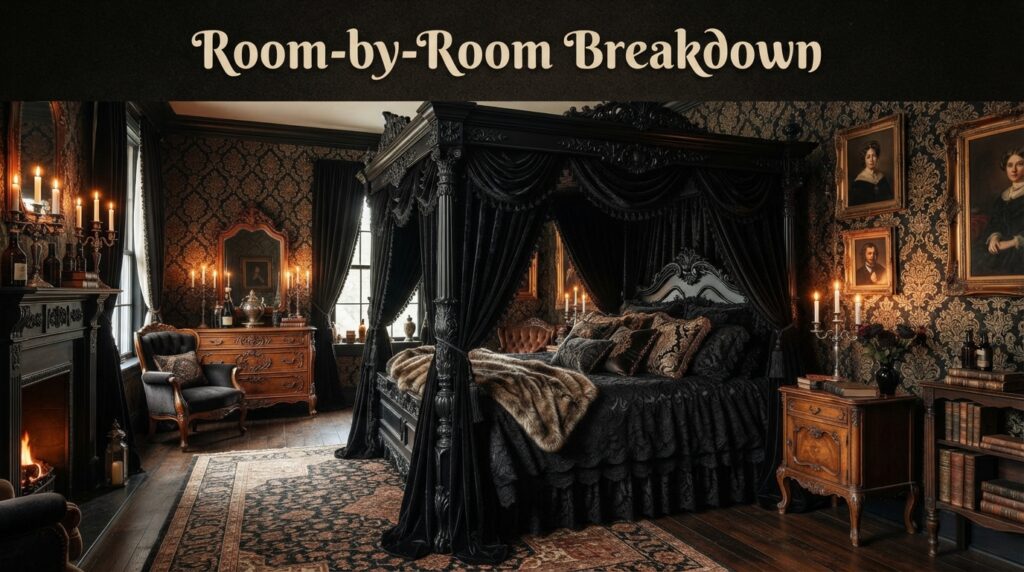
Applying this style works differently depending on which room you are decorating. The sections below cover the most common rooms in a home.
Living Room Ideas
The living room is usually the best place to go bold with victorian gothic home decor since it is where guests spend the most time.
A dark velvet sofa, an ornate coffee table, and a large antique mirror can instantly transform the space. Adding a patterned rug underneath ties the furniture together and adds warmth to the floor.
Bedroom Ideas
Bedrooms benefit from a slightly softer version of this style so the room still feels restful. A carved wooden bed frame, heavy curtains, and rich bedding in deep tones create a cozy but dramatic sleeping space.
Candlestick-style lamps on the nightstands complete the mood without feeling too intense.
Dining Room Ideas
A dining room is a great place for a long wooden table paired with high-backed upholstered chairs. A chandelier hanging above the table becomes the natural centerpiece of the whole room.
Dark wallpaper with subtle patterns works well here since dining rooms are usually used for shorter periods of time.
Bathroom Ideas
Bathrooms can still carry this theme through smaller details like ornate mirror frames, brass fixtures, and dark tile work.
Freestanding clawfoot tubs are a classic addition that instantly feels Victorian. Soft lighting and rich towels finish the look without overwhelming a smaller space.
Entryway and Hallway Ideas
The entryway sets the tone for the rest of the house, so a statement piece here makes a strong first impression.
A large mirror, a small console table, and a patterned runner rug work well in narrow spaces. Wall sconces along the hallway add both light and style as guests walk through.
Home Office or Study Ideas
A home office in this style should feel like a private library from an old manor house. A solid wood desk, a leather chair, and built-in or freestanding bookshelves create the right atmosphere.
Adding a small reading lamp with a warm bulb keeps the space functional as well as beautiful.
Decorative Accents and Accessories
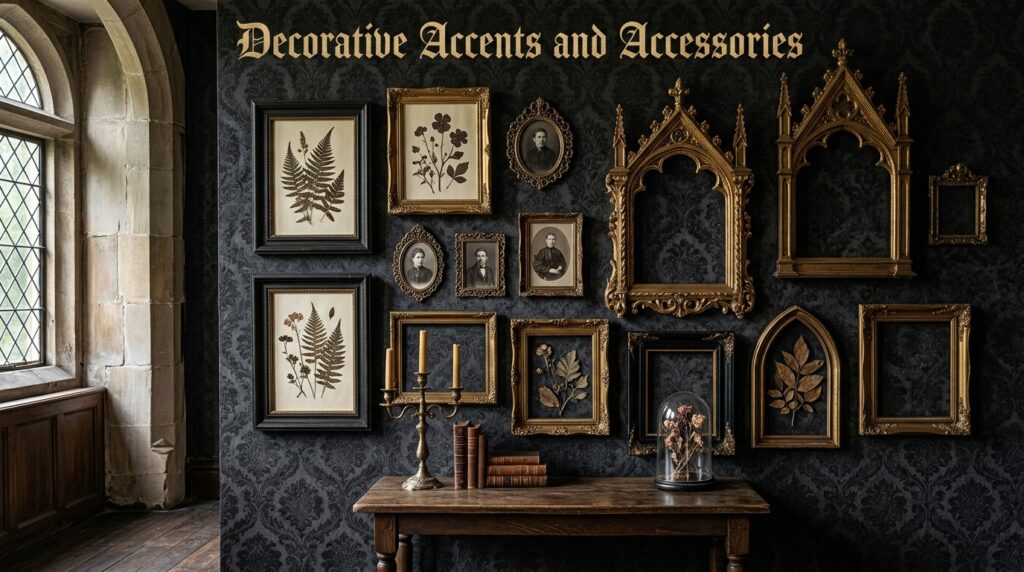
Beyond furniture and paint, smaller accessories are what really finish a Victorian Gothic room. The table below breaks down popular accent categories and where they work best.
| Accent Type | Examples | Best Placement |
| Mirrors and Frames | Ornate gold or black frames | Living room, entryway |
| Wall Art | Vintage-style portraits, dark florals | Hallways, bedrooms |
| Clocks and Candlesticks | Antique-style mantel clocks | Living room, dining room |
| Rugs and Carpets | Persian or oriental patterns | Living room, dining room |
| Curtains and Drapery | Velvet or brocade panels | Bedroom, living room |
| Statement Pieces | Raven or skull motifs, taxidermy | Study, living room |
Mirrors and ornate frames are one of the easiest accessories to add because they instantly bring elegance to any wall. Vintage-style wall art, especially dark florals or old-style portraits, adds a personal and slightly moody touch to hallways and bedrooms. Antique clocks and candlesticks work well as small tabletop details that do not require a full room redesign.
Patterned rugs anchor a room and help tie darker furniture pieces together visually. Heavier curtains made from velvet or brocade block light nicely while adding to the layered, luxurious feel. For those who want a bolder statement, symbolic pieces like raven figures or vintage taxidermy can be added in moderation to avoid overwhelming the space.
Wallpaper and Wall Treatments
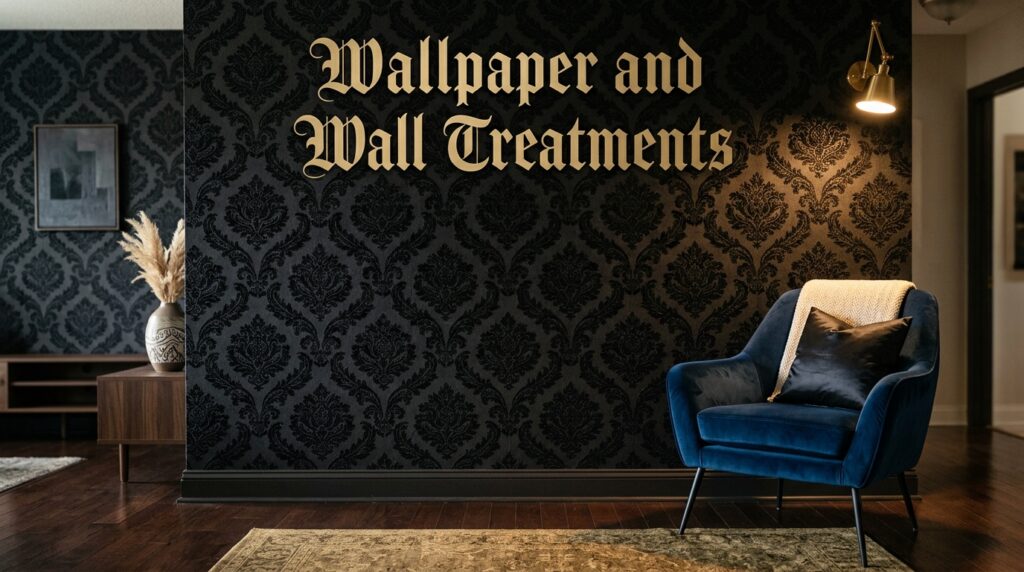
Walls play a bigger role in this style than in most modern designs. This section explains popular patterns and how to apply them without making a room feel too heavy.
Popular Wallpaper Patterns
Damask, floral, and filigree patterns are the most common choices for Victorian Gothic walls. These patterns usually appear in deep tones with subtle metallic accents to catch the light. A busier pattern works best on a single accent wall rather than covering an entire small room.
Dark vs Muted Wallpaper Choices
Very dark wallpaper creates a bold, dramatic feel but can make small rooms feel cramped if used everywhere. A muted or slightly lighter version of the same pattern can achieve a similar mood while keeping the room feeling open. Balancing dark walls with lighter trim or ceiling color is a simple way to manage this.
Wainscoting and Panel Ideas
Wainscoting adds texture and structure to the lower half of a wall, which pairs naturally with patterned wallpaper above it. Painted wood panels in dark tones give a room an instant sense of craftsmanship. This combination is especially effective in dining rooms and hallways.
How to Achieve the Look on a Budget
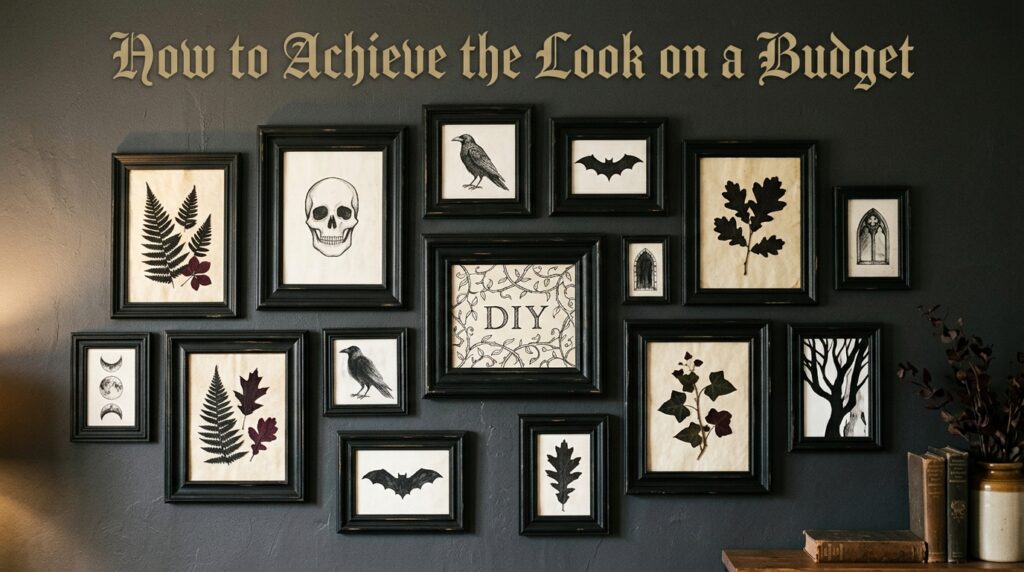
A full Victorian Gothic transformation does not have to be expensive if you know where to look and what to prioritize.
Thrift Store and Antique Shop Finds
Secondhand shops and antique markets are goldmines for carved furniture, old mirrors, and unique decor pieces. These items often already have the aged character that new furniture cannot easily copy. Shopping secondhand also keeps the overall cost of your project much lower.
DIY Techniques
Simple techniques like repainting furniture in dark colors or reupholstering a chair in velvet fabric can transform basic pieces. Distressing wood slightly with sandpaper can also add an aged look to newer furniture. These projects require some time but very little money compared to buying new pieces.
Affordable Decor Swaps
Small swaps like changing lampshades, adding darker throw pillows, or hanging a new mirror can shift a room’s mood without a big budget. Candles in decorative holders are another inexpensive way to add atmosphere. These small changes add up quickly when applied across a whole room.
Mixing Victorian Gothic with Modern Elements
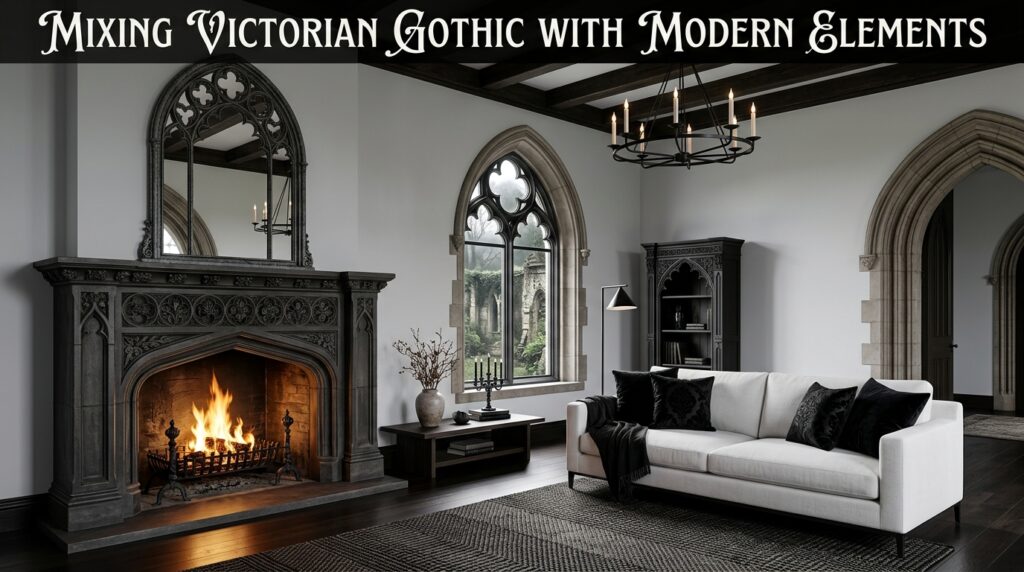
Not everyone wants a fully historical look, and blending styles is a popular modern approach.
Balancing Old and New
Pairing an antique-style sofa with simple modern lighting can keep a room from feeling like a museum. The key is choosing one or two standout Victorian Gothic pieces and letting everything else stay simple. This balance keeps the room functional for everyday modern living.
Minimalist Gothic Approach
A minimalist version of this style uses a limited color palette and fewer accessories while keeping the dark, moody tone. This works well for smaller apartments where too many heavy pieces would feel cluttered. Clean lines paired with one ornate statement piece can still capture the spirit of the style.
Adding Warmth Without Losing the Mood
Warm lighting, textured rugs, and soft throws can prevent a dark room from feeling cold or uninviting. Mixing in a few lighter wood tones or cream-colored fabrics also helps balance the darker elements. The goal is a room that feels rich and dramatic, not gloomy or unwelcoming.
Common Mistakes to Avoid
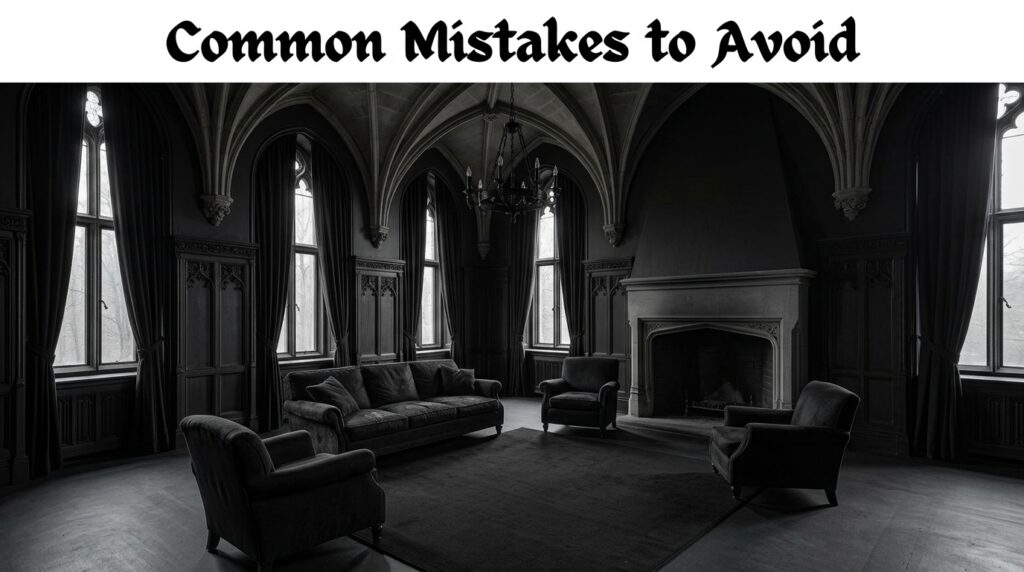
A few common mistakes can make this style feel off rather than intentional.
Overdoing Dark Colors
Using too much black or deep color in a small room without any light-colored breaks can make the space feel cramped. Balancing dark walls or furniture with lighter accents keeps the room from feeling too heavy. Even one light-colored rug or ceiling can make a big difference.
Ignoring Lighting Balance
Relying only on overhead lighting removes the warm, layered glow that makes this style feel special. Combining lamps, sconces, and candle-style fixtures creates the right atmosphere. Without this balance, even well-chosen furniture can look flat under harsh light.
Clashing Patterns
Mixing too many bold patterns, such as heavy wallpaper with a busy rug and patterned curtains, can overwhelm a room. Choosing one dominant pattern and keeping other elements simpler creates a more cohesive look. This small adjustment keeps a room feeling designed rather than cluttered.
Where to Shop for Victorian Gothic Decor
Finding the right pieces is easier once you know which sources tend to work best.
Online Stores
Many online retailers now specialize in gothic and vintage-inspired furniture, making it easy to shop from home.
These stores often carry reproduction pieces that mimic antique carving and detail at a lower price. Reading reviews carefully helps confirm the quality before buying larger furniture items.
Local Antique Markets
Local markets and estate sales often have genuine antique pieces with real history and craftsmanship.
Visiting in person also allows you to check the condition and quality of wood and upholstery before buying. These finds are often one-of-a-kind, which adds character that mass-produced items cannot match.
Custom and Handmade Options
Local carpenters or upholsterers can recreate specific pieces if you cannot find exactly what you want. This option costs more but ensures the furniture fits your space and style perfectly. It is a good choice for statement pieces like a bed frame or dining table.
FAQs
Is Victorian Gothic decor expensive to achieve?
Not necessarily, since secondhand shopping and DIY projects can lower costs significantly while still capturing the look.
Can this style work in a small apartment?
Yes, a minimalist approach with fewer, well-chosen pieces can bring the style into smaller spaces without feeling cluttered.
What colors should I avoid in this style?
Bright, neon, or pastel colors generally clash with the deep, moody palette that defines victorian gothic home decor.
Do I need antique furniture to achieve this look?
No, many modern retailers sell reproduction furniture that captures the same carved, ornate details at a lower price.
Conclusion
Victorian Gothic home decor offers a rich, dramatic way to bring history and character into a modern home. By focusing on deep colors, carved furniture, heavy fabrics, and warm lighting, any room can take on this timeless mood. Whether you choose a full transformation or a few statement pieces, the result is a space that feels elegant, personal, and full of story.