Decorative Modern : A Complete Guide to Design, Elements & Ideas
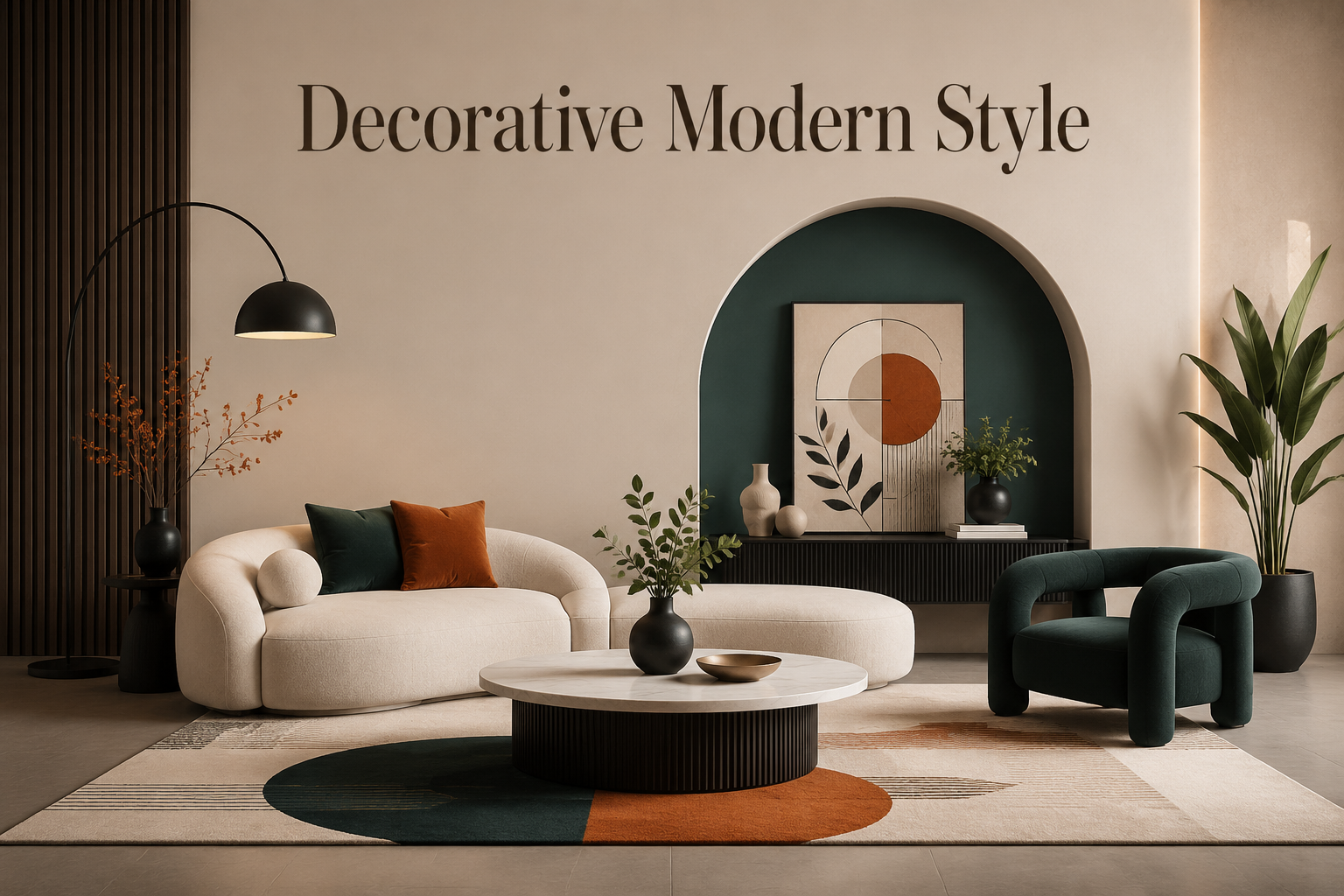
Decorative modern is a design approach that blends clean modern structure with rich decorative detailing, giving spaces both order and personality. It is widely used in interior design, architecture, and graphic design because it avoids the coldness of plain minimalism while staying away from cluttered traditional looks.
This style focuses on balance, where simple forms carry ornamental touches like patterns, textures, and accent pieces. People choose decorative modern when they want a space that feels current yet warm and expressive. Throughout this guide, we will explore its history, core principles, key elements, and practical ways to bring this style into real spaces.
What Is Decorative Modern Style?
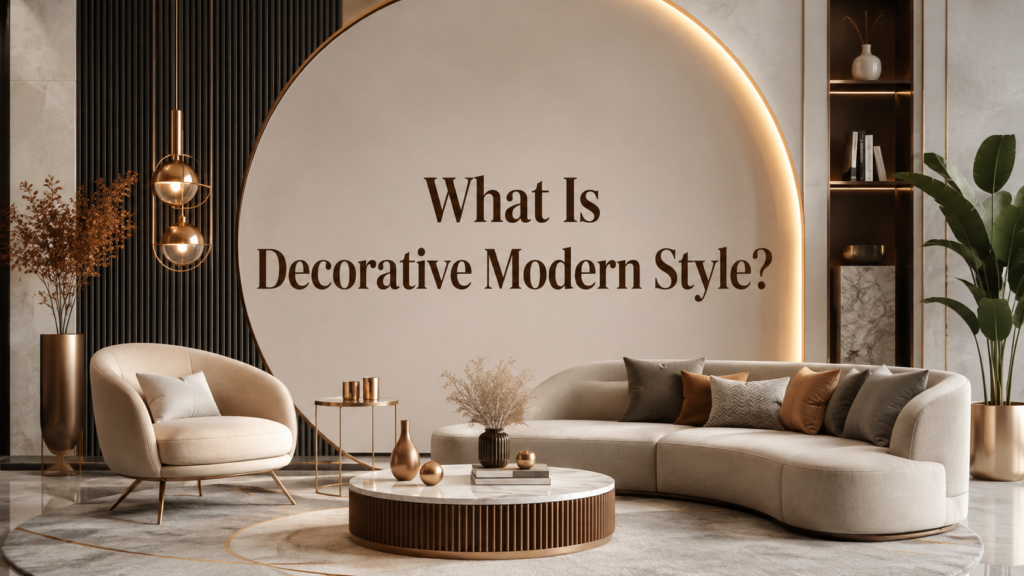
Decorative modern combines the simplicity of modern design with the richness of decorative elements. It creates spaces that feel structured yet personal and visually interesting.
Meaning and Concept
At its core, decorative modern takes the straight lines and open layouts of modern design and adds decorative layers on top. This can include patterned textiles, sculptural lighting, or artistic wall pieces. The goal is never to overwhelm the space but to add just enough character so it does not feel plain or repetitive.
How It Differs From Minimalism
Minimalism strips a space down to only the essentials, often avoiding color, pattern, or ornamentation altogether. Decorative modern, on the other hand, keeps the functional layout of minimalism but layers in decorative accents. This makes it feel more inviting and personalized compared to a strict minimalist interior.
History and Origin of Decorative Modern
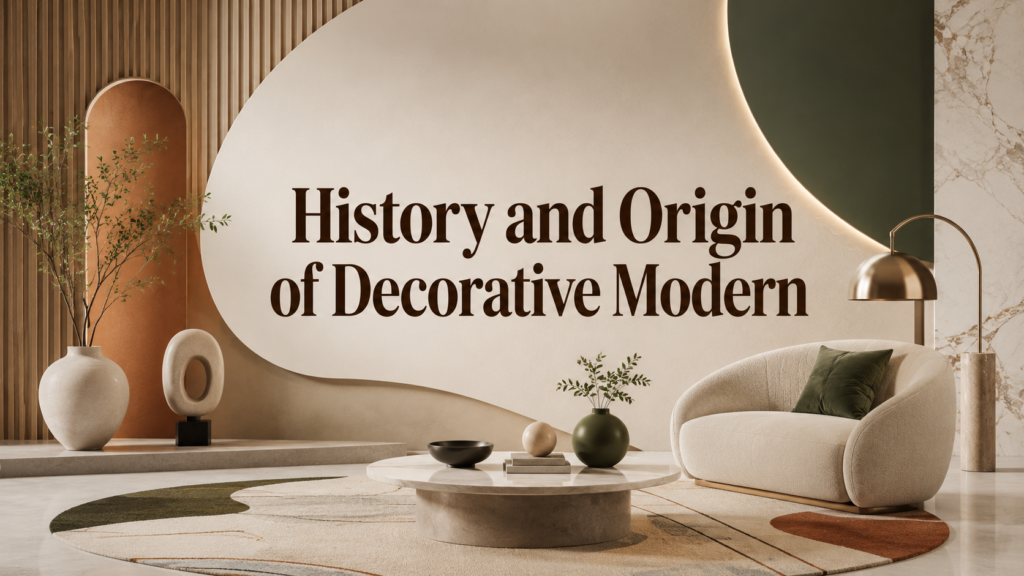
This style grew out of early modernism but was shaped heavily by decorative art movements that came after it. Over time, designers began mixing both approaches into one cohesive look.
Roots in Modernism
Modernism began in the early twentieth century, focusing on function, simplicity, and removing unnecessary detail. It rejected heavy ornamentation in favor of clean geometry and practical design. Decorative modern later borrowed this structural foundation as its base.
Influence of Art Deco
Art Deco introduced bold geometric patterns, luxurious materials, and decorative flourishes during the 1920s and 1930s. When designers combined Art Deco’s ornamental spirit with modernist simplicity, decorative modern began taking shape as a distinct style. This blend is still visible in many contemporary designs today.
Core Principles of Decorative Modern Design
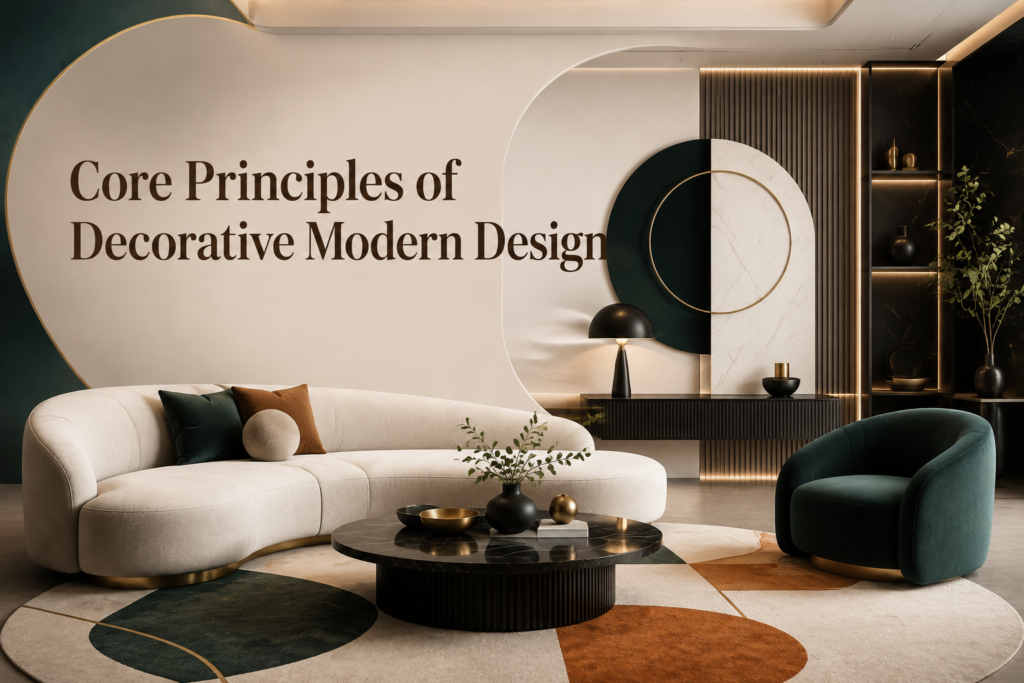
The foundation of this style rests on balancing simplicity with visual interest. Every decorative choice is intentional rather than random or excessive.
Balance of Simplicity and Detail
A decorative modern space usually starts with a simple, uncluttered base such as neutral walls or clean furniture lines. Decorative details are then added selectively, such as a patterned rug or textured cushion. This keeps the space from feeling either too bare or too busy.
Functionality With Artistic Touch
Every decorative element still needs to serve a purpose alongside its visual appeal. A statement light fixture, for example, provides illumination while also acting as an art piece. This principle ensures that decoration never comes at the cost of usability.
Key Elements of Decorative Modern Style
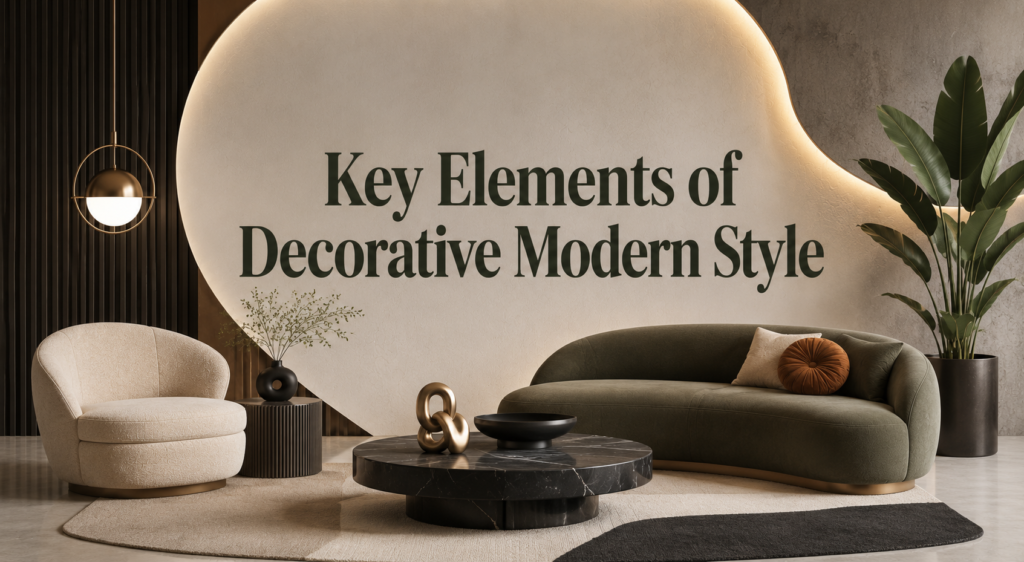
Several recurring elements define this look across different spaces. These elements work together to create the signature decorative modern feel.
Colors and Patterns
Neutral base colors like white, beige, and grey are common, paired with bold accent colors in smaller doses. Patterns such as geometric shapes, abstract prints, or botanical designs are often used on textiles, wallpaper, or accessories.
Materials and Textures
Materials play a major role in bringing texture into an otherwise simple space. Common choices include:
- Brushed metal for fixtures and hardware
- Glass for tables and partitions
- Natural wood for furniture and flooring
- Marble for countertops and accent surfaces
- Velvet or textured fabric for upholstery
Lighting and Accents
Lighting fixtures in decorative modern spaces often double as sculptural pieces rather than plain functional items. Decorative moldings, mirrors, and small trims are also used to add subtle detail without overwhelming the overall design.
| Element | Purpose | Common Examples |
| Color | Sets the base mood | Neutral walls with bold accents |
| Pattern | Adds visual interest | Geometric or botanical prints |
| Material | Adds texture and depth | Marble, wood, velvet, glass |
| Lighting | Combines function and art | Sculptural pendant lights |
| Accents | Adds finishing detail | Moldings, mirrors, trims |
Decorative Modern in Interior Design
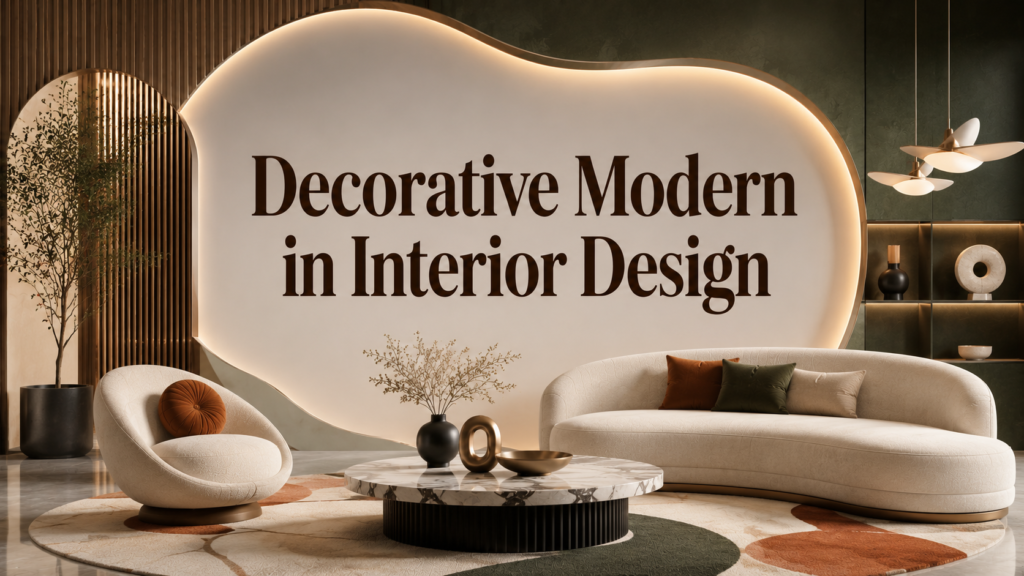
Interior design is where decorative modern is most commonly applied, since it allows flexible mixing of furniture, color, and décor. Each room can use the style differently based on its function.
Living Room and Bedroom Ideas
In living rooms, a simple modern sofa can be paired with a patterned throw and a bold piece of wall art. Bedrooms often use decorative modern through textured headboards, layered bedding, and soft ambient lighting to create a calm yet stylish space.
Kitchen and Furniture Choices
Kitchens can incorporate this style through marble countertops paired with sleek modern cabinetry and decorative pendant lights above an island. Furniture pieces are usually simple in shape but chosen for their material quality or subtle decorative detailing.
Decorative Modern in Architecture and Graphic Design
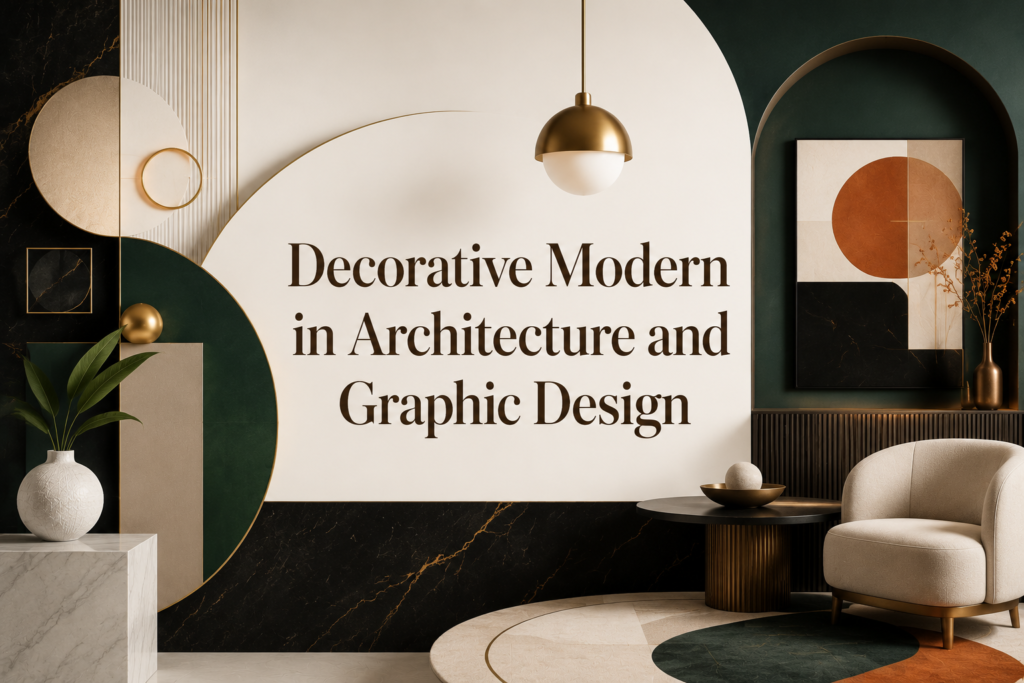
Beyond interiors, this style also appears in building facades and visual design work. The same balance between structure and ornamentation applies across these fields.
Architectural Applications
In architecture, decorative modern often shows up as modern building forms with decorative facade patterns, textured panels, or artistic entryways. This allows buildings to maintain a contemporary structure while still having a distinct visual identity.
Graphic and Product Design Use
In graphic design, decorative modern appears through clean modern layouts enhanced with ornamental typography or subtle pattern work. Product packaging often follows the same idea, using simple shapes with decorative accents to stand out on shelves.
How to Achieve Decorative Modern Style at Home

Bringing this style home does not require a complete renovation. Small, intentional changes can shift a plain modern space into a decorative modern one.
Step by Step Tips
Start with a neutral base for walls and large furniture pieces. Next, add one or two patterned textiles such as cushions or a rug. Then introduce a statement lighting piece and finish with a few decorative accents like mirrors or wall art to complete the look.
Common Mistakes to Avoid
A common mistake is adding too many decorative pieces at once, which can make the space feel cluttered rather than styled. Another mistake is choosing patterns or colors that clash instead of complementing the neutral base already in place.
Decorative Modern vs Other Styles
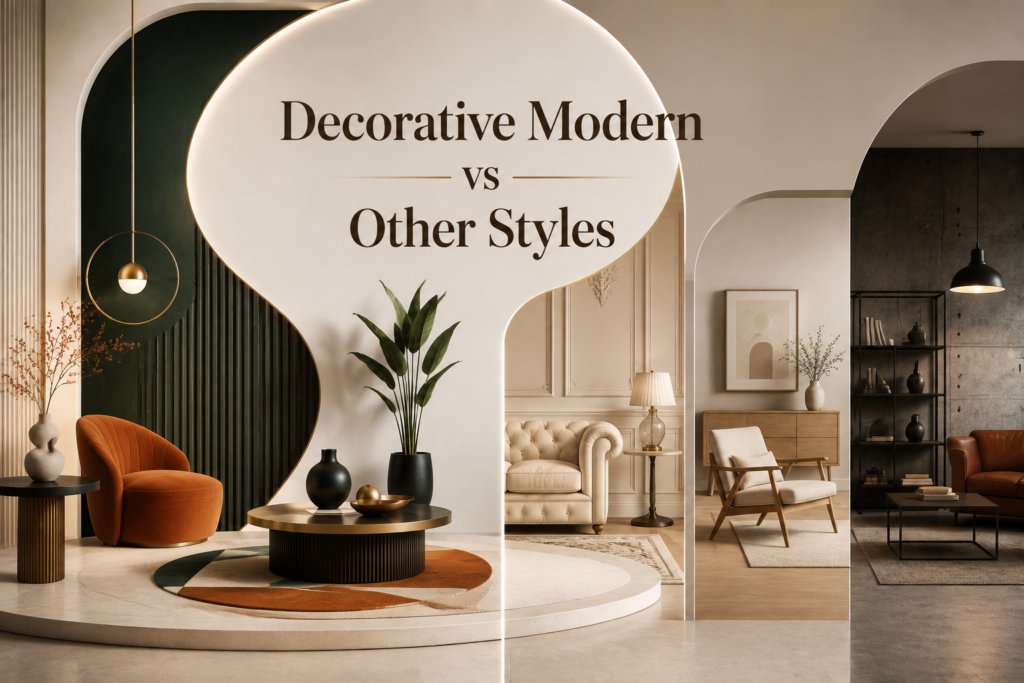
Comparing decorative modern with related styles helps clarify what makes it unique. Below is a simple comparison for better understanding.
| Style | Focus | Decoration Level |
| Decorative Modern | Balance of structure and detail | Moderate |
| Minimalist | Function and simplicity only | Very low |
| Traditional | Classic ornate detailing | High |
| Art Deco | Bold geometric luxury | High |
This comparison shows that decorative modern sits between minimalist and traditional styles, offering enough decoration to feel personal without becoming overly ornate.
Pros and Cons of Decorative Modern
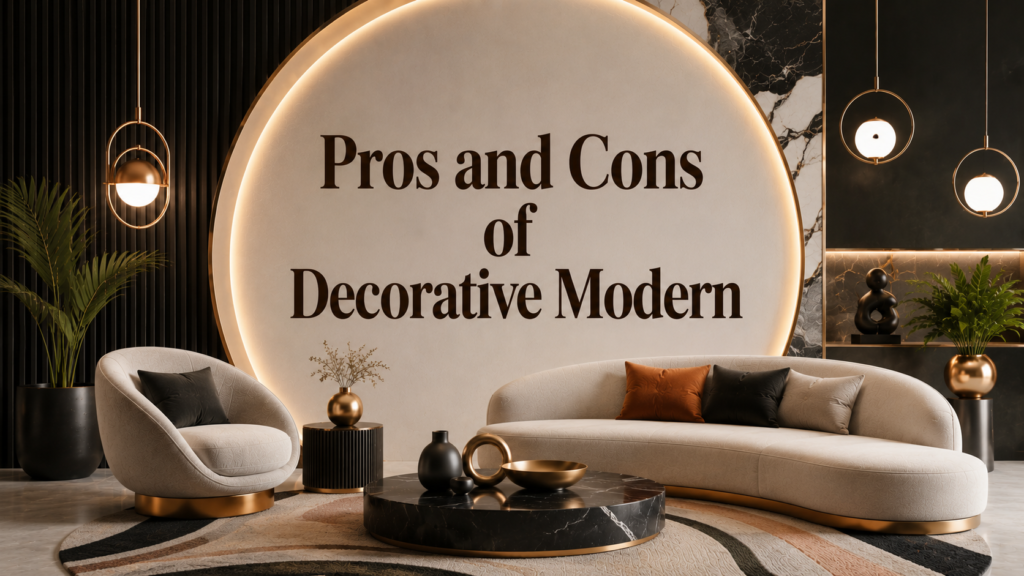
Like any design style, decorative modern has both strengths and limitations worth considering before committing to it fully.
Advantages
This style offers flexibility, since it can adapt to different room types and personal tastes. It also creates a warmer, more inviting feel compared to strict minimalism, while still keeping spaces organized and functional.
Challenges
Getting the balance right can be difficult, since too much decoration pushes the look toward traditional or maximalist styles. It may also require more planning and slightly higher costs due to material and accent choices.
FAQs
What does decorative modern mean in simple words?
It means combining modern simplicity with selective decorative details for a balanced look.
Is decorative modern expensive to achieve?
Not necessarily, since small decorative touches can be added gradually within most budgets.
Can decorative modern work in small spaces?
Yes, using light colors and limited decorative accents keeps small spaces feeling open and stylish.
Conclusion
Decorative modern offers a practical way to enjoy both structure and style in one cohesive design approach. By balancing simple modern foundations with thoughtful decorative touches, it creates spaces that feel current, functional, and personal at the same time.
Related Articles
Japanese Home Decor: A Complete Guide to Minimalist and Calm Interiors
Modern Classic Home Decor: A Complete Guide to Timeless Interior Design
Luxury Home Decor: The Complete Guide to Elevating Your Living Space
Linon Home Decor: Complete Guide to Styles, Quality & Buying Tips
Mens Home Decor: A Complete Guide to Masculine Interior Style