Islamic Wall Art: Meaning, Types, Styles and Home Decor Guide
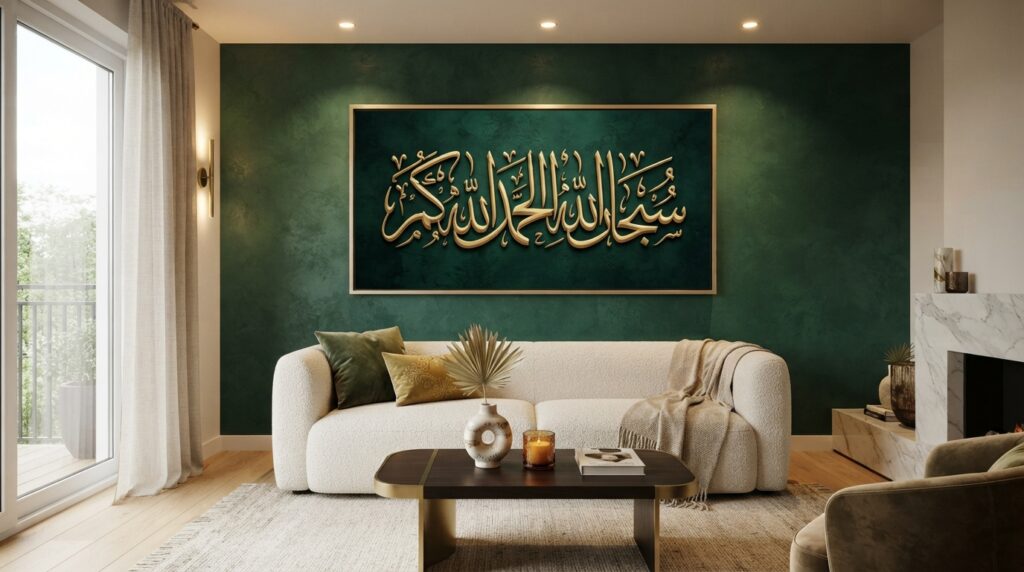
Islamic wall art is a decorative art form rooted in Islamic culture, known for its geometric patterns, flowing arabesque designs and elegant calligraphy. It often features Quranic verses, the names of Allah or symbolic Islamic motifs rather than human or animal figures. This style of art has become a popular home decor choice because it blends spirituality, culture and visual beauty in one piece.
Homeowners use it to create a peaceful, meaningful atmosphere in living rooms, prayer areas and hallways. Unlike typical decorative art, Islamic wall art carries deep historical and religious significance. This guide explains its origins, styles, materials and how to choose the right piece for your space.
Understanding Islamic Wall Art
Islamic wall art did not appear overnight; it developed over centuries through different Islamic civilizations. Its design language was shaped by religious values that encouraged pattern-based and calligraphic expression instead of figurative imagery.
Origins in Islamic Civilization
Early Islamic art grew from a religious preference to avoid depicting living beings in sacred or decorative spaces. Artists instead turned to geometry, script and nature-inspired patterns to express beauty and devotion. This approach gave rise to a completely distinct visual identity within Islamic culture.
Evolution Through Different Islamic Dynasties
Persian, Ottoman and Moorish artisans each added their own touch to Islamic wall art, from intricate tile work to elaborate calligraphic panels. Over time, these regional styles blended and spread across mosques, palaces and homes. Today’s Islamic wall art still reflects traces of these historical influences.
Key Characteristics of Islamic Wall Art
Certain design features consistently appear across Islamic wall art, making it instantly recognizable. These characteristics work together to create harmony, symmetry and spiritual meaning in every piece.
Geometric Patterns and Symmetry
Geometric shapes such as stars, polygons and interlacing lines form the backbone of many Islamic wall art designs. These patterns often repeat infinitely, symbolizing the eternal nature of the divine. The precision and balance of these shapes give the art a calming, structured appearance.
Arabesque Designs
Arabesque patterns use flowing vines, leaves and floral shapes arranged in continuous, rhythmic designs. This style softens the strict geometry with organic movement, creating a sense of natural beauty. It is commonly combined with calligraphy or geometric borders.
Calligraphy as Art
Arabic calligraphy transforms sacred text into a visual masterpiece, often featuring Quranic verses or the 99 names of Allah. Skilled calligraphers shape letters into elegant, sometimes abstract forms while preserving readability. This makes calligraphy one of the most respected and widely used elements in Islamic wall art.
Popular Types of Islamic Wall Art
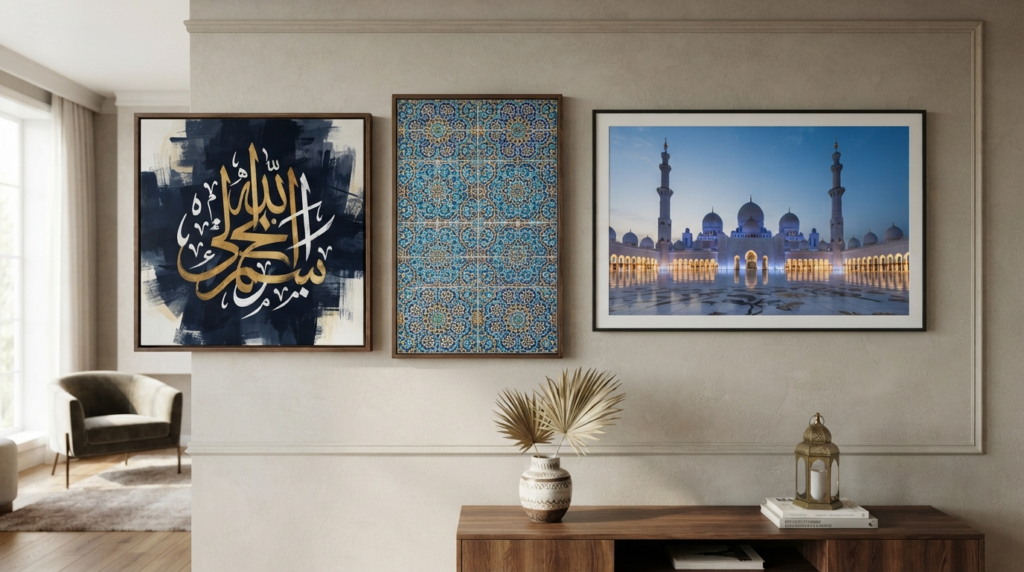
Islamic wall art comes in several distinct styles, each suited to different tastes and interior themes. Understanding these types helps buyers pick a piece that matches both their space and personal preference.
Calligraphy Wall Art
This type features verses, names or phrases written in decorative Arabic script, often framed or mounted as a centerpiece. It is popular for prayer rooms, living rooms and entryways due to its spiritual meaning. Calligraphy pieces range from simple single-line designs to elaborate multi-layered artwork.
Geometric and Metal Wall Art
Metal cut-out designs showcase intricate geometric patterns, often in brass, copper or matte black finishes. These pieces add a modern, sculptural touch while still honoring traditional Islamic design principles. They work especially well as statement pieces on plain walls.
Wooden and 3D Wall Art
Carved or laser-cut wooden panels bring warmth and texture to a room, often combining geometric and floral motifs. Some designs extend into three-dimensional relief work, adding depth and shadow effects. These pieces suit both traditional and contemporary interiors.
The table below summarizes common types and the materials typically used for each.
| Type of Islamic Wall Art | Common Materials | Best Suited For |
| Calligraphy Art | Canvas, metal, wood | Prayer rooms, living rooms |
| Geometric Art | Metal, acrylic | Modern, minimalist spaces |
| Arabesque Art | Wood, ceramic | Traditional interiors |
| 3D Sculptural Art | Wood, resin, metal | Feature walls, entryways |
| Mosaic Art | Tile, glass | Hallways, accent walls |
Choosing Islamic Wall Art for Your Home
Selecting the right piece depends on the room’s purpose, the existing color scheme and the overall style of the home. Thoughtful selection ensures the artwork feels intentional rather than random.
Matching With Room Purpose
A prayer or meditation space usually suits calligraphy or verse-based art, while a living room can accommodate bolder geometric designs. Bedrooms often benefit from softer arabesque patterns that promote calm. Choosing art based on the room’s function creates a more cohesive atmosphere.
Size, Color and Placement
Larger walls call for bigger statement pieces, while smaller spaces suit compact or minimalist designs. Metallic tones like gold, bronze and black tend to complement most interior palettes. Proper placement, such as centering the piece at eye level, enhances its visual impact.
Benefits of Islamic Wall Art
Beyond its visual appeal, Islamic wall art offers deeper value that connects a home to culture, history and personal meaning. This makes it more than just a decorative choice for many buyers.
Spiritual and Cultural Value
For many households, Islamic wall art serves as a daily reminder of faith and cultural identity. Verses and names displayed on walls can create a peaceful, reflective environment. This spiritual dimension is a key reason for its continued popularity.
Aesthetic Appeal for Modern Homes
The intricate patterns and elegant script of Islamic wall art fit seamlessly into modern, bohemian and traditional interior styles alike. Its timeless design does not go out of fashion easily. This versatility makes it a practical long-term decor investment.
Buying and Caring Tips
Choosing quality Islamic wall art and maintaining it properly ensures the piece stays beautiful for years. A little care in both buying and upkeep goes a long way.
What to Check Before Buying
Always verify the accuracy of any Quranic text or calligraphy before purchasing, as incorrect script can be disrespectful. Check the material quality, finish and craftsmanship, especially for metal or wood pieces. Buying from reputable artisans or trusted sellers reduces the risk of poor-quality work.
Maintenance Tips
Metal and wood pieces should be dusted regularly and kept away from excess moisture to prevent rust or warping. Canvas and printed art should avoid direct sunlight to prevent fading over time. Simple, routine care keeps Islamic wall art looking fresh for years.
Frequently Asked Questions
Is Islamic wall art only meant for Muslims?
No, many non-Muslims appreciate Islamic wall art for its artistic and cultural value, especially the geometric and calligraphic designs.
What does Islamic geometric art symbolize?
It often represents infinity, unity and the order found in the universe, reflecting spiritual and mathematical harmony.
Can Islamic wall art include images of people or animals?
Traditional Islamic wall art avoids figurative imagery, focusing instead on geometry, calligraphy and nature-inspired patterns.
Conclusion
Islamic wall art combines centuries of tradition with timeless design, making it a meaningful addition to any home. From calligraphy to geometric metalwork, there is a style suited to every interior taste. Choosing the right piece thoughtfully ensures both beauty and lasting cultural value.
Related Articles
Black Home Decor: The Complete Guide to Styling Your Space with Black
Personalized Home Decor: A Complete Guide to Custom Interior Styling
Vintage Home Decor: A Complete Guide to Creating a Timeless Home
Home Decoration: A Complete Guide to Styling Your Home Beautifully
Home Decor Australia: A Complete Guide to Styling Every Room in Your Home